IoT hardware connects physical devices with software, networks, sensors, and users, making product development more complex than building a conventional electronic device. From smart home equipment to industrial monitoring systems, manufacturers must solve challenges involving hardware integration, connectivity, power, enclosure design, and production. We use product design and prototyping to address these challenges before they become costly manufacturing problems. This approach helps us turn IoT concepts into functional, reliable, and production-ready products.
Where Does Product Design Begin in IoT Hardware?
Product design begins with defining what the device needs to accomplish and how users will interact with it. For an IoT product, this involves more than selecting electronic components. We must consider the physical structure, hardware architecture, connectivity, power requirements, user interface, and manufacturing constraints together.
Our engineering process starts with requirements analysis and feasibility assessment. We evaluate factors such as component selection, target costs, and technology choices before moving into detailed development. For IoT products, this foundation helps us balance functionality with practical manufacturing requirements.
Prototyping Tests IoT Hardware Before Production
A digital design cannot reveal every problem that may appear in a physical device. Prototyping provides a practical way to test hardware integration, product dimensions, functionality, and user experience before significant investments are made in tooling and mass production.
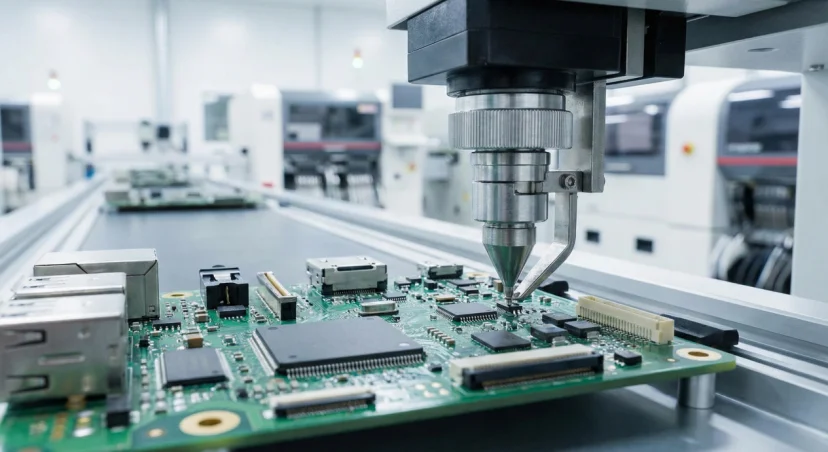
We use electronic prototype manufacturing to create functional representations of IoT products. Our rapid prototyping capabilities include 3D printing, CNC machining, and silicone molding, while prototype testing can help validate performance against real-world requirements.
This stage is especially valuable when several components must operate within a compact enclosure. Identifying an integration problem during prototyping is generally much easier than discovering it after production tooling has been completed.
Smart Home Devices Need Compact Hardware Integration
Smart home products are one of the clearest applications for product design and prototyping. Devices such as smart doorbells, security hubs, sensors, and connected appliances must combine multiple functions while remaining convenient and visually appropriate for residential environments.
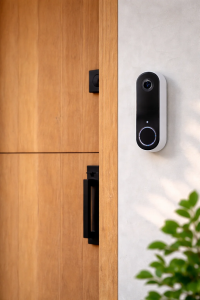
Our smart doorbell project illustrates this challenge. The device combines HD video monitoring, two-way audio, motion detection, night vision, and app connectivity. We supported the project by optimizing the internal electronic architecture so the camera, microphone, speaker, wireless module, and power components could fit within a slim housing.
The project demonstrates why IoT hardware design cannot focus on electronics alone. Mechanical structure and electronic architecture must be developed together so that the finished device can deliver its intended functions without compromising its physical design.
Wearables Require Miniaturization and Power Optimization
Wearable IoT devices introduce another important application. Smart wearable products must often accommodate electronics within very limited physical space while remaining comfortable for users.
Our product design approach considers miniaturization, hardware integration, and power consumption together. At Minewing, we identify wearables as one of our core product categories and highlight ergonomic engineering and ultra-low-power considerations within our IoT and wearable solutions.
Prototyping allows engineers to evaluate whether the selected components and physical configuration can realistically satisfy these requirements. It also provides an opportunity to assess the product’s physical dimensions and usability before committing to larger production volumes.
Industrial IoT Requires Reliable Functional Validation
IoT hardware is not limited to consumer products. Industrial control equipment, environmental monitoring devices, smart detectors, and other connected systems also require structured product development and validation.
For these applications, prototyping can help verify hardware behavior and integration before production. At Minewing, our project portfolio includes IoT terminal devices and industrial control products, reflecting the need to adapt product development and manufacturing processes to different technical requirements.
Industrial applications can also place greater emphasis on reliability and manufacturing consistency. For this reason, design reviews should consider production requirements from the beginning rather than treating manufacturability as an issue that appears only after engineering is complete.
Product Design Connects Prototyping With Manufacturing
A prototype that works is not automatically ready for mass production. IoT hardware may require additional optimization for component sourcing, assembly, testing, production yield, and cost.
We incorporate Design for Manufacturing considerations into our development process. Our manufacturing engineering services review PCB layouts and mechanical structures with the objective of improving production yields, reducing assembly time, and controlling manufacturing costs.
Our workflow also connects rapid prototyping with trial production. During New Product Introduction (NPI), we use Engineering Validation Testing (EVT), DVT, and PVT stages to identify and eliminate potential production risks before moving toward volume manufacturing.
Turning IoT Concepts Into Production-Ready Hardware
We apply product design and prototyping across the entire IoT hardware development process to validate physical functionality, electronic integration, user experience and manufacturing feasibility. These steps are especially critical for smart home devices, wearables, industrial IoT products and other connected hardware, where multiple technologies have to work together within one physical product.
Our smart doorbell project shows how these disciplines work together. By integrating electronic architecture with structural design and manufacturing expertise, we helped transform a connected security concept into a compact, practical product.
At Minewing, we support IoT hardware projects from concept development and engineering through electronic prototype manufacturing, trial production, and mass production. Our goal is to help startups and established brands identify problems early, optimize their designs, and move toward reliable, scalable products with greater confidence.