Smart energy storage is becoming an important part of modern power infrastructure. For commercial and industrial buyers, however, deployment is more than selecting batteries and connecting an inverter. A successful deployment must align application requirements, electrical integration, controls, safety, monitoring, manufacturing quality, and long-term serviceability. We believe this system-level view is essential when organizations evaluate electronics solutions for energy storage projects.

Define the Energy and Business Objectives First
Every deployment should begin with a clear operating objective. Energy storage can shift electricity across time, balance supply and demand, support grid flexibility, and improve resilience. The U.S. Department of Energy also recommends structured procurement and technical evaluation during early BESS development.
A commercial site may prioritize peak-demand management or backup power, while a renewable-energy project may need storage to better match generation with consumption. These applications influence required power, usable energy, response time, operating cycles, controls, and site integration. Defining these parameters early prevents an expensive system from solving the wrong problem.
Build the Architecture Around Integration
A smart energy storage system is a coordinated electronic platform rather than a battery pack alone. Depending on the application, the architecture may include battery modules, a battery management system, power conversion equipment, thermal management, protection devices, communications, and supervisory software.
We recommend treating interfaces as a major consideration. Voltage and current requirements, communications protocols, sensor placement, connector selection, enclosure constraints, and thermal behavior all affect manufacturability and field reliability. A well-integrated architecture also makes future revisions easier.
Prioritize Safety and Compliance Early
Safety cannot be added conveniently at the end of development. Stationary energy storage installations are subject to requirements covering design, construction, installation, commissioning, operation, maintenance, and decommissioning. NFPA 855 is a key reference for stationary energy storage installation, while local authorities having jurisdiction may impose additional permitting and inspection requirements.
Safety requirements should therefore influence the design from the beginning. Protection circuits, temperature sensing, fault detection, isolation, enclosure design, and emergency procedures should be considered alongside performance targets. Procurement teams should also confirm applicable codes, certifications, site requirements, and responsibilities before production starts.
Use Electronics Solutions That Support Reliability
The control layer determines how intelligently an energy storage system responds to changing conditions. Reliable PCBAs, accurate sensing, stable communications, and consistent assembly are therefore central to system performance.
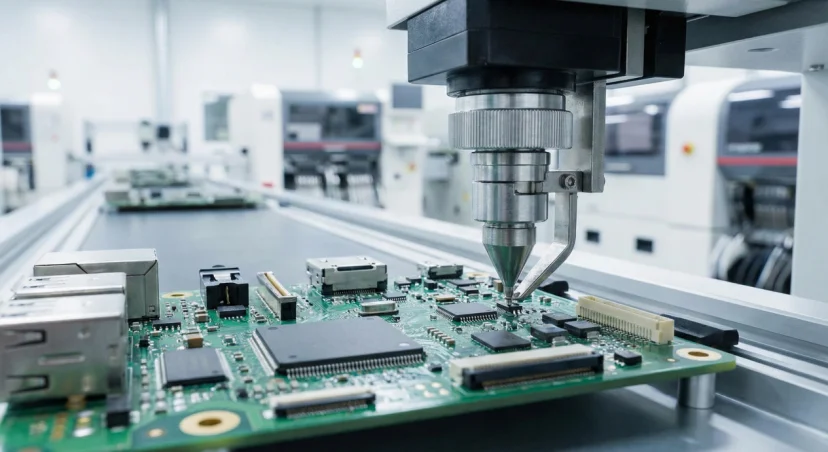
We approach electronics development with manufacturing in mind. Our capabilities cover PCB and PCBA development, technical support, prototyping, testing, assembly, and mass production. Our SMT operation supports advanced component packages and inspection processes, helping customers move from engineering requirements toward repeatable production.
Apply DFM Before Scaling Production
Design for manufacturability is particularly valuable for energy storage electronics because the products may contain dense boards, connectors, sensors, power-related components, and protective structures. A design that works in a prototype can still create assembly, sourcing, testing, or service problems at volume.
We use DFM optimization to identify these issues before they become production constraints. BOM optimization and value engineering can also reduce total cost without treating component price as the only target. For B2B buyers, the objective is predictable quality and cost across the product lifecycle.
Validate Through EVT, DVT, and PVT
A disciplined validation process reduces the risk of moving an unproven design directly into mass production. Engineering Validation Testing (EVT) can verify whether the core design meets intended requirements. Design Validation Testing (DVT) focuses on whether the refined product performs reliably against broader specifications. Production Validation Testing (PVT) then confirms that the manufacturing process can repeatedly produce the approved design.
Teams gain clear, measurable checkpoints through this phased workflow. It also creates opportunities to resolve design, sourcing, assembly, and tests issues before commercial production. We integrate validation with our New Product Introduction (NPI) process so that prototype learning can feed directly into production preparation.
Choose Turnkey Manufacturing Solutions for Faster Execution
Energy storage projects often involve multiple suppliers and engineering disciplines. Managing PCB design, component procurement, enclosure production, assembly, testing, and logistics separately can create communication gaps and increase project-management effort.
Our turnkey manufacturing solutions bring these activities into a coordinated development and production workflow. We support customers from idea and design through prototype, trial production, and mass production. This model reduces handoffs and gives teams a path from engineering decisions to manufacturable products.
Make Lifecycle Readiness Part of Deployment
Deployment planning should continue beyond factory acceptance. Teams should consider firmware updates, component availability, maintenance access, diagnostics, replacement strategy, monitoring, and future product revisions. These factors influence enclosure access, connectors, PCB design, software interfaces, and documentation before production.
We see lifecycle readiness as part of sound manufacturing strategy. An electronics product should not only function when it leaves the factory; it should also be practical to build, test, maintain, and improve. This perspective supports stronger relationships between engineering teams, procurement departments, and manufacturing partners.
Build a Scalable Energy Storage Roadmap
Smart energy storage deployment succeeds when business objectives and engineering decisions remain connected. Start with the application, define the electrical and safety requirements, design for integration, validate systematically, and prepare the product for repeatable production. This sequence can reduce avoidable development risk while improving cost and time-to-market.
At Minewing, we combine PCBA development, DFM optimization, validation support, prototyping, assembly, and mass production to help customers develop reliable electronic products. By applying our turnkey manufacturing solutions and electronics solutions approach to energy storage projects, we help B2B teams move from a promising concept toward a scalable product with manufacturing confidence.