A working prototype proves that an idea can become a physical product, but it does not automatically prove that the product is ready for manufacturing. Moving from a prototype to repeatable production requires engineering validation, design refinement, supply-chain planning, process development, and quality control. When we support customers through this transition, we treat electronic prototyping as the beginning of a manufacturing journey rather than the final engineering milestone.

Start with a Prototype That Answers the Right Questions
The purpose of a prototype is not simply to demonstrate that a device powers on. It should help the development team validate important assumptions about functionality, fit, performance, materials, and user interaction. Functional prototypes can also expose design issues before expensive production tooling or large component commitments are made. Prototyping is widely used to reduce design risk and evaluate products in realistic applications.
We use rapid prototyping methods such as 3D printing, CNC machining, and silicone molding to produce quick-turn samples. The appropriate process depends on the part geometry, material, functional requirements, and development objective. Different prototyping methods have different strengths, so selecting the process around the test objective can prevent unnecessary iterations.
How to Go from Prototype to Production Starts with Validation
Once a prototype works, the next question is whether the design can perform consistently under realistic conditions. We recommend testing the product against its intended operating environment rather than relying only on laboratory demonstrations. Functional testing may reveal thermal, mechanical, electrical, software, or assembly issues that were not visible during initial development.
The transition also benefits from structured engineering verification. A commonly used product-development path moves from prototype to engineering verification, design verification, process verification, and finally mass production. Each stage addresses a different risk, helping teams avoid discovering production problems only after volume manufacturing begins.
Turn a Working Design into a Manufacturable Design
A prototype can be functional while still being difficult or expensive to manufacture. That is why design for manufacturing, or DFM, becomes increasingly important before production tooling and volume commitments are finalized. Good DFM decisions can improve manufacturability and help control production costs.
We at Minewing review designs with production in mind, looking for opportunities to simplify assembly, improve production yield, reduce unnecessary operations, and address potential manufacturing constraints. DFM can also help teams identify component availability concerns and reduce the likelihood of expensive engineering changes after production has started.
This step is particularly important for electronics because the final product may combine PCBs, electronic components, cables, connectors, batteries, displays, mechanical housings, and other assemblies. A change to one part can affect the manufacturing process of another.
Use Trial Production to Bridge the Gap
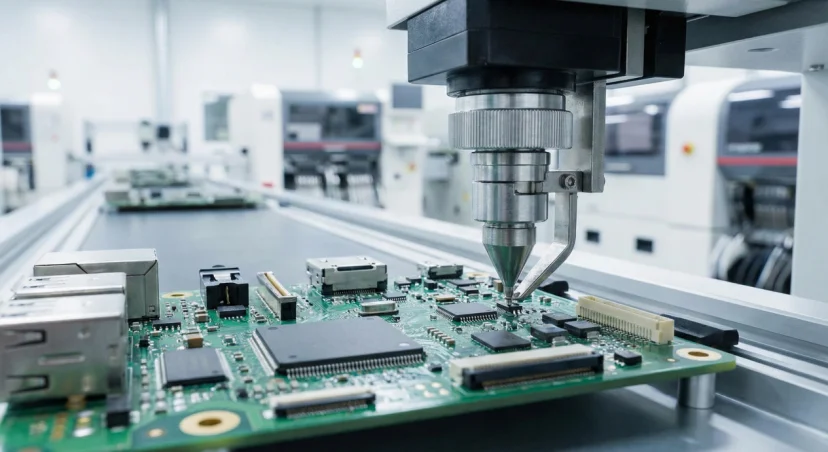
The jump from a handful of prototypes to full-scale production is where many projects encounter unexpected risks. We use trial production during the New Product Introduction (NPI) phase to bridge this gap. Small production batches allow engineering and manufacturing teams to evaluate whether the product, materials, equipment, operators, and processes work together as intended.
Depending on the project, Engineering Validation Testing (EVT), DVT, and PVT stages can be used to progressively verify the product and manufacturing process. Engineering verification focuses on whether the design meets its requirements, while later validation stages place greater emphasis on design robustness and production readiness.
The objective is not simply to produce a small quantity. Trial production should generate evidence that the process can deliver consistent results and provide an opportunity to correct problems before mass production. Low-volume production can also support product testing while reducing the risk of committing immediately to larger manufacturing quantities.
Build the Supply Chain Before Volume Orders
A production-ready design also needs a production-ready supply chain. Key components should be sourced, evaluated, and validated before the project reaches volume manufacturing. Otherwise, a technically finished product can still face delays because of component shortages, long lead times, or inconsistent supplier performance.
We support supply-chain setup by sourcing and validating key components and vendors. This work connects engineering decisions with purchasing and manufacturing requirements. When appropriate alternatives are identified early, teams can reduce dependence on a single component or supplier and respond more effectively to changing availability.
Establish Repeatable Quality and Production Processes
Mass production requires more than a successful pilot run. Work instructions, inspection methods, testing procedures, assembly processes, and quality criteria need to be defined clearly enough for repeatable execution. Production teams should also have mechanisms for identifying defects, tracing issues, and implementing corrective actions.
We consider this process discipline essential when moving customers from electronic prototyping into volume manufacturing. A reliable manufacturing partner should help convert engineering knowledge into documented and repeatable production processes rather than simply accepting a finalized design and starting assembly.
Move from Prototype to Production with the Right Partner
Knowing how to go from prototype to production means managing the transition as a series of controlled decisions. Prototype testing validates the concept, DFM improves manufacturability, trial production exposes process risks, supply-chain preparation supports continuity, and quality systems establish repeatability.
At Minewing, we provide rapid prototyping and trial production as connected stages within our broader electronics manufacturing services. We help customers validate designs through quick-turn samples, POC and functional testing, then support NPI activities such as DFM optimization and supply-chain setup. Our workflow connects concept development, electronic prototyping, trial production, and mass manufacturing, helping startups and established companies move toward volume production with fewer avoidable surprises.