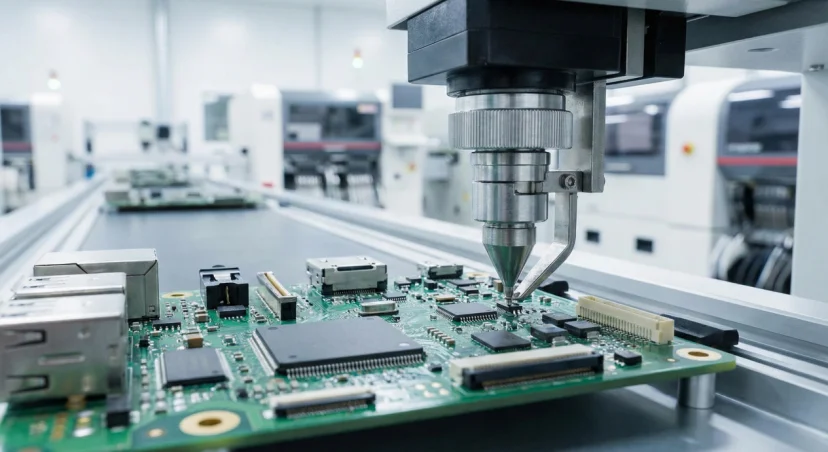
IoT brands face a manufacturing challenge that goes beyond putting components onto a printed circuit board. Connected products must combine electronics, mechanical structures, communications, firmware, testing, security, and scalable production while maintaining consistent quality. For this reason, choosing capable electronic manufacturing services companies and establishing a disciplined manufacturing process can strongly influence time to market, product reliability, and long-term commercial performance.
Start With Manufacturability Before Prototyping
We believe an EMS partnership should start before prototyping begins. We recommend joint reviews covering the bill of materials, PCB layout, component availability, enclosure design, assembly method, tolerances, and testing requirements. This design-for-manufacturing approach allows us to identify avoidable production risks before they become expensive tooling or rework issues.
This review matters because IoT devices may contain antennas, sensors, batteries, displays, wireless modules, and tightly packaged electronics. Manufacturing decisions can affect signal integrity, thermal behavior, assembly access, and enclosure performance. An EMS partner should contribute engineering feedback rather than simply manufacture files exactly as received.
Build a Controlled Prototype-to-Production Path
Prototypes should prove more than whether a device powers on. We recommend using prototypes to validate functionality, assembly methods, component choices, mechanical fit, and production processes. A controlled transition from prototype to trial production helps engineering teams discover problems while changes are still manageable.
As production volume increases, documentation, approved component lists, assembly instructions, inspection criteria, and test procedures should remain aligned. A capable EMS partner should connect engineering decisions with repeatable production rather than treating each stage separately. This approach can help IoT brands reduce avoidable changes when moving toward commercial quantities.
Make Quality Testing Part of the Manufacturing Plan
IoT products often operate continuously, so failures can create service costs and damage customer confidence. We recommend quality checkpoints for incoming materials, PCB assembly, functional testing, and final product verification.
Testing should reflect actual product requirements. Depending on the device, this may include power performance, communication functions, sensor operation, charging behavior, buttons or displays, and other application-specific functions. Clear test criteria also make production results easier to track and communicate between the brand and manufacturing team.
Treat Component Supply as a Product Requirement
A technically sound design can still face delays when critical components become unavailable. IoT brands should therefore evaluate component sourcing, lifecycle status, approved alternatives, lead times, and supply continuity during product development rather than waiting until mass production.
We recommend clear records for key components and controlled substitutions through an agreed engineering process. This protects product consistency while giving the manufacturing team enough flexibility to respond to supply-chain changes. This balance becomes especially important when demand increases unexpectedly.
Include IoT Security in Manufacturing Coordination
Security should not be treated as a software-only issue. National Institute of Standards and Technology (NIST)’s 2026 IoT manufacturer guidance emphasizes cybersecurity across development and support, including pre-market activities and communication about maintenance and end-of-life. Manufacturing partners can support this through protected production data and controlled device configuration and testing.
Brands should define requirements for credentials, device identity, firmware handling, and production configuration early. The workflow should make these requirements practical and repeatable. Clear responsibility between the brand, engineering team, and EMS provider can reduce production gaps and support more consistent deployment.
Choose EMS Companies That Can Scale With the Brand
The right manufacturing partner should match the brand’s growth path. Startups may need rapid prototyping and small production runs, while established companies may prioritize stable capacity, supply-chain coordination, quality systems, and global delivery. Frequent supplier changes can introduce unnecessary engineering and validation work.
At Minewing, we support this staged growth. We provide end-to-end electronics design and manufacturing, including engineering support, rapid prototyping, trial production, and mass production. Our capabilities cover electronics and enclosure design optimization, PCBA and enclosure manufacturing, assembly, testing, and packaging, supporting projects from development through larger-scale production.
Create One Source of Accountability
IoT manufacturing involves many interconnected activities, so fragmented supplier management can create gaps. Brands should establish clear ownership for engineering changes, quality issues, sourcing decisions, production schedules, and approval milestones. Regular project reviews and documented change control keep teams aligned.
Our one-stop production model is designed around this principle. Since 2011, we have combined mechanical and electronic expertise to provide integrated manufacturing support. We work with startups and global brands from initial prototyping to mass production, with project management connecting major production stages.
Build a Long-Term Manufacturing Partnership
A strong electronics manufacturing services relationship should continue after the first production run. As products evolve, brands may need revisions, cost optimization, component changes, tooling, testing, or higher volumes. A manufacturing partner that already understands the product can respond more efficiently to these changes.
At Minewing, we aim to serve as a long-term manufacturing partner rather than only a production vendor. Our focus is on flexible, reliable, and cost-effective manufacturing support tailored to each project’s requirements. By combining engineering, production, and supply-chain coordination, we help IoT brands move more systematically from concept to market.
Turning EMS Best Practices Into Business Advantages
For IoT brands, selecting electronic manufacturing services companies should be based on more than quoted unit price. Manufacturability, prototyping, testing, component continuity, cybersecurity coordination, scalability, and communication all affect the real cost and risk of bringing a connected product to market.
We believe an effective EMS partnership should reduce complexity while preserving flexibility. With one-stop production capabilities spanning design, prototyping, trial production, assembly, and mass manufacturing, at Minewing, we work to give IoT brands a dependable manufacturing foundation as their products move from early ideas to commercial scale.