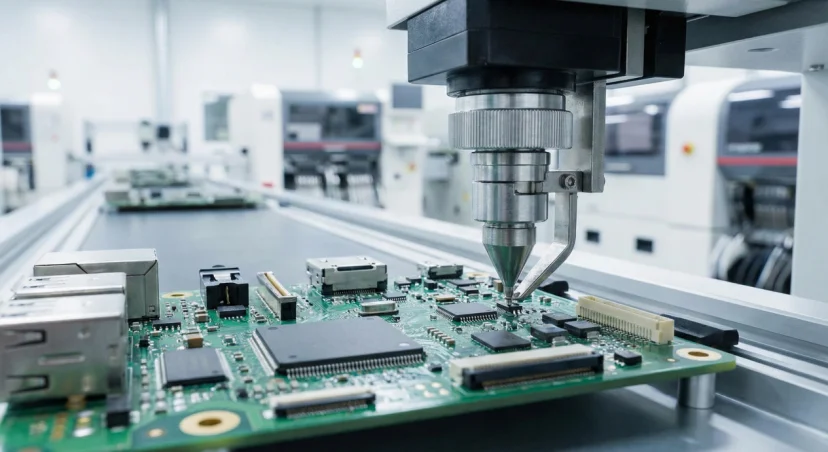
Bringing an electronic product to market quickly requires more than moving fast on the production line. Delays often occur earlier, when teams struggle with design validation, component sourcing, tooling, manufacturing preparation, or repeated engineering changes. We use OEM and ODM models to connect these stages more efficiently. By combining engineering, prototyping, trial production, and scalable manufacturing, we help businesses reduce avoidable delays while moving from concept to commercial production with greater confidence.
Why OEM and ODM Can Accelerate Product Development
OEM and ODM provide different paths to manufacturing, but both can shorten development cycles when the partnership is structured correctly. With OEM manufacturing, a customer typically provides a completed design and relies on the manufacturing partner to execute production accurately and efficiently. ODM goes further by involving the manufacturing partner in product development, engineering, optimization, and production preparation.
For businesses with established engineering teams, OEM can eliminate the need to build additional manufacturing infrastructure. For companies with an idea but limited internal development resources, electronic ODM can reduce the number of separate suppliers involved in turning that idea into a production-ready product.
The main advantage is integration. Instead of transferring a project repeatedly between designers, prototype suppliers, engineering teams, and manufacturers, businesses can work with a partner that understands the product across multiple stages. This reduces communication gaps and makes engineering feedback easier to implement.
Rapid Prototyping: Validate Before Expensive Tooling
The first major opportunity to save time comes from rapid prototyping. We create functional prototypes that allow customers to evaluate a design before committing to expensive tooling or larger production investments. Our quick-turn sample capabilities include 3D printing, CNC machining, and silicone molding.
Physical prototypes give engineering and product teams something concrete to evaluate. We help clients check dimensions, enclosure structures, component placement, user interaction, and other practical requirements. More importantly, we deliver functional samples to support Proof of Concept (POC) and performance testing under real-world scenarios.
This approach helps us identify problems while changes are still relatively manageable. A design modification made during prototyping is generally easier to implement than a correction discovered after tooling or mass production has already started. For B2B product teams, this early validation can protect both development schedules and budgets.
Trial Production: Turn a Design Into a Production-Ready Product
A successful prototype does not automatically mean a product is ready for mass production. The next challenge is proving that the design can be manufactured repeatedly, efficiently, and consistently. During the New Product Introduction (NPI) phase, we use small trial production batches, including Engineering Validation Testing (EVT), DVT, and PVT stages, to identify and eliminate potential production risks.
We also apply Design for Manufacturing (DFM) optimization before scaling. This means reviewing designs from a production perspective and identifying opportunities to improve manufacturing yield, simplify assembly, and control costs. Our engineering and manufacturing teams can connect design decisions with actual production requirements rather than treating them as separate activities.
Supply chain preparation is another important part of this stage. We help source and validate key components and suppliers so that production is not delayed by unverified materials or unstable sourcing. Establishing these resources before mass production creates a more reliable foundation for scaling.
Mass Production: Scale Without Restarting the Process
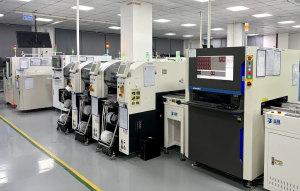
Once the product has passed validation and trial production, the objective changes from development speed to manufacturing consistency. We provide flexible OEM contract manufacturing and scalable production support, allowing businesses to increase volumes without rebuilding the manufacturing process from scratch.
Our services cover volume assembly, packaging, and global logistics. We can manage the transition from early production quantities toward larger-scale manufacturing while maintaining attention to quality and process stability. At Minewing, we also support projects from individual prototypes and low-volume trials through mass production, giving businesses flexibility as demand develops.
Global logistics also impacts time to market. Completing production is only one part of the launch process; finished products must also be properly packaged and reliably shipped to destinations. By coordinating manufacturing and logistics support, we help reduce unnecessary handoffs after production.
Choose an Integrated Path to Faster Market Launch
Time to market is ultimately a process-management challenge. Rapid prototyping helps validate the concept early, trial production exposes manufacturing risks before volume commitments, and mass production provides the capacity required for commercial launch. Each stage becomes more efficient when engineering and manufacturing teams communicate continuously.
We bring these stages together through our OEM and ODM services. With more than 20 years of manufacturing experience, we support projects from concept and engineering through prototyping, production preparation, and mass manufacturing.
For companies developing electronic products, electronic ODM can be especially valuable when internal engineering resources are limited or when faster commercialization is a priority. Rather than treating design, validation, sourcing, and manufacturing as isolated tasks, we help connect them into one coordinated development path.
Turning Development Speed Into Business Advantage
A shorter development cycle brings value only if it does not compromise product quality or production readiness. That is why we focus on validating designs early, optimizing them for manufacturing, testing them through controlled production stages, and scaling only after key risks have been addressed.
At Minewing, we aim to provide more than manufacturing capacity. We act as an integrated engineering and manufacturing partner, helping businesses move from ideas and prototypes toward reliable commercial products. By combining the flexibility of OEM and ODM with rapid prototyping, NPI support, DFM optimization, scalable assembly, and global logistics, we help our customers turn development efficiency into a practical time-to-market advantage.