Smart energy storage systems are moving far beyond the simple idea of storing electricity for later use. Today, businesses expect storage products to manage energy intelligently, communicate with connected devices, operate efficiently, and scale reliably. This evolution creates new requirements for hardware development and production. For us, the transition from concept to commercial scale demonstrates why flexible electronics solutions and coordinated manufacturing capabilities are becoming increasingly important.

From Energy Storage to Intelligent Energy Management
Early energy storage products primarily focused on storing and releasing energy. Modern systems increasingly combine batteries with sensors, battery management systems (BMS), power electronics, communication interfaces, and software-driven controls. These components work together to monitor operating conditions and determine how energy should be used.
The broader energy-storage market is also expanding rapidly. The International Energy Agency reports that global lithium-ion battery manufacturing capacity exceeded 4 TWh by the end of 2025, with China accounting for more than 80% of global capacity. This growing industrial base creates opportunities for smarter and more sophisticated storage products.
Ultra-Low Power and Smarter Battery Management
One important development is the effort to reduce the energy consumed by the electronics responsible for managing storage systems. A smart device should not waste a significant portion of its stored energy simply monitoring itself.
We implement intelligent power sequencing in ultra-low-power architectures to activate individual circuits only when their functions are needed. Sleep modes, efficient voltage regulation, low-power sensors and optimized communication can further cut unnecessary power consumption.
Energy harvesting provides another opportunity for low-power applications. Research into self-sustainable power systems has examined combinations of energy harvesting, storage, and power management for applications such as wireless sensor networks, wearable electronics, and portable devices.
For manufacturers, this means power efficiency needs to be considered at the architecture level. Component selection, PCB design, firmware requirements, and production testing can all influence the final energy performance of the product.
Why the Journey From Prototype to Scale Is Difficult
A working prototype does not automatically become a commercially viable product. At prototype stage, engineering teams may accept manual assembly, limited testing, expensive components, or small-volume procurement. Those compromises become much harder to sustain when production reaches thousands or millions of units.
Battery manufacturing illustrates this challenge particularly well. Research reported in Nature Communications shows batteries can be strongly affected by minor manufacturing variations, so robust quality management becomes more critical as production scales up.
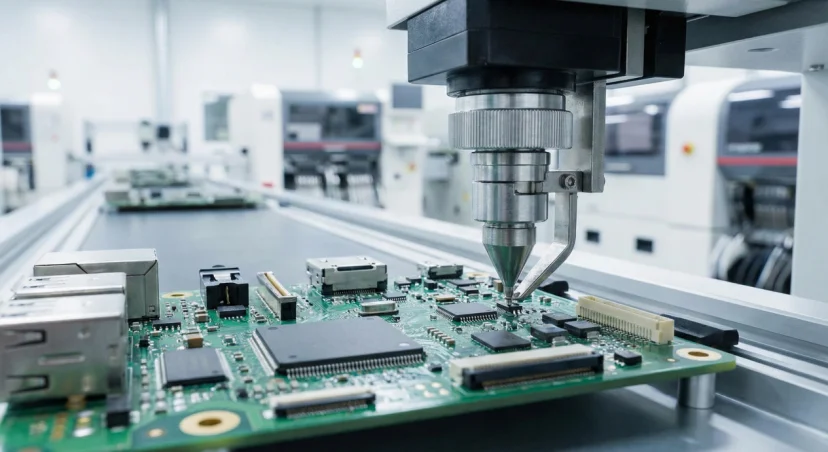
Smart storage electronics face similar issues. Production processes must deliver repeatable soldering, reliable connections, consistent component placement, and effective functional testing. A design that performs well in ten prototypes must also remain stable across much larger production volumes.
Manufacturing Becomes Part of the Design Process
The evolution of smart storage systems is therefore closely connected to manufacturing engineering. Design teams need to consider manufacturability before finalizing the product architecture.
This includes evaluating component availability, PCB layout, assembly methods, thermal considerations, testing requirements, and potential substitutions. Early manufacturing involvement can identify problems that may otherwise emerge only after tooling or production investment.
We see this as one of the most valuable roles of professional electronics solutions providers. Manufacturing should not simply begin after engineering finishes. When design and production teams communicate earlier, businesses can make more practical decisions about cost, reliability, scalability, and supply-chain resilience.
The Role of Turnkey Manufacturing Solutions
As storage products become more complex, managing multiple suppliers can introduce additional coordination challenges. A company may otherwise need separate partners for prototyping, PCB assembly, component sourcing, testing, final assembly, and production scaling.
Turnkey manufacturing solutions can simplify this structure by bringing multiple production activities under one coordinated manufacturing relationship. This can provide greater visibility across the project and reduce communication gaps between engineering, procurement, and production.
The value becomes particularly clear when products move from prototypes toward mass production. Supply-chain changes, component shortages, design revisions, and quality issues can affect multiple stages simultaneously. A coordinated manufacturing partner can respond to these issues with a broader understanding of the product.
Scaling Smart Energy Storage Requires Quality Discipline
Scaling is not simply about increasing factory output. Quality systems must also develop alongside production volume. Battery-related products require particular attention because failures can affect safety, reliability, operating life, and customer confidence.
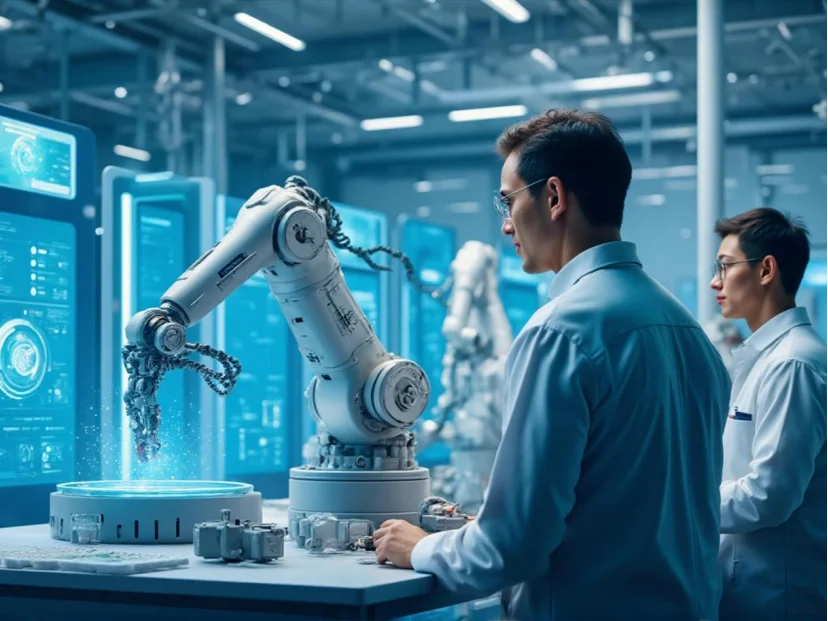
Research into battery manufacturing increasingly emphasizes digitalization, automation, production quality, predictive maintenance, and data-driven manufacturing. These trends demonstrate that future manufacturing competitiveness will depend on more than equipment capacity.
For businesses developing smart storage products, supplier evaluation should therefore include production controls, engineering communication, component management, testing capabilities, and the ability to maintain consistency during volume increases.
How We Support the Move Toward Commercial Production
At Minewing, we understand that an electronics project can change significantly between its first prototype and mass production. As a Chinese electronics manufacturer, we support startups and global brands through different stages of product development and manufacturing.
Our approach focuses on providing flexible and reliable support according to each project’s requirements. We can help customers move from development toward scalable production while maintaining transparent communication throughout the manufacturing process.
We also emphasize stable supply chains and practical problem solving. These capabilities become especially valuable when electronic products contain numerous components and require consistent production over an extended period.
Creating a More Scalable Energy Storage Future
The evolution of smart energy storage is ultimately a shift from standalone batteries toward integrated, intelligent systems. Better battery management, ultra-low-power electronics, energy harvesting, digital monitoring, and manufacturing automation are all contributing to this transition.
For businesses, the challenge is turning promising technology into products that can be produced consistently and economically. That requires engineering decisions and manufacturing decisions to work together from an early stage.
From Smart Concept to Reliable Production
Smart energy storage will continue to evolve as businesses demand greater efficiency, connectivity, reliability, and scalability. The strongest products will not be defined by battery technology alone but by how effectively hardware, power management, software, and manufacturing work together.
At Minewing, we aim to support that transition through flexible electronics solutions and coordinated turnkey manufacturing solutions. By combining transparent communication, stable supply-chain support, and a problem-solving mindset, we work to become a long-term manufacturing partner for companies turning energy-storage concepts into dependable commercial products.