Industrial facilities depend on stable electricity for automated equipment, production lines, control systems, and critical infrastructure. Yet electricity networks are facing growing pressure from electrification, renewable generation, rising demand, and limited grid capacity. The International Energy Agency (IEA) identifies grid capacity as an increasing bottleneck for connecting supply, demand, and storage. For industrial users, smart energy storage systems can provide a flexible way to manage power fluctuations while supporting more reliable operations.

Why Industrial Grids Need More Flexibility
Traditional power networks were designed around relatively predictable generation and consumption patterns. Modern industrial facilities can create more dynamic demand through automated machinery, electric heating, charging infrastructure, and other high-power loads. At the same time, renewable energy introduces variability into electricity generation.
Energy storage provides a way to respond to these changing conditions. Batteries can absorb electricity when supply is available and release it when demand increases. According to the IEA, battery storage can provide short-term flexibility and respond to grid signals within seconds, making it suitable for supporting grid stability.
For industrial businesses, this flexibility can help reduce the impact of sudden changes in electricity demand. It can also support operations when grid conditions become less predictable.
How Smart Energy Storage Supports Grid Stability
A modern storage system is more than a collection of battery cells. Its effectiveness depends heavily on power electronics, monitoring, control algorithms, thermal management, and battery management. These components work together to determine how safely and accurately stored energy can be charged, discharged, and monitored.
Battery storage can provide several grid-support functions. These include frequency regulation, operating reserves, energy shifting, and congestion management. The IEA reports that energy shifting has become the dominant application for newly deployed battery storage, while batteries continue to provide fast-response balancing services.
For industrial users, this combination can be particularly valuable. Storage can help shift electricity use away from periods of high demand while also responding quickly to short-duration disturbances.
Battery Management Is Central to Intelligent Control
Battery performance depends on maintaining cells within appropriate operating conditions. A battery management system monitors parameters such as voltage, temperature, and state of charge while coordinating charging and discharging. Without effective monitoring and control, the battery pack cannot be managed as efficiently or reliably.
This is where intelligent electronics become important. Low-power control circuits, sensing hardware, communication interfaces, and power-management functions can all contribute to the performance of an energy-storage product.
Our focus at Minewing is not simply on assembling electronic boards. We provide engineering support for electronics hardware, software, structural processes, exterior design, and packaging. This allows us to consider how electronic functions should be designed for manufacturability from the early stages of a project.
Ultra-Low Power Electronics Improve System Efficiency
Not every electronic function in an energy-storage system needs high power. Monitoring, communication, sensing, and control functions may need to remain active even when the main power path is operating differently. Designing these functions for low energy consumption can therefore help improve overall system efficiency.
Our ultra-low-power approach focuses on intelligent power sequencing and high-efficiency energy harvesting to extend device longevity. For industrial electronics, such techniques can be relevant to monitoring devices and control subsystems where continuous operation and efficient energy use matter.
The key is to match power architecture with the actual operating requirements. A carefully designed electronic system can allocate energy to essential functions while reducing unnecessary consumption.
Electronics Solutions Need Manufacturing Discipline
Designing a capable control system is only one part of developing reliable industrial equipment. Production quality also matters. PCB assembly defects, component inconsistencies, soldering problems, or inadequate functional testing can affect the reliability of the finished electronics.
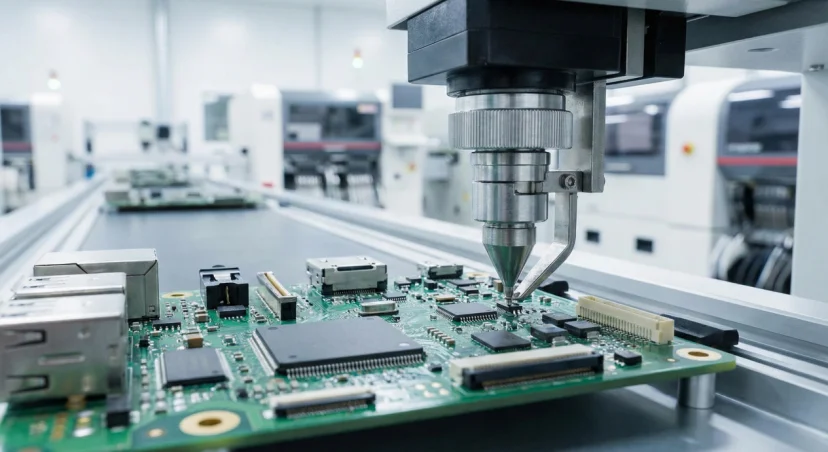
Our electronics solutions therefore connect engineering with manufacturing. At Minewing, we provide PCB-related services covering design-stage technical advice, rapid prototypes, testing improvement, and mass production. Our manufacturing facilities also support SMT, DIP, functional testing, aging testing, and finished-product assembly.
This integrated approach can be useful for businesses developing industrial energy equipment because engineering decisions can be evaluated against actual production requirements.
Turnkey Manufacturing Solutions Reduce Development Complexity
Industrial energy products often involve several interconnected components, including control boards, enclosures, connectors, sensors, and other electronic assemblies. Coordinating separate suppliers for each stage can increase communication requirements and make quality management more difficult.
Our turnkey manufacturing solutions are designed to connect multiple stages through one manufacturing workflow. At Minewing, our service covers the path from idea and design through prototype, trial production, and mass production. Our capabilities also extend into electronics and plastic manufacturing.
For businesses developing smart energy equipment, this model can simplify coordination while allowing production requirements to influence design decisions earlier.
Designing for Industrial Reliability
Industrial energy-storage electronics must operate reliably under demanding conditions. Engineers need to consider electrical performance, thermal conditions, mechanical protection, component selection, testing, and long-term maintainability. Reliability should therefore be considered during design rather than treated as a final inspection step.
We emphasize design-for-manufacturing principles because a technically functional prototype still needs to become a repeatable production product. Our engineering team can advise on manufacturing processes, product optimization, prototypes, testing improvements, and mass production.
This approach helps bridge the gap between an engineering concept and a product that can be manufactured consistently at commercial volumes.
Building Smarter Energy Infrastructure Through Better Electronics
Industrial grid stability will increasingly depend on technologies that can respond quickly to changing electricity conditions. Battery storage is particularly valuable because it can shift energy across time while also providing rapid-response grid services.
For us, the electronics behind these systems deserve equal attention. Effective sensing, control, power management, and communication can determine how intelligently an energy-storage product responds to real operating conditions.
At Minewing, we combine engineering expertise with integrated manufacturing capabilities to support customers developing customized electronics. Our electronics solutions and turnkey manufacturing solutions can help connect design, prototyping, testing, assembly, and production within a coordinated process.
As industrial power requirements become more dynamic, smart energy storage will play an increasingly important role in maintaining flexibility and reliability. Strong electronic design and disciplined manufacturing provide the foundation that allows these systems to operate intelligently, efficiently, and consistently.