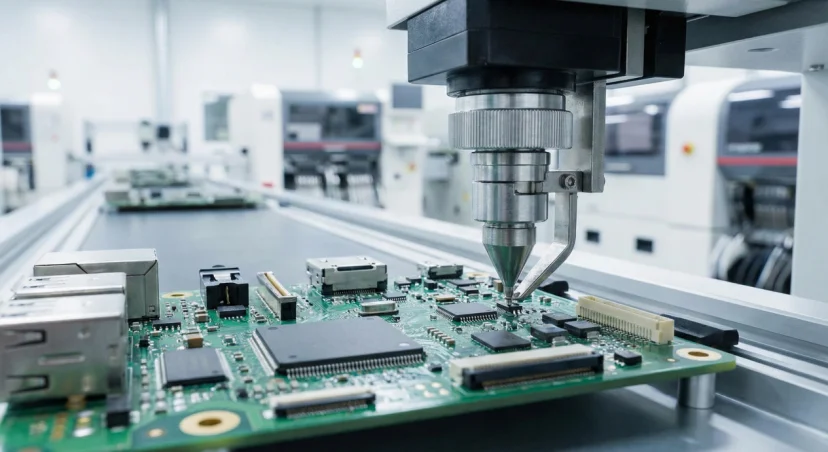
Commercial energy storage is becoming an important tool for businesses seeking better control over electricity use, renewable energy integration, and operational resilience. However, selecting a smart system requires more than comparing battery capacity or purchase prices. We need to consider safety, thermal management, power electronics, monitoring, scalability, compliance, and long-term service. For companies developing connected energy products, choosing the right electronics solutions and manufacturing partner can also determine how reliably the finished system performs in demanding commercial environments.
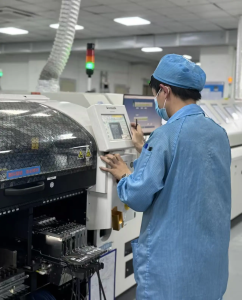
Start with the Actual Commercial Energy Requirement
The first consideration should be the job the storage system must perform. A commercial facility may need energy storage for peak shaving, renewable energy utilization, backup power, load management, or a combination of these functions.
We recommend defining the required power, usable energy, operating profile, charging and discharging cycles, and expected expansion before selecting hardware. A system designed around a clear load profile is more likely to deliver useful performance than one selected simply because it offers a larger nominal battery capacity.
Battery Safety Must Come First
Energy storage systems contain substantial amounts of stored energy, making safety a fundamental design consideration. The U.S. Department of Energy identifies thermal runaway as a key safety concern for lithium-ion batteries because it can result from abuse or manufacturing defects and may lead to fire or explosion if propagation is not controlled.
Commercial buyers should therefore examine battery protection, enclosure design, temperature monitoring, fault detection, and thermal runaway mitigation. Safety should be considered at the cell, module, system, and installation levels rather than treated as a final certification exercise.
Thermal Management Supports Reliable Operation
Temperature can directly affect battery performance, service life, and safety. Commercial systems may operate continuously under demanding charge and discharge conditions, so thermal management needs to be designed around the expected environment and workload.
Effective solutions may combine temperature sensors, controlled airflow, liquid cooling where appropriate, insulation, thermal protection, and intelligent control. The exact approach depends on battery chemistry, system architecture, installation conditions, and power requirements.
For us, this is where well-engineered electronics solutions become particularly valuable. Sensors and control electronics must work together reliably so that the system can monitor operating conditions and respond appropriately when temperatures or other parameters move outside defined limits.
Consider the Battery Management System
The battery management system (BMS) is another critical part of a commercial energy storage platform. It can monitor parameters such as cell voltage and temperature while supporting protection and control functions.
A well-designed BMS should work as part of the broader system rather than operating as an isolated component. Communication with power conversion equipment, energy management systems, monitoring platforms, and other controls may be required depending on the architecture.
When we develop connected hardware, we consider these interactions early. This helps ensure that the electronics architecture can support the required sensing, communication, control, and protection functions without creating unnecessary complexity.
Power Electronics and System Efficiency Matter
A battery cannot deliver commercial value without appropriate power conversion and control. Power electronics determine how stored DC energy interacts with AC loads, renewable generation, or the electrical grid.
Businesses should evaluate conversion efficiency, operating range, response requirements, thermal behavior, and compatibility with the intended electrical infrastructure. Control logic is equally important because the system needs to determine when to charge, discharge, reserve energy, or respond to changing loads.
This combination of hardware and intelligent control demonstrates why commercial energy storage is not simply a battery project. It is a coordinated electronic system requiring careful integration across multiple subsystems.
Design for Monitoring and Remote Management
Smart energy storage should provide meaningful operational data. Commercial operators need visibility into battery condition, energy flows, alarms, system performance, and maintenance requirements.
We leverage remote monitoring to simplify data access and help engineering teams detect abnormal conditions before they escalate into major operational issues. Meanwhile, we design connectivity with robust cybersecurity standards and communication requirements factored in from the start.
We consider connectivity an important part of modern electronics solutions, particularly for energy products that may need to communicate with cloud platforms, industrial controllers, or facility management systems.
Compliance Should Be Planned Early
Compliance requirements vary according to the technology, market, installation environment, and local regulations. For systems entering North American markets, UL Solutions identifies UL 9540 as the foundational product safety standard for energy storage systems and UL 9540A as a test method for evaluating thermal runaway fire propagation.
The 2026 edition of NFPA 855 also places greater emphasis on large-scale fire testing in applicable situations.
For manufacturers, these requirements should influence design decisions before production begins. Early compliance planning can reduce the risk of expensive redesigns, testing delays, or market-entry problems.
Scalability and Manufacturing Readiness
Commercial customers may begin with one deployment and later require substantially greater production volumes. The manufacturing strategy should therefore accommodate changes in demand without compromising consistency.
We believe DFM, component sourcing, prototyping, validation, and production control should be connected from the beginning. Our manufacturing workflow incorporates DFM optimization and trial production before mass manufacturing, helping identify potential production risks earlier.
This approach is particularly relevant when developing specialized energy hardware because small design decisions can affect assembly complexity, yield, cost, and reliability.
Why Turnkey Manufacturing Solutions Can Help
Developing commercial energy storage hardware often requires coordination among electronics engineering, PCB assembly, enclosure production, testing, sourcing, and final assembly. Managing these activities through disconnected suppliers can make technical communication and quality control more difficult.
We provide comprehensive turnkey manufacturing solutions that connect design, engineering, prototyping, manufacturing, assembly, testing, and packaging. Our capabilities include electronics and enclosure design optimization, PCBA manufacturing, and DFM-focused production preparation.
Building Smarter Storage with Minewing
A successful commercial energy storage system needs more than high battery capacity. It requires a coordinated combination of safe battery architecture, thermal management, BMS functionality, power electronics, monitoring, compliance, and manufacturing discipline.
At Minewing, we provide turnkey manufacturing solutions for businesses developing sophisticated electronic products. Our facilities follow ISO 9001:2015 quality management and ISO 14001:2015 environmental management systems. By combining engineering expertise with flexible production, we help customers turn demanding energy-related hardware concepts into reliable, scalable products.