Turning an electronic product from a promising design into a repeatable, commercially viable product requires more than a functioning prototype. New Product Introduction (NPI) creates a structured bridge between engineering and manufacturing, helping teams identify technical, quality, cost, and production risks before volume production begins. For OEMs and product companies, understanding this workflow is essential when evaluating B2B manufacturing partnerships.
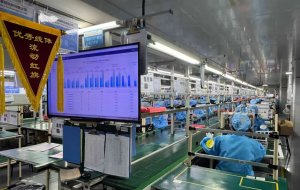
What NPI Means for Electronics Manufacturing
NPI is the controlled transition from product development to manufacturing. Rather than waiting until mass production to discover problems, manufacturers progressively validate the design, materials, processes, tooling, testing, and supply chain.
The workflow commonly includes Engineering Validation Test (EVT), Design Validation Test (DVT), and Production Validation Test (PVT). Each stage answers a different question: does the engineering work, does the finished design meet requirements, and can the factory produce it consistently at scale?
For us, this staged approach is particularly important when supporting customers with customized electronics. As one of the electronic contract manufacturers in China, we provide services spanning idea development, design, prototyping, trial production, and mass production, allowing manufacturing considerations to enter the project before production decisions become costly to modify.
EVT: Validating the Engineering Foundation
EVT is where the product design meets a more production-oriented reality. The objective is to verify core functions and identify engineering problems that could prevent the product from progressing.
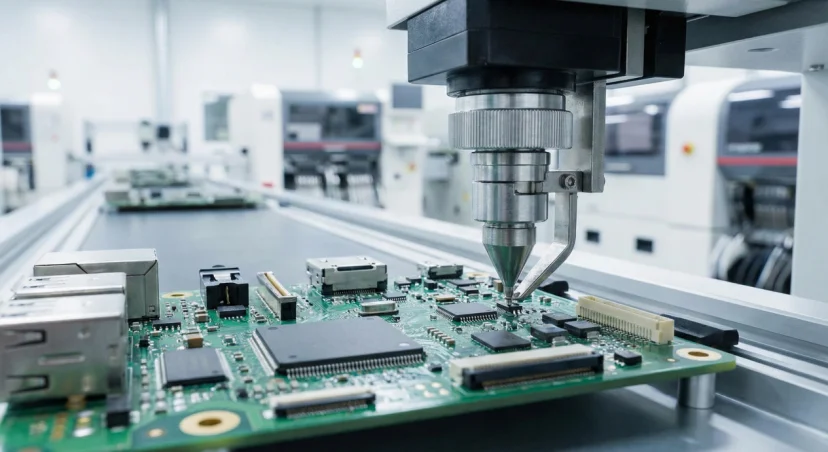
At this stage, we examine factors such as component selection, PCB assembly, electrical performance, mechanical integration, and functional testing. Problems discovered during EVT can then be addressed before the design becomes more difficult or costly to modify.
This is also where close communication between the customer and manufacturer matters. Engineering feedback should not be treated as a final inspection activity. It should influence design decisions while there is still flexibility to make changes.
DVT: Proving the Design Is Ready
Once major engineering issues have been resolved, DVT moves the focus toward comprehensive design validation. Production-intent components, materials, and processes are increasingly important because the goal is to confirm that the product meets its complete specification under expected operating conditions.
For B2B customers, DVT can be a critical decision point. Reliability, environmental performance, functional requirements, and applicable compliance testing may all need consideration before approving the next manufacturing stage.
Our role is to maintain alignment between the customer’s design requirements and manufacturing execution. At Minewing, our capabilities include electronics assembly, testing engineering, documentation control, final integration, and supply chain management, supporting a more coordinated validation process.
DFM Optimization: Designing for Better Production
A strong NPI workflow does not simply reproduce a customer’s prototype. It examines whether the product can be manufactured efficiently and consistently.
Design for Manufacturing (DFM) evaluates design features against actual production capabilities. Simplifying components, improving assembly access, addressing PCB manufacturing constraints, and reducing unnecessary process complexity can improve yield and reduce assembly costs. Academic research also identifies early DFM involvement as a way to reduce development costs and support smoother production transitions.
We apply this principle by combining engineering and manufacturing knowledge during product development. At Minewing, we support PCB manufacturing, mold production, plastic housings, assembly, testing, and other integrated manufacturing activities, giving our teams visibility across multiple production steps.
PVT: Validating the Production System
PVT shifts the question from “Can we build the product?” to “Can we build it repeatedly at the required quality, yield, cost, and production rate?”
The process, tooling, fixtures, operators, inspection methods, and production controls must work together. Any weaknesses discovered here should be addressed before a full production ramp.
This is why we regard trial production as more than a small order. At Minewing, we view trial production as a necessary step for confirming samples and validating production processes before mass production.
Supply Chain Setup: Controlling Production Risk
An NPI workflow also extends beyond the factory floor. Component availability, supplier qualification, lead times, quality consistency, and alternative sourcing can all affect whether a product reaches volume production on schedule.
We therefore treat supply chain preparation as an engineering and project-management activity rather than simply a purchasing task. At Minewing, we maintain a professional electronics component supply chain and sourcing practices designed to preserve component quality, while our integrated manufacturing model connects procurement with assembly, testing, and production management.
For companies searching an ODM manufacturing partner in China, this integrated capability can reduce the number of disconnected handoffs between design, sourcing, engineering, and production.
Why the Right Manufacturing Partner Matters
The effectiveness of NPI depends heavily on collaboration. A manufacturer that only receives finalized files may identify production problems too late. A stronger partner participates earlier, communicates manufacturing risks, and helps turn engineering intent into a repeatable process.
That is the foundation of effective B2B manufacturing partnerships. We work across JDM, OEM, and ODM projects and provide a one-stop path from concept through prototype, trial production, and mass production.
From Validation to Reliable Volume Production
A successful NPI workflow is ultimately about reducing uncertainty before committing to volume. EVT identifies engineering risks, DVT verifies the design, and PVT validates the production system. DFM optimization and supply chain preparation strengthen these stages by addressing cost, yield, sourcing, and scalability earlier.
At Minewing we bring these activities together through integrated electronics manufacturing capabilities and project management. For businesses evaluating a manufacturing agent ODM China option, our approach is designed to bridge the gap between product design and dependable production. We build robust B2B manufacturing partnerships not merely on factory capacity, but also on our capability to resolve issues before they become production challenges.