Quality assurance is not a final inspection step for modern electronics production. For businesses outsourcing hardware development, it is a structured framework that connects design requirements, component control, assembly, testing, documentation, and improvement. We believe an effective electronic manufacturing service should make quality measurable throughout the product lifecycle, giving startups and established brands greater confidence as they move from prototype to commercial production.
Why Quality Assurance Needs a Framework
Electronics projects involve many variables, including component specifications, PCB design, soldering processes, mechanical integration, software or firmware interaction, and supply-chain availability. A quality framework helps us control these variables through defined processes rather than relying on individual judgment.
ISO 9001 provides a useful management foundation because it emphasizes customer focus, process management, risk-based thinking, documented information, performance evaluation, and continual improvement. For an EMS partner, these principles create a repeatable structure for controlling production, measuring results, and addressing problems systematically.
Quality Starts Before Production
Strong quality assurance begins during engineering rather than after assembly. We review product requirements and manufacturing considerations at an early stage to identify potential issues before they turn into costly production problems.
Design for manufacturability is especially important when a project moves from prototype to mass production. We evaluate component selection, PCB layout, mechanical structures, assembly requirements, and production methods. This collaboration can reduce avoidable variation and create a smoother transition into new product introduction and volume manufacturing.
Controlling Components and Incoming Materials
A finished electronic product can only be as reliable as the materials entering the production process. For this reason, we treat supplier and component control as an important part of the quality framework.
We verify purchased components against approved requirements and manage material information throughout production. Traceability is also valuable because it helps manufacturers investigate quality issues efficiently. When a deviation occurs, clear records can help us determine what material, process, or production condition may have contributed to it.
Applying Process Controls to Assembly
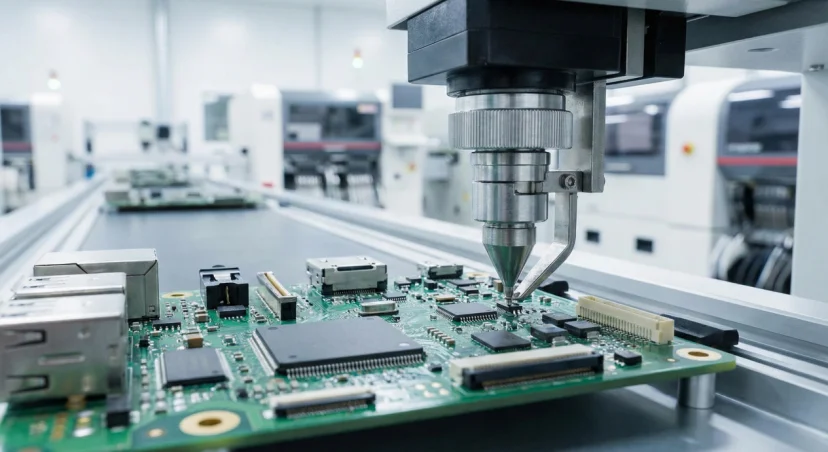
Assembly quality depends on consistent processes, appropriate equipment, trained personnel, and clearly defined acceptance criteria. IPC standards are widely used within the electronics industry to establish requirements for soldered assemblies and post-assembly acceptance.
IPC J-STD-001J addresses materials, methods, and requirements for soldered electrical and electronic assemblies, while IPC-A-610J provides visual acceptance criteria for electronic assemblies. We can use applicable industry standards together with customer specifications to establish practical inspection and process-control requirements for each project.
Testing and Inspection Across Multiple Stages
Inspection should not be concentrated at the end of the production line. A layered approach allows us to detect problems earlier, reducing the chance that defects move into later stages.
Depending on product requirements, quality controls may include inspection of incoming materials, assembly-process checks, automated inspection, functional testing, and final verification. We determine the combination based on product complexity, risk, customer requirements, and production stage rather than applying one checklist to every project.
Using Data to Drive Continuous Improvement
Quality assurance becomes more effective when production decisions are supported by evidence. We monitor process results and investigate recurring defects, yield changes, customer feedback, and other relevant performance indicators.
When a problem is identified, corrective action should address its underlying cause rather than simply removing the affected unit. Root-cause analysis, corrective measures, verification, and follow-up help prevent recurrence. This approach turns quality data into practical improvements in engineering, sourcing, assembly, and testing.
How Minewing Applies Quality Across the Product Lifecycle
At Minewing, we combine engineering and manufacturing support so quality considerations remain connected from early development through mass production. We support startups and global brands from initial prototyping to volume manufacturing, providing integrated electronics manufacturing services.
Our capabilities cover electronics and enclosure design optimization, rapid prototyping, trial production, PCBA manufacturing, assembly, testing, packaging, and global delivery. We also maintain ISO 9001:2015 quality management and ISO 14001:2015 environmental management certifications, supporting a structured approach to manufacturing and operational control.
Our background also contributes to this integrated model. Minewing initially focused on specialized mold design and precision tooling, building experience in complex hardware structures and mechanical engineering. We later expanded into high-density PCBA manufacturing and broader electronics production, bringing mechanical and electronic quality considerations into one manufacturing workflow.
Building a Reliable Business Manufacturing Partnership
For business buyers, quality assurance is closely connected with business continuity. Consistent products can reduce rework, returns, production interruptions, and uncertainty during scaling. A capable manufacturing partner should therefore provide more than assembly capacity. At Minewing, we should provide transparent processes, engineering communication, documented controls, and a clear path for resolving issues.
The strongest framework is also flexible enough to reflect the product. A startup developing an early IoT device may need rapid iteration and prototype verification, while an established brand may prioritize repeatability, supply-chain control, and high-volume consistency. We adapt our manufacturing support to the project’s maturity, technical requirements, and commercial goals.
Creating Quality That Scales With the Product
A dependable quality assurance framework connects people, processes, standards, materials, equipment, and data into one controlled system. Rather than treating quality as an inspection performed at the end, we integrate it into design review, sourcing, production, testing, and continuous improvement.
As Minewing, we aim to give our partners a reliable route from concept to production through flexible, end-to-end support. By combining engineering experience, manufacturing capabilities, structured quality management, and responsive collaboration, we help businesses develop electronic products that can move toward scale with greater consistency and confidence.