A working prototype proves that an electronic concept can function, but it does not automatically mean the product is ready for commercial manufacturing. Moving from prototype to production requires engineering validation, design optimization, supply-chain preparation, and process control. For businesses developing connected devices, industrial electronics, or other hardware, understanding how to go from prototype to production can reduce manufacturing risks while creating a more predictable path toward market launch.

Why the Prototype Is Only the Beginning
Electronic prototyping gives engineering teams an opportunity to verify whether a design performs according to its intended requirements. It can reveal problems with component selection, PCB layout, mechanical integration, thermal behavior, assembly, or user interaction before significant production resources are committed.
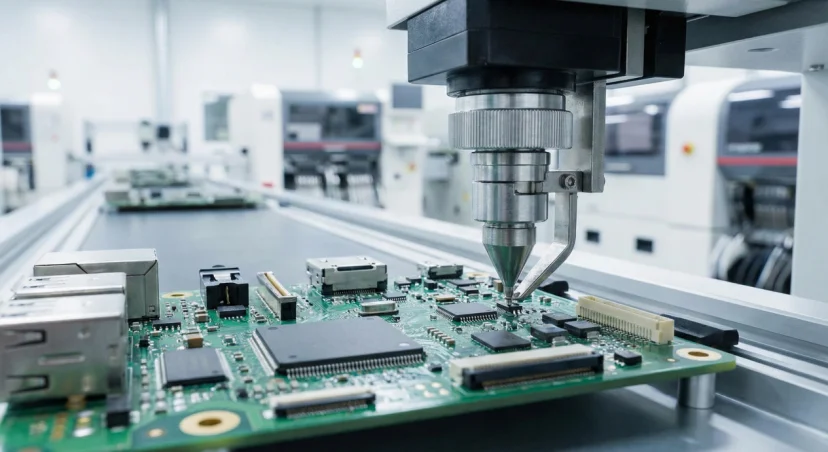
However, a prototype is generally produced in a different environment from volume manufacturing. Engineers may assemble limited quantities using processes that are practical for testing but unsuitable or inefficient at scale. Consequently, a successful prototype still needs to undergo engineering and manufacturing preparation before commercial production.
The objective is not simply to reproduce the prototype thousands of times. The objective is to create a repeatable manufacturing process that can consistently produce the required product quality at an acceptable cost.
How to Go From Prototype to Production Efficiently
The transition normally involves several interconnected stages. First, the product design should be reviewed for manufacturability. Design for Manufacturing (DFM) can identify features that increase assembly complexity, create unnecessary material costs, or reduce production efficiency.
Next, companies can conduct trial production to evaluate whether the manufacturing process works consistently with a small batch. This stage provides an opportunity to identify process issues and refine assembly procedures before larger production commitments are made.
At Minewing, we structure our development process around this transition. Our services cover engineering and design, rapid prototyping, trial production, and mass production. During the New Product Introduction (NPI) phase, we use small testing batches to validate production readiness and apply DFM optimization to improve yield and reduce assembly costs.
Better Manufacturing Consistency
One of the most important benefits of moving beyond electronic prototyping is improved production consistency. A prototype can demonstrate functionality, but commercial customers need every production unit to meet defined specifications.
Production preparation establishes standardized assembly methods, inspection procedures, testing requirements, component specifications, and quality controls. These controls make it easier to identify deviations and maintain consistency as production volumes increase.
This is particularly important for products containing multiple electronic and mechanical components. A minor variation that has little effect on one prototype can become a significant quality issue when repeated across hundreds or thousands of units.
Lower Costs Through Design Optimization
Moving toward production also provides an opportunity to control the product’s cost structure. Manufacturing engineers can review the bill of materials, component availability, PCB design, enclosure construction, assembly sequence, and tooling requirements.
These decisions can have a substantial effect on unit economics. A design that works perfectly as a prototype may still contain unnecessary manufacturing complexity. Optimizing the design before volume production can reduce material waste, assembly time, and avoidable production costs.
Our approach at Minewing combines electronics and enclosure design optimization with manufacturing preparation. We work to balance product functionality with manufacturability, quality, and cost rather than treating design and production as completely separate activities.
Stronger Supply Chain Readiness
We know prototype quantities are relatively small, so component sourcing for prototypes can differ greatly from sourcing for commercial production. When demand rises, component availability, lead times, supplier reliability and approved alternatives become far more critical.
A production-ready project therefore needs a more structured supply-chain strategy. Key components should be reviewed for availability, specifications, sourcing reliability, and potential substitutions. Establishing these controls early can reduce the risk of production interruptions after a product enters the market.
At Minewing, we incorporate supply-chain preparation into our trial-production process. Our manufacturing workflow includes sourcing and validating key components before moving toward volume production, helping connect engineering decisions with practical manufacturing requirements.
Faster and More Predictable Market Launches
A structured transition from prototype to production can also improve launch predictability. Instead of discovering manufacturing problems after placing a large order, companies can identify and resolve issues during engineering validation and trial production.
This approach is particularly valuable for businesses working against fixed launch windows. Resolving a PCB issue, tooling problem, component shortage, or assembly challenge after mass production has started can cause substantially more disruption than addressing it during NPI.
An experienced manufacturing partner can coordinate these activities across engineering, sourcing, quality, and production teams. This reduces communication gaps and creates a clearer route from a validated prototype to a repeatable commercial process.
Build a Scalable Manufacturing Foundation
The ultimate benefit of moving from prototype to production is scalability. A product should not only work today; its manufacturing process should support future demand.
At Minewing, we provide full-cycle electronics manufacturing solutions covering concept development, engineering, rapid prototyping, trial production, mass production, assembly, testing, and packaging. We support projects from individual prototypes and low-volume trials to larger production requirements without a strict MOQ, giving growing businesses room to scale.
Turning a Working Prototype Into a Market-Ready Product
Understanding how to go from prototype to production means recognizing that manufacturing readiness is a separate milestone from functional validation. Electronic prototyping establishes whether the concept works; NPI, DFM, trial production, supply-chain preparation, and quality controls determine whether it can be manufactured reliably.
We believe an integrated manufacturing approach makes this transition more manageable. By connecting engineering, prototyping, production preparation, and volume manufacturing, at Minewing, we help businesses turn validated concepts into scalable products. Our full-cycle electronics manufacturing solutions are designed to provide the continuity needed from the first prototype through commercial production.