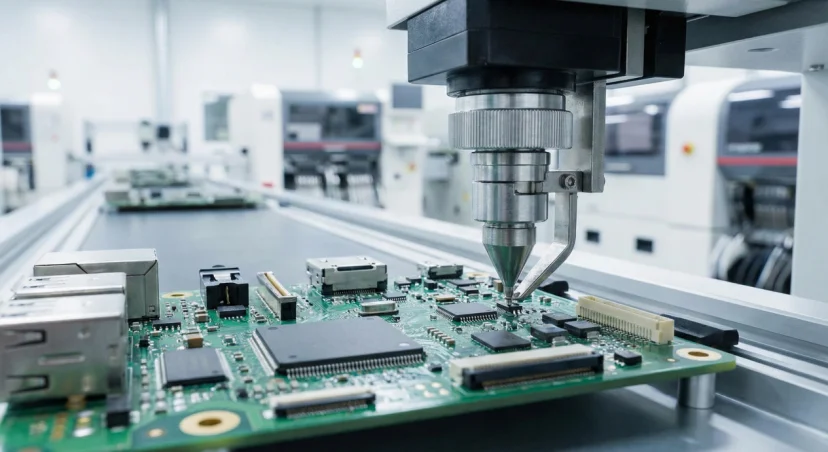
Connected devices are expected to remain functional, secure, and compatible long after they reach customers. As the Internet of Things (IoT) expands across homes, industries, and commercial environments, firmware maintenance has become an essential part of product design. Over-the-air (OTA) updates allow manufacturers to deliver firmware improvements remotely without requiring users to access devices physically. However, this capability depends on hardware and software decisions made much earlier in development.
For businesses developing connected products, OTA functionality should not be treated as an optional feature added before launch. It influences processor selection, memory capacity, communication modules, power management, and security architecture. During IoT device development, planning these requirements early helps reduce redesign risks and supports long-term product maintenance. We consider update capability an important part of building reliable, production-ready electronics.
Understanding OTA Firmware Updates in IoT Products
OTA firmware updates enable devices to receive and install software or firmware packages through wireless connections. Depending on the product architecture, updates may be delivered through Wi-Fi, cellular networks, Bluetooth gateways, or other communication technologies.
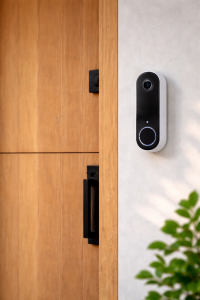
For a smart doorbell, OTA functionality can improve motion detection, optimize camera performance, refine two-way audio, and address software vulnerabilities. Manufacturers can also correct operational issues without asking homeowners to remove the device or arrange technical support visits.
Industrial sensors, smart appliances, and connected controllers benefit from similar capabilities. Remote updates can help maintain compatibility, improve device performance, and extend product usefulness. For manufacturers, this reduces dependence on physical servicing while creating opportunities for continuous product improvement.
Why OTA Planning Should Begin During Hardware Design
Selecting Hardware with Sufficient Resources
Firmware updates require appropriate processing and storage capabilities. A device needs enough memory to receive update packages, verify their integrity, and install new firmware safely. Some architectures also require additional storage to retain the existing firmware while preparing a replacement version.
Engineers should evaluate flash memory, RAM, processor performance, and available storage interfaces during the initial design stage. Selecting components based only on current functionality may create limitations when future firmware becomes larger or more complex.
For businesses investing in IoT device development, early hardware planning provides greater flexibility for software expansion. It can also prevent expensive PCB revisions when additional memory or processing resources become necessary.
Designing Reliable Wireless Connectivity
An OTA update is only as dependable as the communication connection supporting it. Devices deployed in residential buildings, factories, or outdoor environments may experience unstable signals, interference, or temporary network interruptions.
Hardware engineers should consider antenna placement, wireless module selection, signal performance, and power consumption together. For example, a smart doorbell must maintain reliable Wi-Fi communication while fitting its camera, microphone, speaker, and other electronic components into a compact enclosure.
During electronic prototype manufacturing, testing different antenna positions and communication configurations can reveal connectivity limitations before production. These evaluations help engineering teams identify practical improvements without relying entirely on theoretical specifications.
Providing Sufficient Power Management
Firmware installation can require more power than ordinary standby operation. If a battery-powered device loses power during an update, the installation may fail and potentially affect normal operation.
Engineers should therefore evaluate battery capacity, voltage stability, charging arrangements, and power consumption throughout the update process. For products such as smart doorbells, update scheduling can also be coordinated with battery conditions and device activity to reduce operational disruption.
Power management should be considered alongside firmware architecture rather than treated as an independent hardware requirement.
Security and Reliability Considerations for OTA Implementation
Remote firmware access creates important security responsibilities. Manufacturers must ensure that update packages come from trusted sources and cannot be modified by unauthorized parties.
Digital signatures, encryption, secure boot, and firmware authentication can help protect devices against malicious software. Engineers should also consider device identity management and secure communication between connected products and update servers.
Another important consideration is recovery. If an update fails because of network interruption, corrupted data, or unexpected power loss, the device should have a defined recovery mechanism. Depending on the architecture, this may involve dual firmware partitions, rollback functionality, or a protected recovery image.
These requirements should influence memory architecture, bootloader design, and hardware resource allocation during early development. Adding them after the PCB and firmware architecture are finalized may introduce avoidable complexity.
How Prototyping Helps Validate OTA Functionality
Prototyping provides an opportunity to evaluate whether hardware and firmware work together under realistic conditions. Instead of checking only whether a device powers on and performs its primary function, engineering teams should test its complete update workflow.
During electronic prototype manufacturing, teams can evaluate wireless stability, firmware transfer speed, memory allocation, installation behavior, and recovery procedures. Testing should include interrupted downloads, weak network conditions, unexpected restarts, and unsuccessful firmware verification.
For a smart doorbell project, these checks can be combined with camera performance, motion detection, audio communication, and mobile application synchronization. We supported the development of a smart doorbell solution by coordinating compact hardware integration, outdoor-ready structural design, low-power optimization, wireless connectivity, and manufacturing preparation.
This type of integrated development demonstrates why OTA requirements should be considered alongside the device’s other functional and structural needs.
Integrating OTA Requirements into the Manufacturing Process
A production-ready OTA-enabled device requires coordination across electronic engineering, firmware development, testing, and manufacturing. Design for manufacturability (DFM) helps ensure that the PCB layout, component placement, and assembly structure remain suitable for repeatable production.
Manufacturers should also establish firmware programming and verification procedures. Each production unit may need an initial firmware installation, device identification, connectivity checks, and functional testing before shipment.
At Minewing, we provide integrated electronic design and manufacturing support, connecting engineering development with prototyping, DFM, testing, and mass production preparation. Our approach helps businesses evaluate hardware requirements as part of the broader product development process.
For companies seeking reliable IoT device development, this coordination can make it easier to address update-related requirements before manufacturing begins. It also creates a more consistent foundation for future product revisions and maintenance.
Building Connected Products for Long-Term Performance
OTA functionality is no longer simply a convenient addition to connected electronics. It is an important capability that influences product architecture, security, power management, and manufacturing decisions. Businesses that plan for remote firmware maintenance early can reduce redesign risks and prepare their devices for longer service lifecycles.
By combining careful hardware planning, structured validation, and coordinated electronic prototype manufacturing, we help businesses establish a stronger foundation for connected products. At Minewing, we recognize that successful IoT device development must consider not only how a product performs at launch, but also how it can remain secure, adaptable, and reliable throughout its operational life.