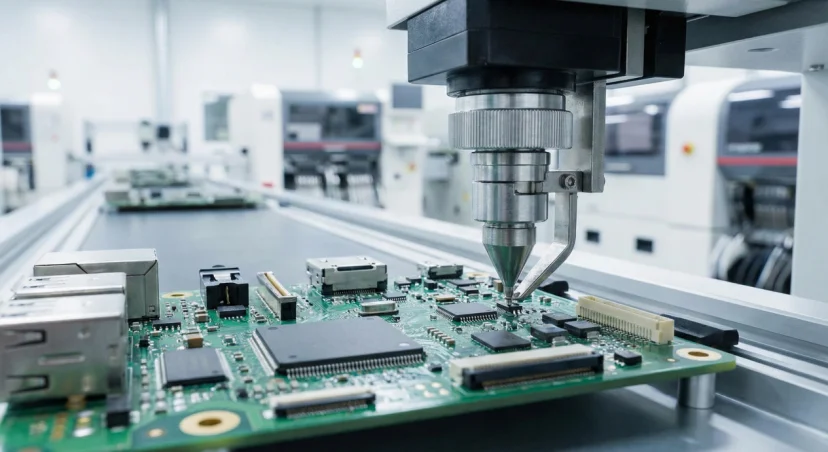
Obtaining an accurate printed circuit board assembly (PCBA) price is an important step in planning electronic product development and manufacturing. However, a quotation is only as reliable as the technical and commercial information provided to the manufacturer. Missing component details, incomplete design files, unclear production quantities, or undefined testing requirements can lead to pricing assumptions, repeated clarification, and unexpected cost changes later.
For businesses sourcing electronic manufacturing services, preparing a complete PCB assembly quote request helps shorten the evaluation process and improves cost transparency. It also gives manufacturers a clearer understanding of project complexity, production expectations, and potential engineering challenges. At Minewing, we work with businesses across different development stages, helping connect engineering requirements with practical manufacturing and cost optimization.

Prepare Complete PCB Design Files
The first step toward an accurate quotation is providing the correct design documentation. Manufacturers generally need Gerber files or other accepted PCB fabrication data to understand the board’s physical structure, copper layers, dimensions, drilling requirements, and surface finish.
The bill of materials (BOM) is equally important. It should identify every component by reference designator, manufacturer part number, description, package, and required quantity. Providing exact part numbers reduces uncertainty during component sourcing and helps manufacturers evaluate availability and pricing.
Centroid files, also called pick-and-place files, provide component coordinates and rotation information for automated assembly. Together, these documents allow the manufacturer to assess board complexity, assembly requirements, and material costs.
Before requesting a PCB assembly quote, check that all files correspond to the same design revision. Inconsistent documentation can create unnecessary clarification and increase the risk of quoting an outdated configuration.
Specify Production Quantity and Order Expectations
Production volume directly affects manufacturing economics. Prototype quantities, small batches, and mass production require different purchasing and assembly arrangements. A manufacturer may need to use different sourcing channels or production processes depending on the expected order size.
When requesting pricing, specify both the immediate quantity and anticipated future demand. For example, a company may initially require 100 assembled boards for product validation but expect monthly orders of several thousand units after launch.
Providing this information allows manufacturers to evaluate material purchasing, production scheduling, setup costs, and potential volume discounts. It also helps establish whether the quotation should cover a single batch or a longer-term supply arrangement.
For companies developing B2B manufacturing partnerships, communicating demand forecasts early can support more practical production planning and improve cost discussions.
Clarify Component Sourcing Requirements
Component sourcing can significantly influence the final assembly price. Identical electronic functions may be available from different manufacturers, but prices, lead times, minimum order quantities, and availability can vary.
Businesses should clarify whether they require original manufacturer components, approved alternatives, or manufacturer-managed sourcing. If certain components must come from specific suppliers, these restrictions should be stated before quotation.
It is also useful to identify obsolete, end-of-life, or long-lead-time components. Such parts may affect production schedules and require alternative sourcing strategies. Manufacturers can then evaluate possible substitutions while maintaining the required electrical and functional characteristics.
At Minewing, we consider component sourcing an important part of manufacturing preparation. Our engineering and procurement coordination helps businesses assess sourcing considerations alongside design requirements rather than treating material costs as an isolated issue.
Define PCB Assembly and Quality Requirements
Not all PCB assembly projects involve the same manufacturing processes. Board complexity, component density, package types, and soldering requirements can influence production time and equipment selection.
A quotation request should specify whether the board requires surface-mount technology (SMT), through-hole technology (THT), or mixed assembly. Details about fine-pitch components, ball grid arrays (BGAs), double-sided assembly, and special soldering requirements are also useful.
Quality expectations should be equally clear. Depending on the application, businesses may require automated optical inspection (AOI), X-ray inspection, in-circuit testing (ICT), or functional testing.
If the product serves an industry with specific regulatory or reliability requirements, communicate those expectations at the beginning. Clear inspection criteria help manufacturers estimate the necessary equipment, labor, and validation procedures.
Include DFM Requirements and Engineering Support
A design that works electrically may still present manufacturing difficulties. Component spacing, pad dimensions, solder mask openings, panelization, and thermal considerations can affect assembly efficiency and yield.
Design for manufacturability (DFM) reviews help identify these issues before production. Manufacturers can recommend layout adjustments, component alternatives, or process improvements that reduce unnecessary costs without compromising essential product functions.
When submitting files, indicate whether the design has already undergone DFM review or whether engineering assistance is required. This distinction helps prevent differences between the expected quotation scope and the actual services needed.
We provide PCBA layout support, firmware-related engineering services, DFM cost optimization, and rapid prototyping, including a 48-hour rapid prototyping capability. These services help clients evaluate technical feasibility and refine designs before committing to larger production volumes.
Explain Packaging, Delivery, and Commercial Expectations
Manufacturing costs do not end when the assembled boards pass inspection. Packaging, labeling, shipping, and delivery arrangements can also influence the total project budget.
Specify whether boards should be supplied individually, in panels, or in protective packaging. If moisture-sensitive components are involved, indicate any applicable handling and packaging requirements. Businesses should also provide the delivery destination and preferred shipping arrangements so transportation costs can be estimated appropriately.
Commercial details deserve attention as well. Clarify whether the quotation should include PCB fabrication, component procurement, assembly, testing, and packaging or cover assembly only. Defining the scope prevents different manufacturers from quoting different service combinations.
These details are particularly important when establishing B2B manufacturing partnerships because long-term cooperation depends on transparent responsibilities, predictable costs, and consistent delivery expectations.
Compare Quotations Beyond the Unit Price
The lowest quoted price does not always represent the most economical manufacturing option. Businesses should examine what each supplier includes in its quotation, including component sourcing, engineering review, inspection, testing, packaging, and logistics.
Lead times, payment terms, production capacity, communication efficiency, and quality management procedures also deserve consideration. A supplier with a slightly higher unit price may offer better value through more reliable sourcing or fewer production disruptions.
A detailed PCB assembly quote should make it possible to understand the relationship between material costs, assembly charges, engineering services, and additional expenses. Request clarification whenever a quotation contains assumptions or excludes important project requirements.
At Minewing, we aim to connect engineering excellence with dependable manufacturing execution, supporting customers from initial schematic design through high-precision production.
Build Better Manufacturing Decisions Through Clear Quotation Requests
Accurate electronic manufacturing pricing starts with clear communication. Complete design files, a detailed BOM, realistic production forecasts, component sourcing preferences, quality requirements, and delivery expectations give manufacturers the information needed to prepare meaningful quotations.
A well-prepared PCB assembly quote also creates a stronger foundation for evaluating technical capabilities and production costs. By sharing requirements early and working with experienced partners, businesses can reduce unnecessary revisions, improve cost visibility, and establish more effective B2B manufacturing partnerships. At Minewing, we support this process through integrated engineering, prototyping, DFM optimization, and scalable manufacturing services.