Choosing a manufacturing partner in China can create valuable opportunities for businesses seeking competitive production costs, engineering expertise, and scalable supply chains. However, selecting a factory based only on quotations or product samples can expose buyers to unexpected risks. A supplier may demonstrate strong assembly capabilities but lack the engineering resources, quality systems, or production flexibility required for a long-term partnership.
Before signing a manufacturing agreement, buyers should evaluate the supplier’s technical resources, production processes, quality management, communication practices, and capacity. A structured assessment helps businesses distinguish reliable partners from suppliers whose actual capabilities may not match their proposals.
Evaluate Engineering and Product Development Capabilities
A capable manufacturing partner should understand more than how to assemble finished products. For electronic projects, buyers should examine whether the factory can support PCB design, PCBA development, component selection, mechanical engineering, and product optimization.
These services become particularly important when a product is still undergoing development. Engineering teams should be able to review technical drawings, identify design problems, recommend suitable components, and assess whether the product can be manufactured consistently.
When comparing China electronics manufacturers, ask for examples of projects involving similar technologies, product structures, or production requirements. Discuss how the supplier handles design revisions and engineering validation. This helps determine whether its technical team can contribute to product development rather than simply follow assembly instructions.
Inspect Production Equipment and Manufacturing Processes
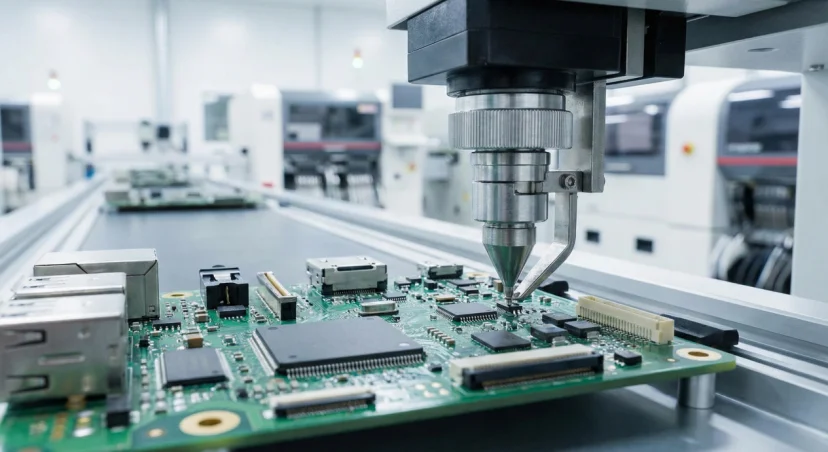
Production equipment provides useful evidence of a factory’s operational readiness. Depending on the product, relevant resources may include SMT lines, PCB assembly equipment, precision machining facilities, injection molding machines, automated testing systems, and packaging equipment.
However, equipment ownership alone does not guarantee production quality. Buyers should also understand how machines are maintained, how production parameters are controlled, and how operators verify process consistency.
Ask suppliers to explain their production workflows from incoming material inspection to final packaging. If possible, arrange a factory audit or request a virtual production tour. Reviewing actual processes can reveal whether the factory has sufficient resources to meet the project’s technical and delivery requirements.
Check Quality Management and Testing Procedures
Quality control should be integrated into every manufacturing stage rather than treated as a final inspection activity. A reliable factory should have documented procedures for incoming quality control, in-process inspection, and outgoing quality assurance.
For electronic products, testing requirements may include electrical performance checks, functional testing, visual inspection, solder joint evaluation, and environmental testing when relevant. Mechanical components may require dimensional verification, material checks, and structural assessments.
Buyers should ask about defect classification, corrective actions, traceability, and inspection records. They should also confirm whether the supplier follows recognized quality management standards, such as ISO 9001, and request valid documentation where applicable.
Among different manufacturing capabilities, the ability to identify problems, document their causes, and implement corrective measures is especially important. Consistent quality depends on repeatable processes, not simply the final inspection of individual products.
Assess Production Capacity and Order Flexibility
A factory’s production capacity should match both current requirements and potential future demand. Buyers should investigate available production lines, workforce arrangements, equipment utilization, component sourcing resources, and typical lead times.
It is equally important to understand how suppliers manage changes in order volume. A factory that handles large orders efficiently may not necessarily accommodate small prototype batches or frequent engineering revisions.
Startups and businesses testing new products should discuss minimum order quantities, prototype arrangements, and customized production schedules. Flexible cooperation can reduce the financial pressure of entering a new market.
When evaluating manufacturing capabilities, buyers should distinguish between theoretical maximum capacity and realistically available production capacity. Ask how the factory manages overlapping customer orders, seasonal demand, and urgent production requirements. These discussions help establish more realistic delivery expectations.
Review Supply Chain Management and Material Sourcing
Even a technically capable factory can experience production delays when critical components are unavailable. Electronic manufacturing often involves multiple suppliers, including semiconductor distributors, PCB manufacturers, connector providers, and enclosure material suppliers.
Buyers should understand how the factory qualifies suppliers, verifies component authenticity, manages inventory, and handles material shortages. Ask whether alternative components can be proposed and what approval procedures apply before substitutions are made.
For China electronics manufacturers serving international markets, supply chain transparency is particularly valuable. Buyers should establish expectations for material traceability, purchasing documentation, and communication about sourcing risks.
It is also worth checking whether the factory has contingency plans for discontinued components, fluctuating material prices, and extended supplier lead times. These measures can help protect production schedules when market conditions change.
Verify Communication, Documentation, and Delivery Management
A manufacturing partnership involves continuous coordination. Technical specifications, design changes, inspection results, and delivery schedules must be communicated accurately between both parties.
Before signing an agreement, identify the primary project contact and clarify how technical questions and production issues will be escalated. Evaluate whether the supplier provides clear quotations, project schedules, engineering documentation, and regular progress updates.
Contracts should define product specifications, quality acceptance criteria, delivery responsibilities, payment terms, intellectual property protection, and procedures for handling defective products. Buyers should also clarify responsibilities for export documentation and shipping arrangements.
Clear communication is one of the practical manufacturing capabilities that can prevent small misunderstandings from becoming expensive production problems.
Consider End-to-End Manufacturing Support
Working with multiple suppliers can increase coordination requirements, particularly when electronic design, PCB assembly, enclosure production, testing, and packaging are handled separately. An integrated manufacturing partner may simplify project management by connecting these activities within a coordinated workflow.
At Minewing, we provide end-to-end electronic design and manufacturing services, covering PCB design and assembly, enclosure production, testing, and packaging. We also optimize electronic and mechanical designs for cost, manufacturability, and quality.
Our flexible cooperation models support projects from prototyping to mass production, without fixed MOQ requirements. This approach allows startups and established businesses to discuss production arrangements according to their development stages and actual needs.
Build a Stronger Foundation Before Signing
Selecting a factory requires more than comparing prices and production promises. Buyers should verify engineering expertise, equipment, quality management, sourcing practices, production flexibility, and communication procedures before making a commitment.
A detailed evaluation of manufacturing capabilities can help businesses reduce supplier risks and establish realistic expectations for long-term cooperation. By examining these factors early, companies can make more informed decisions when comparing China electronics manufacturers. At Minewing, we support businesses with integrated design and production services, helping turn electronic product concepts into manufacturable solutions.