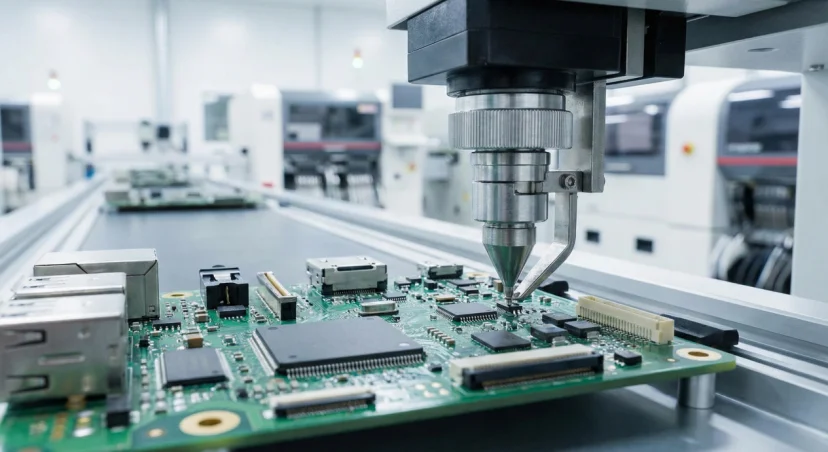
For hardware startups, product developers, and established electronics businesses, ordering printed circuit boards in small quantities is often necessary during prototyping, product validation, and early market entry. However, a low volume PCB orders quote may appear surprisingly high compared with the unit prices offered for large production runs. This difference is not necessarily caused by higher material prices alone. Setup expenses, engineering preparation, procurement limitations, and manufacturing efficiency all influence the final cost.
Understanding these factors helps businesses make better purchasing decisions without compromising PCB quality or product reliability. Through effective design optimization and B2B manufacturing partnerships, companies can reduce unnecessary expenses while maintaining the flexibility needed for small-scale electronics development.
Why Small-Batch PCB Manufacturing Costs More
PCB manufacturing involves several preparation activities regardless of order quantity. Before production begins, manufacturers must review design files, prepare tooling, configure equipment, and establish suitable production parameters. These activities create fixed costs that are distributed across the ordered boards.
For large orders, these expenses are spread across thousands of units. Small batches have fewer boards over which to distribute the same preparation costs, resulting in a higher unit price.
Material procurement is another important factor. Manufacturers typically purchase copper-clad laminates, solder masks, surface finishes, and other materials in standardized quantities. A small order may not use an entire material sheet, but the manufacturer still needs to account for material allocation and processing expenses.
Production scheduling also affects pricing. Small orders may need to fit between larger manufacturing jobs, while frequent product changes can require additional setup time. Consequently, a low volume PCB orders quote reflects both direct production expenses and the operational resources required to complete the order.
Key Factors That Influence a PCB Quote
Businesses should understand the main cost drivers before requesting quotations from manufacturers.
Board dimensions and layer count: Larger boards consume more raw material, while multilayer designs require additional lamination and processing steps. A four-layer PCB generally involves more manufacturing work than a comparable two-layer design.
Material selection: Standard FR-4 materials are commonly used for general electronics applications. Specialized materials for high-frequency, high-temperature, or demanding electrical environments can increase costs.
Surface finish and specifications: Options such as ENIG, immersion silver, and lead-free HASL have different processing requirements and pricing structures. Tight tolerances and specialized via structures may also increase manufacturing complexity.
Order quantity and delivery schedule: Very small quantities often have higher unit costs. Urgent production schedules may introduce additional charges because manufacturers need to adjust their production priorities.
Understanding these variables allows purchasing teams to evaluate quotations more accurately instead of comparing prices without considering technical differences.
DFM Cost Optimization: Reduce Expenses Before Production
Design for Manufacturing (DFM) is one of the most effective ways to control small-batch PCB costs. Rather than modifying the design after receiving an expensive quotation, businesses can identify potential manufacturing inefficiencies during the engineering stage.
For example, engineers can review whether the selected board dimensions make efficient use of standard production panels. Optimizing panel utilization can reduce material waste and improve manufacturing efficiency.
Designers should also avoid unnecessary complexity. Excessive layer counts, unusually small drill sizes, complicated via structures, and overly tight tolerances can increase processing costs. Where electrical performance permits, simplifying these specifications can make the design more economical.
At Minewing, we provide engineering and R&D support covering PCBA layout, firmware, and DFM cost optimization. We can help businesses review design requirements and identify practical improvements before production. Our rapid prototyping service, with a stated 48-hour turnaround, also supports faster design evaluation and iteration.
However, cost optimization should never override essential electrical, thermal, or mechanical requirements. Every proposed change needs appropriate engineering verification.
Work With Suppliers Through Better B2B Manufacturing Partnerships
Choosing a manufacturing partner involves more than finding the lowest initial quotation. Reliable B2B manufacturing partnerships can help businesses improve cost visibility, coordinate engineering activities, and establish more predictable production processes.
An experienced partner can review PCB files, identify specification-related cost drivers, and recommend suitable material or process alternatives. This early technical communication reduces the possibility of repeated quotations and unexpected changes after production preparation begins.
Businesses should also evaluate supplier capabilities, quality management procedures, communication efficiency, and production flexibility. A manufacturer that can support both prototyping and later production stages may offer greater long-term value than a supplier focused exclusively on low-cost prototype orders.
When discussing a low volume PCB orders quote, purchasing teams should provide complete Gerber files, drill files, board specifications, surface finish requirements, and quantity information. Clear documentation allows manufacturers to prepare more accurate quotations and reduces misunderstandings during production.
Practical Ways to Lower Small-Batch PCB Costs
Several purchasing and engineering strategies can help reduce expenses without affecting product functionality.
First, standardize board specifications across related product models wherever possible. Reusing suitable materials, thicknesses, and manufacturing processes can simplify procurement and production planning.
Second, consider combining compatible orders. If several PCB designs share similar material requirements and production specifications, manufacturers may be able to improve material utilization or scheduling efficiency. The actual savings depend on production compatibility and supplier capabilities.
Third, plan prototype quantities carefully. Ordering too few boards may lead to repeated setup expenses, while ordering excessive quantities can create unnecessary inventory and increase the risk of holding outdated revisions.
Finally, compare quotations using the same technical requirements. A cheaper offer may exclude testing, inspection, or certain finishing processes. Evaluating the complete scope provides a more realistic understanding of total manufacturing costs.
These practices can also strengthen B2B manufacturing partnerships by creating clearer expectations and more efficient cooperation between engineering, procurement, and production teams.
Preparing for Scalable PCB Production
Small-batch manufacturing is often an early stage in a larger product development journey. Businesses should therefore consider whether their initial PCB design can support future production volumes without requiring substantial redesign.
Documentation, component availability, test procedures, and manufacturing consistency all influence the transition from prototypes to commercial production. Establishing these requirements early can reduce engineering changes and improve production readiness.
At Minewing, we connect engineering and manufacturing activities to support businesses throughout electronic product development. By combining PCB design, firmware support, DFM optimization, and rapid prototyping, we help customers address technical and manufacturing considerations before scaling their products.
Building Better Value Beyond the Initial PCB Quote
A higher small-batch PCB price does not necessarily indicate an inefficient manufacturer. It often reflects fixed setup expenses, material constraints, engineering complexity, and production scheduling requirements.
Businesses can manage these costs through simplified designs, careful order planning, complete technical documentation, and reliable supplier cooperation. More importantly, strong B2B manufacturing partnerships help companies evaluate cost and quality together rather than focusing exclusively on the lowest unit price. With the right engineering preparation and manufacturing strategy, small PCB orders can become a more manageable foundation for future commercial growth.