Modern electronics production is becoming more data-intensive as products become smaller, more connected, and more complex. For us as manufacturers, improving yield is no longer only about inspecting finished boards and correcting defects after they occur. Artificial intelligence (AI) can help us analyze production data, identify abnormal patterns, predict equipment problems, and support faster process decisions.
For businesses outsourcing production, choosing an electronic manufacturing service provider with the right engineering and data capabilities can therefore become an important part of improving manufacturing performance.

Why Yield Matters in Electronics Manufacturing
Yield refers broadly to the proportion of products that meet defined requirements without requiring rejection or rework. A low yield can increase material consumption, labor requirements, testing costs, production delays, and pressure on delivery schedules.
Electronics manufacturing is particularly sensitive to small process variations. Component characteristics, equipment conditions, assembly parameters, materials, and environmental factors can all influence final quality. Traditional quality systems remain important, but AI can analyze relationships across large datasets that may be difficult to identify through manual analysis alone. National Institute of Standards and Technology (NIST) identifies predictive quality, scrap reduction, and yield improvement as important applications of AI in manufacturing.
AI-Powered Quality Inspection
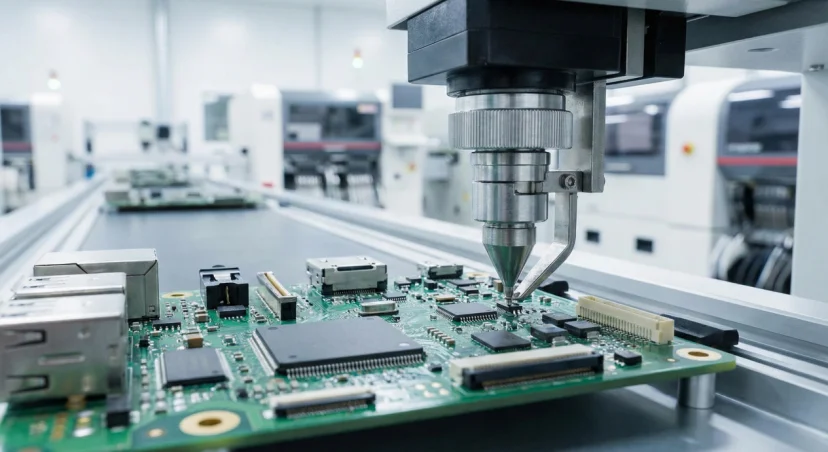
One of the most visible applications of AI is automated visual inspection. Computer vision systems can examine products and compare captured images against trained defect patterns. This approach can support consistent inspection while helping production teams identify subtle anomalies.
For electronics manufacturers, AI-assisted inspection can be applied at appropriate points in the production process rather than relying exclusively on final inspection. When inspection data is connected with production information, manufacturers can investigate whether defects are associated with particular components, processes, machines, or production conditions.
IBM describes AI-based visual inspection as a way to identify defects through pattern recognition and support faster, more consistent quality control.
Predictive Maintenance Protects Production Yield
Equipment problems can affect yield before a machine completely fails. A production system may continue operating while gradually moving away from its normal condition, potentially producing inconsistent results.
AI-based predictive maintenance helps us analyze equipment and sensor data to identify patterns associated with developing faults. Instead of waiting for an unexpected breakdown, maintenance teams can receive earlier indications and investigate the equipment during a suitable production window.
NIST notes that condition-monitoring technologies can provide information about current equipment health and support predictions of future conditions. Its research also highlights the connection between AI-based monitoring, maintenance decisions, production quantity, and product quality.
Finding Root Causes Faster
Identifying a defect is only the first step. For electronics manufacturers, the greater challenge is determining why the defect occurred and preventing it from returning.
AI can compare production variables across large datasets and identify relationships between process conditions and quality outcomes. This can help engineers narrow down possible root causes more quickly instead of reviewing production records manually one variable at a time.
Early-warning systems can also detect emerging changes in failure rates before they become widespread quality problems. We adopt predictive quality approaches as referenced by IBM to enable earlier detection and support root-cause analysis, helping us respond more quickly.
Connecting AI with the Manufacturing Process
AI delivers greater value when it is connected to the broader manufacturing workflow. Production data can come from inspection systems, equipment, testing stations, materials, and manufacturing records. Bringing these sources together allows engineers to evaluate production as a connected system rather than treating every quality issue separately.
For an electronics manufacturing services provider, this connection is especially important because customers may move from prototypes and engineering validation into larger production volumes. AI-supported analysis can help identify manufacturing risks earlier and provide data that supports continuous process optimization.
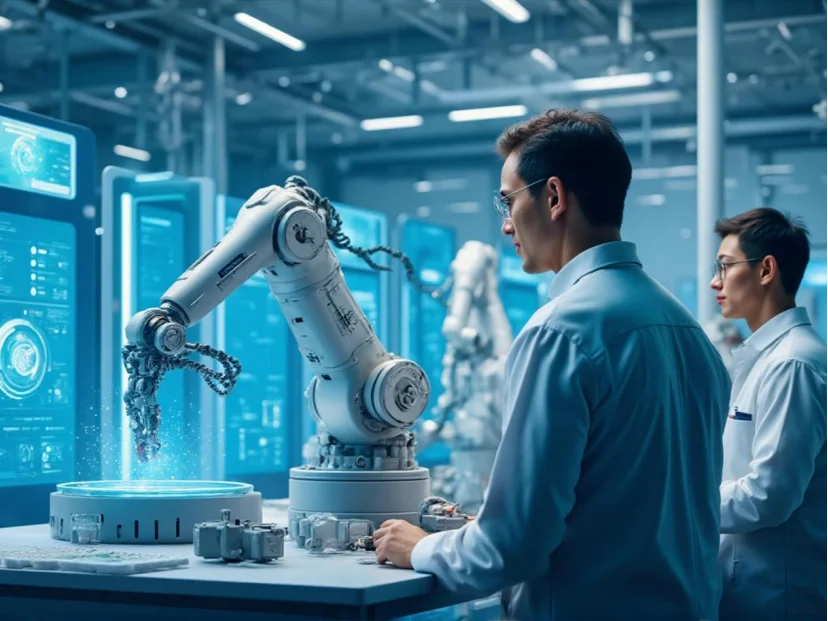
However, AI should not replace manufacturing expertise. NIST emphasizes that effective industrial AI combines intelligent algorithms with measurements, process knowledge, and human expertise.
What AI Integration Means for Business Electronics Buyers
For OEMs, startups, and established brands, AI integration should be evaluated as part of the manufacturer’s overall production capability. A sophisticated algorithm alone does not guarantee better yield. The manufacturer also needs reliable production data, disciplined process control, capable engineering teams, appropriate inspection systems, and a structured approach to acting on AI-generated insights.
This is why we believe AI should complement—not replace—our engineering and manufacturing processes. Our role is to connect product development, prototyping, manufacturing preparation, testing, and production so that quality improvements can be addressed throughout the product lifecycle.
Building Higher-Yield Production with Minewing
At Minewing, we support startups and global brands from initial prototyping through mass production. Our one-stop approach covers electronics design and optimization, rapid prototyping, PCBA and enclosure manufacturing, assembly, testing, packaging, and supply-chain coordination.
We serve customers across consumer technology and IoT devices, industrial control and energy, and logistics and smart supply chain applications. These markets often demand dependable quality, production flexibility, and the ability to scale hardware efficiently.
AI integration can strengthen these objectives by turning manufacturing data into actionable information. Combined with DFM optimization, structured New Product Introduction (NPI) processes, quality management, and experienced engineering support, it gives us more opportunities to identify problems earlier and continuously improve production performance.
Turning Manufacturing Data into Better Production Decisions
AI is becoming a practical tool for improving manufacturing yield rather than simply a futuristic concept. From visual inspection and predictive maintenance to root-cause analysis and process optimization, its greatest value comes from helping manufacturers detect problems earlier and make better decisions.
For businesses selecting an electronic manufacturing service partner, the key question is therefore not simply whether a supplier uses AI. It is whether AI, engineering expertise, production systems, and quality management work together to deliver consistent results. At Minewing, we combine our one-stop manufacturing capabilities with a continuous improvement mindset to help global brands move from prototype to reliable, scalable production.