Growing an electronic product business often changes what a company needs from its manufacturing partner. Early-stage teams may need extensive engineering support to transform an idea into a workable product, while established businesses may eventually have finalized designs and require efficient, repeatable production. This is where the transition from electronic ODM to OEM becomes valuable. We help businesses make that transition by connecting product development, manufacturing engineering, and scalable production within one coordinated process.
Why Companies Start with Electronic ODM
Electronic ODM is often a practical starting point when a business has a market opportunity but lacks all the technical resources required to develop the product internally. Instead of providing us with a complete production package, customers can bring us a product concept, functional requirements, or initial idea.
We then participate more deeply in the development process. Our capabilities include hardware design, PCB layout, prototyping, mechanical engineering, and production preparation. This integrated approach allows us to help transform an early concept into a product that can ultimately enter manufacturing.
For companies entering a new electronics category, this model can reduce the burden of coordinating multiple specialist suppliers. We can connect engineering decisions with manufacturing requirements from the beginning, helping identify issues related to performance, manufacturability, cost, and production feasibility before they become expensive problems.
When the ODM Model Starts to Become a Limitation
ODM remains useful as a product evolves, but the relationship can naturally change as a business becomes more mature. Once a company has established its product architecture, finalized its engineering requirements, and built internal design ownership, it may no longer need extensive development support from its manufacturing partner.
At this point, the priority often shifts toward production efficiency, consistent quality, supply-chain stability, and the ability to increase output as demand grows. The company needs a partner that can execute an established design accurately rather than continually developing the product.
This is where OEM becomes an important scalability path. Instead of paying for unnecessary development activities, the business can provide finalized engineering documentation and concentrate the manufacturing relationship on reliable execution.
Moving From Development to OEM Readiness
A successful transition starts with documentation. For our OEM service, customers typically have finalized design information such as Gerber files, bills of materials (BOMs), and mechanical 3D drawings. These materials give our manufacturing team the technical foundation required to reproduce the product according to defined specifications.
However, having design files does not automatically guarantee efficient mass production. We still need to examine whether the design is suitable for manufacturing. Design for Manufacturing (DFM) can reveal opportunities to simplify assembly, improve production yield, reduce unnecessary costs, and minimize manufacturing risks.
We therefore treat the transition as an industrialization process rather than simply changing the label from ODM to OEM. Engineering knowledge developed during ODM can be carried forward into production, while manufacturing feedback can help ensure the finalized design performs consistently at scale.
Building a More Scalable OEM Manufacturing Process
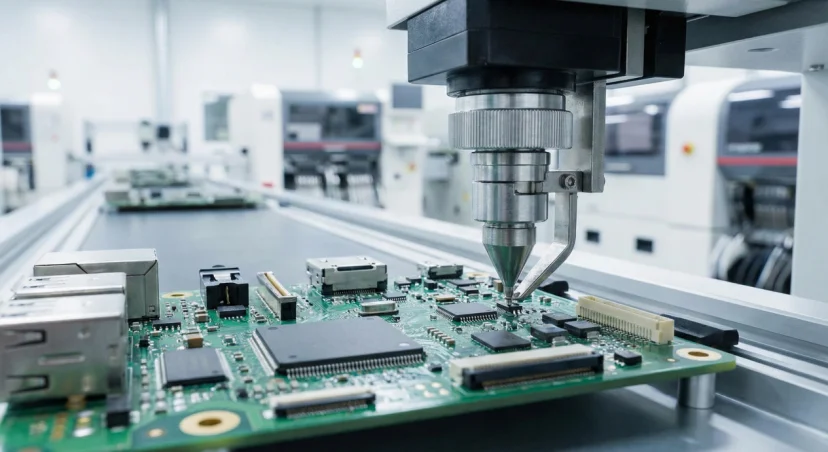
Once a product is production-ready, OEM manufacturing allows us to focus our resources on repeatable execution. Our services cover production stages including PCBA development and assembly, enclosure production, testing, packaging, and mass manufacturing. This end-to-end capability helps reduce unnecessary handoffs between separate suppliers.
Supply-chain preparation is equally important when a product moves toward larger volumes. Component availability, supplier reliability, production capacity, and quality control can all affect a company’s ability to fulfill growing orders. We support global component sourcing and supply-chain management as part of our manufacturing services, helping customers establish a more dependable production foundation.
Scalability also requires flexibility. We support projects ranging from individual prototypes and low-volume trials to full-scale mass production, allowing businesses to increase manufacturing volumes as market demand develops rather than committing to an inflexible production model from the beginning.
OEM and ODM Can Be Two Stages of One Strategy
The choice between OEM and ODM does not always need to be permanent. For many businesses, the two models can represent different stages of the same product lifecycle. A company may begin with ODM because it needs engineering expertise, then transition toward OEM once its design and internal product ownership become sufficiently mature.
We see this as a natural progression. During the ODM stage, we contribute development capabilities and manufacturing knowledge to help establish the product. During the OEM stage, we can concentrate on executing the customer’s finalized design with production discipline, quality control, and scalable manufacturing capacity.
This approach can also simplify supplier management. Rather than developing a product with one partner and then transferring it to an unfamiliar factory, businesses can maintain continuity with a manufacturing partner that already understands the product’s engineering history and production requirements.
Turning an ODM Foundation Into OEM Scale
The move from electronic ODM to OEM should be based on business readiness rather than an arbitrary deadline. When a product concept still requires substantial engineering work, ODM can provide the technical support needed to reach production readiness. Once the design is mature and properly documented, OEM can provide a more focused path toward repeatable volume manufacturing.
At Minewing, we support both sides of this journey. With more than 20 years of manufacturing experience, we provide end-to-end electronics services covering concept development, engineering, prototyping, trial production, and mass manufacturing.
For growing electronics businesses, this creates a practical scalability path: use ODM capabilities when development expertise is the priority, then transition toward OEM when manufacturing execution becomes the priority. By maintaining continuity between these stages, we help our customers turn early product development into a production strategy that can support long-term commercial growth.