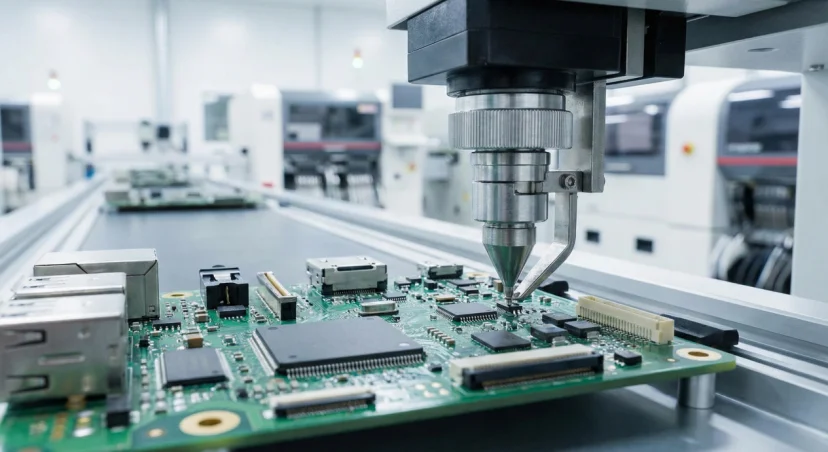
Moving an electronic product from an engineering concept to a commercially viable product requires more than building a working prototype. Teams must validate functionality, refine manufacturability, secure components, establish repeatable processes, and prepare for increasing production volumes. For B2B hardware companies, understanding how to go from prototype to production is therefore essential to controlling development costs and avoiding problems during scale-up. A structured workflow connects engineering decisions with manufacturing realities from the beginning.
Start With Clear Requirements and Manufacturing Goals
A strong prototype-to-production workflow begins with a well-defined product requirement. Before we start building hardware, we need to understand the product’s functions, target application, expected production volume, cost objectives, and relevant quality or certification requirements.
We see these requirements influence component selection, PCB architecture, enclosure design, testing methods, and production planning. Defining them early also provides engineering and manufacturing teams with a shared reference when making design decisions.
For B2B projects, we also recommend considering the eventual production environment while the design is still flexible. A prototype optimized only for demonstration may require substantial modification before it can support repeatable manufacturing.
Use Electronic Prototyping to Validate the Design
Electronic prototyping provides an important opportunity to test a product before committing significant resources to tooling and volume manufacturing. A physical prototype allows engineering teams to evaluate electrical performance, hardware integration, mechanical fit, and real-world functionality.
We use rapid prototyping to identify problems while changes remain relatively manageable. Depending on the project, physical samples can involve 3D printing, CNC machining, or other techniques for evaluating both electronics and enclosures. At Minewing, our development process uses functional prototypes to validate designs before larger production commitments.
The objective is not simply to prove that one unit works. We need to determine whether the underlying design is suitable for a repeatable manufacturing process.
Introduce DFM Before Scaling the Build
Once the prototype demonstrates the intended functionality, the next priority should be Design for Manufacturing, or DFM. This stage connects engineering design with the capabilities and constraints of actual production equipment and processes.
We review areas such as component placement, PCB layout, assembly complexity, material selection, and component availability. Small design changes can simplify assembly, reduce potential manufacturing errors, and improve production efficiency.
DFM should happen before mass production rather than after manufacturing problems appear. At Minewing, we incorporate DFM reviews into our electronics prototyping workflow to identify manufacturing limitations and improve the transition toward larger-scale assembly.
Use Trial Production to Bridge Prototype and Volume
Trial production is where a design begins to demonstrate that it can be manufactured consistently rather than simply function correctly. During the New Product Introduction (NPI) phase, we run small testing batches, including Engineering Validation Testing (EVT), DVT, and PVT stages, to identify and eliminate potential risks before volume production.
This stage provides valuable production data. Teams can evaluate assembly procedures, testing methods, material readiness, process stability, and early yield performance. Problems discovered here are generally easier to address than problems appearing after a full production run has begun.
At Minewing, our trial-production process is designed specifically to bridge the gap between design validation and volume manufacturing. We combine DFM optimization with supply-chain preparation to make the transition more controlled.
Build the Supply Chain Before Production Starts
A product cannot enter stable production if critical components are unavailable. Supply-chain preparation should therefore progress alongside engineering validation instead of waiting until the design is completely finished.
We focus on sourcing and validating reliable key components and vendors during NPI. The bill of materials should be reviewed for availability, lead times, alternatives, and potential sourcing risks. This can help prevent a technically finished product from being delayed because one component cannot be obtained in the required quantity.
For B2B buyers, supply-chain stability is particularly important because production interruptions can affect customer commitments, inventory planning, and market launch schedules. An experienced manufacturing partner can coordinate sourcing decisions with engineering and production requirements.
Standardize Testing and Production Processes
A successful transition to volume manufacturing requires repeatability. The manufacturing team needs defined assembly procedures, inspection points, testing requirements, and quality criteria so that production does not depend entirely on individual operators.
We therefore recommend documenting the approved design and manufacturing parameters before mass production. Changes should be controlled so that engineering, procurement, production, and quality teams are working from the same information.
At Minewing, our manufacturing approach includes quality monitoring throughout the production process, with inspection and testing integrated into electronics manufacturing rather than treating quality as a final-stage activity.
Plan the Scale-Up Around Real Production Data
The final step is not simply increasing order quantities. Before scaling, we should review trial-production results and determine whether the process is stable enough for the planned volume.
We regard key considerations to include production yield, assembly time, component availability, testing performance, defect patterns, and manufacturing costs. If results show recurring issues, our engineering and production teams resolve them before ramping up output.
This data-driven approach helps prevent the common mistake of treating a successful prototype as proof that a product is automatically ready for mass production. A prototype proves a concept; a controlled production process proves scalability.
Building a More Predictable Path to Production
Knowing how to go from prototype to production means managing the entire development path rather than focusing on individual stages. Electronic prototyping validates the design, DFM improves manufacturability, trial production exposes process risks, and supply-chain preparation supports stable output.
At Minewing, we integrate engineering, rapid prototyping, NPI, DFM optimization, component sourcing, assembly, and mass production into one manufacturing workflow. We aim to help our partners succeed through transparent communication, stable supply chains, and a problem-solving mindset. By connecting design decisions with production requirements early, we can create a more predictable path from the first prototype to scalable manufacturing.