To manufacture an electronic product in China, first turn the idea into measurable requirements. Develop the electronics, enclosure, and firmware together, validate the design through prototypes, prove the production process with trial builds, and release manufacturing only when the agreed quality and compliance requirements are met.
The work between an attractive prototype and a shippable product is substantial. A sample assembled by an engineer may depend on hand adjustments, unavailable components, or test steps that will not work on a production line. The electronic product development process has to remove those dependencies before output increases.
At Minewing, we support electronics and enclosure development through prototyping and production. In this guide, we explain the decisions and deliverables that help you move between those stages. The workflow covers consumer electronics, IoT terminals, smart home devices, wearables, industrial controls, and AI hardware. Medical devices, vehicle safety systems, and other regulated applications need additional development and approval work.
The five stages from idea to delivery
The five-stage sequence below is a practical way to organize the electronics manufacturing process in China. Activities overlap, and a failed validation test can send the design back for revision. Each stage should end with evidence that supports the next spending decision.
Idea and feasibility → Engineering and design → Rapid prototyping → Trial production → Mass production and delivery
These windows illustrate a 24-week plan for a bounded, non-medical connected device using available components and an established technical architecture. Use these windows as planning assumptions. We would assess the delivery schedule for your project against its actual scope, component availability, and validation needs. Freight transit, major redesigns, and unresolved approval work can extend the schedule.
| Stage | Main deliverable | Lead responsibility | Example planning window |
|---|---|---|---|
| Idea and feasibility | Approved requirements and architecture | Product owner with engineering | Weeks 1–2 |
| Engineering and design | Coordinated electronics, mechanics, and firmware | Engineering team | Weeks 3–8 |
| Rapid prototyping | Tested functional samples and issue list | Engineering and prototype team | Weeks 7–10 |
| Trial production | Design and process validation evidence | Engineering, NPI, and quality | Weeks 11–20 |
| Mass production and delivery | Released production, inspection, and shipment records | Operations and supply chain | Ramp in weeks 21–24 |
Stage 1 Define the product and test feasibility
A useful product requirements document, or PRD, describes how the product will be used and how success will be measured. “Long battery life” is difficult to engineer against. A requirement that specifies operating states, reporting frequency, temperature range, and the intended battery is much more useful.
Before design begins, agree:
- Core functions, users, use environments, and features deferred to a later release.
- Target selling price, target BOM cost, first-batch quantity, and annual forecast.
- Size, weight, power, connectivity, serviceability, and expected product life.
- Destination markets, applicable product requirements, and ownership of cloud or app work.
The feasibility review should test the high-risk choices first. Can the selected chipset handle the workload? Is the proposed wireless technology appropriate for the deployment environment? Can the enclosure accommodate the battery, antenna, connectors, and thermal path? Are key parts available through acceptable supply channels?
For an AI device, clarify what runs locally and what depends on a cloud service. That decision affects memory, compute power, heat, connectivity, recurring costs, and behavior when the network fails.
Release evidence: An agreed PRD, initial architecture, first-pass BOM, risk register, and cost and schedule ranges. Freeze the baseline feature set, then use a change process rather than treating the specification as permanently unchangeable.
Stage 2 Develop electronics mechanics and firmware together
Four workstreams need coordinated reviews: industrial design defines the interaction and appearance; mechanical engineering turns that into producible parts; hardware engineering develops the circuit and PCB; firmware implements device behavior and test access.
The interfaces between them are where avoidable problems accumulate. A late battery change can alter the enclosure and charging circuit. A metal finish can affect radio performance. Moving a connector can change PCB routing, assembly access, and the tooling design.
Our electronics development solutions address hardware and mechanical requirements together. Agree who owns each interface and who approves changes across the product.
Review the assembled product
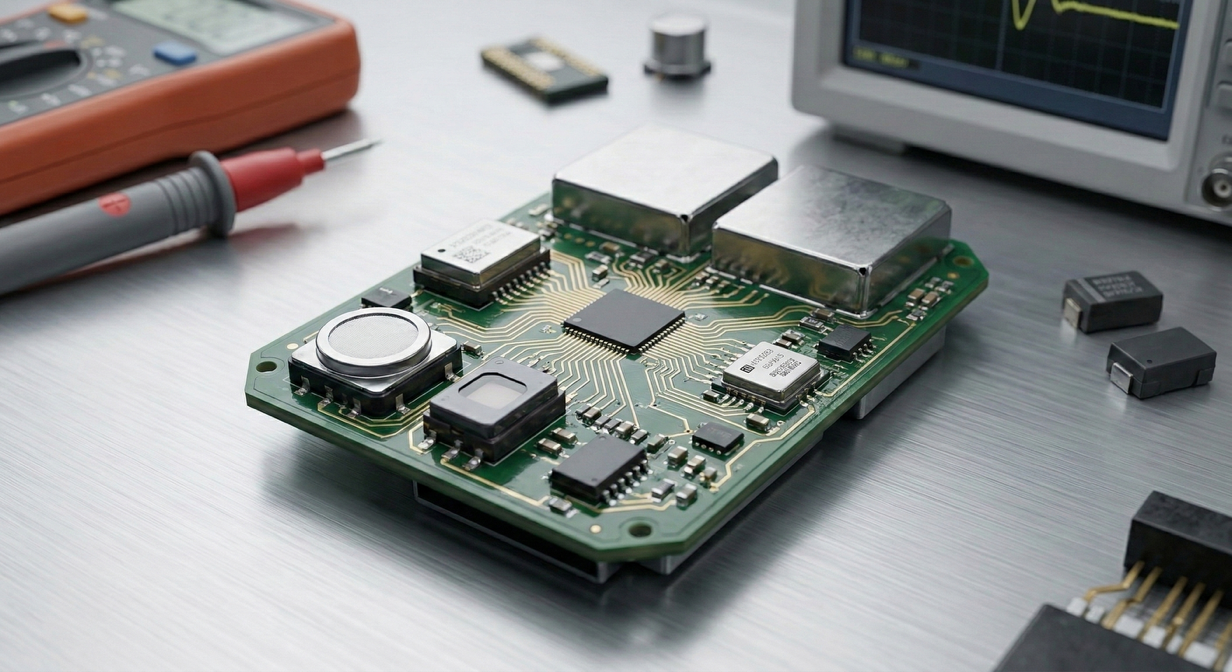
PCB reviews should address signal and power integrity, electromagnetic compatibility, antenna clearance, component height, and manufacturing access. Evaluate radio behavior with the intended enclosure and battery arrangement, not only on an exposed board.
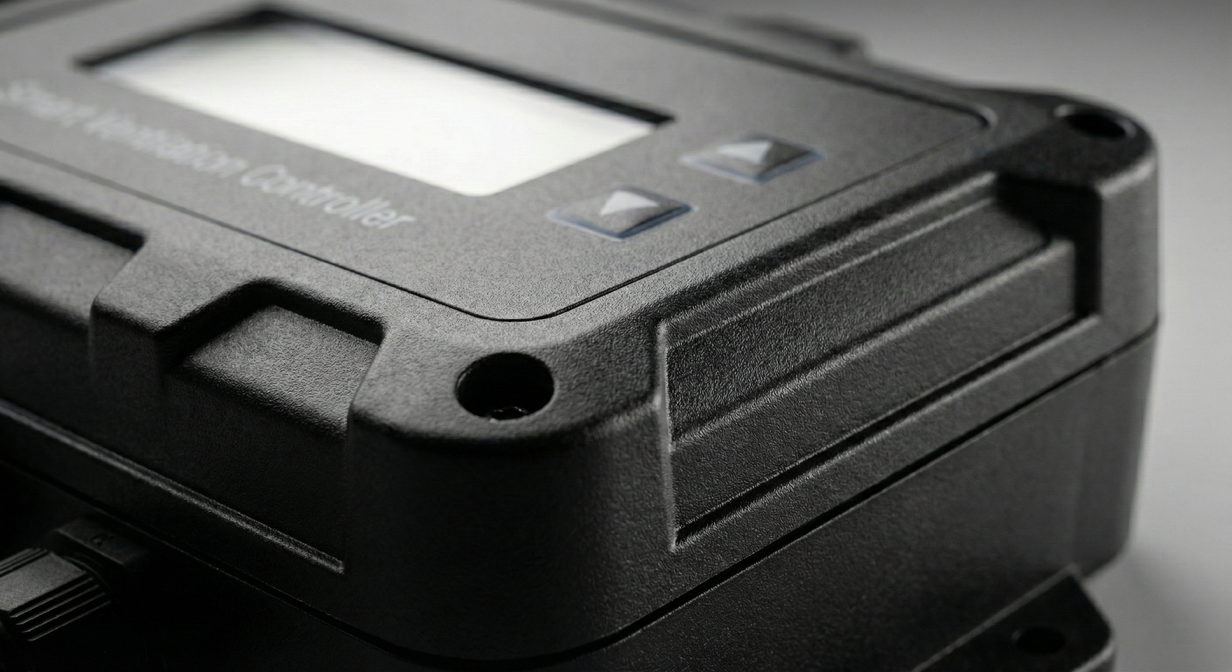
Mechanical reviews should address tolerance accumulation, seals, screw bosses, snap fits, thermal paths, and access for assembly and service. Define how any ingress-protection target will be tested rather than assuming a gasket establishes a rating.
For molded parts, discuss wall thickness, draft, parting lines, gates, ejector marks, and surface texture before releasing tooling. A shape that prints successfully may still need changes for injection molding. [1]
Design the test and update path
Provide programming access, test points where appropriate, measurable functional limits, and a way to identify firmware versions. For connected products, allocate responsibility for device identity, credentials, updates, recovery, and vulnerability handling during development.
Release evidence: Controlled 3D models and drawings, schematics, PCB source and fabrication data, BOM revision, firmware architecture and source-delivery scope, and a verification plan. An image of the board or a compiled firmware file alone may not be sufficient for future maintenance or transfer.
Stage 3 Build prototypes that answer specific questions
Choose the prototype process around the uncertainty you need to resolve. Appearance models, proof-of-concept circuits, and production-representative devices serve different purposes.
| Method | Useful for | Main limitation to consider |
|---|---|---|
| FDM printing | Fast fit checks, assembly access, early enclosure iterations | Surface, direction-dependent properties, and material behavior may differ from production |
| SLA printing | Detailed appearance models and small geometric features | Resin properties may not represent the intended molded material |
| CNC machining | Accurate interfaces and parts in selected engineering materials | Machining constraints and cost differ from molding |
| Silicone tooling and casting | A small series of enclosure samples before production tooling | Tool life and casting material behavior limit representativeness |
A proof of concept might demonstrate sensing or wireless communication with development boards. A functional prototype brings key features together in a realistic form. Neither automatically proves that the final design will pass reliability tests or can be manufactured repeatably.
Record each sample’s hardware, firmware, and mechanical revision. Test it against a written plan and turn failures into assigned engineering actions. This makes the transition from prototype to mass production traceable instead of dependent on informal workshop knowledge.
Release evidence: Working samples, test results, first DFM feedback, and an agreed list of changes for the next build. A quoted prototype lead time should specify the starting files, material availability, sample quantity, test scope, and whether revisions are included.
Stage 4 Validate the design and the production process
EVT, DVT, and PVT are useful names for different questions. Suppliers may organize the stages differently, so agree definitions and release criteria at kickoff.
| Build | Main question | Evidence needed before moving on |
|---|---|---|
| EVT engineering validation | Does the architecture and core functionality work | Functional results, power and thermal measurements, and resolved critical engineering issues |
| DVT design validation | Does the intended design meet the specification | Reliability and environmental results, production-intent parts, and applicable compliance evidence |
| PVT production validation | Can the intended process build conforming units repeatably | Pilot yield and defect data, qualified fixtures, work instructions, and material traceability |
Build quantities should follow the test plan, destructive-test needs, variants, and production risks. “Tens for EVT, low hundreds for DVT, hundreds for PVT” can be a discussion starting point, but it is not a universal requirement. A small build cannot support a strong reliability claim merely because it is labeled DVT.
Use environmental tests and burn-in where they address identified failure risks. Select stress levels, duration, samples, and acceptance limits deliberately. A product for a temperature-controlled room and a sealed outdoor terminal need different validation plans.
Close manufacturing and sourcing risks
Design for manufacturing, assembly, and test should continue through the trial builds. Improve access, reduce avoidable assembly steps, add test coverage, and verify the changes. Lower part cost is useful only if it preserves performance and does not introduce greater failure or retest costs.
Agree approved manufacturers and part numbers, purchasing lead times, last-buy risks, and substitution approval. Qualify alternatives before relying on them; similar catalog descriptions do not establish interchangeability.
A failure mode and effects analysis can help prioritize design and process risks. PPAP and layered process audits belong where customer or sector requirements call for them; they are not mandatory labels for every consumer IoT project.
Release evidence: Closed critical issues, approved drawings and BOM, validated test fixtures, controlled firmware, work instructions, quality plan, and a signed production release. Treat unresolved deviations as explicit decisions with owners and limits.
Stage 5 Manufacture inspect and prepare delivery
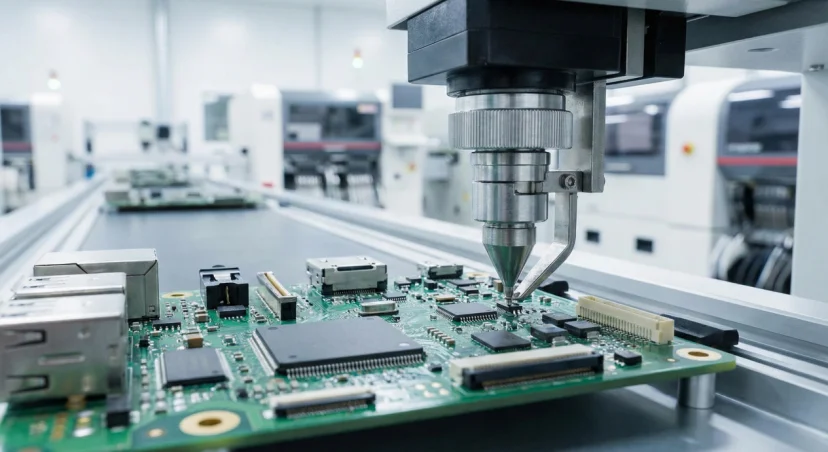
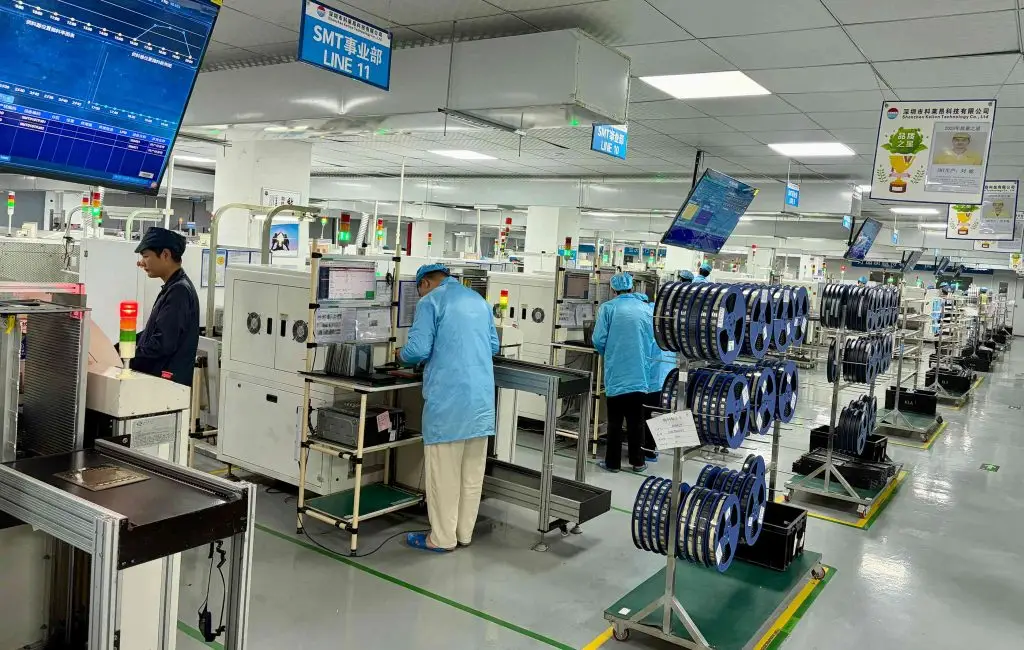
A production route can include incoming inspection, solder paste printing, SMT placement and reflow, through-hole assembly where needed, inspection, programming, product assembly, functional testing, and packing. The actual route depends on the design.
AOI checks visible assembly features; X-ray can help inspect hidden joints where appropriate. ICT checks selected electrical characteristics, while functional testing exercises the assembled device. These methods answer different questions, so specify coverage rather than collecting equipment names.
For enclosures, control resin or material grade, color, dimensional tolerances, cosmetic acceptance, and finishing. Printing, spraying, and curing processes need their own approved settings where used.
Traceability should connect the shipped unit or lot to the relevant material batches, design revision, firmware version, and test records. Ask for a sample retrieval exercise. The existence of MES or ERP software does not establish what data is recorded or how effectively it can be retrieved.
Agree outgoing sampling, critical-defect treatment, rework rules, and shipment release authority. For retail packaging, check labeling, accessories, instructions, and protective performance for the intended transport route. Confirm commercial documents, delivery terms, and any battery shipping requirements before goods reach the freight forwarder.
Budget and schedule from the actual scope
Separate non-recurring engineering (NRE) and other one-time development expenses from recurring production costs. A low unit price can conceal large setup costs; a higher prototype price may be reasonable if it includes engineering and testing that another quote excludes.
| Cost bucket | Ask the quotation to identify |
|---|---|
| Engineering and NRE | Disciplines, deliverables, source files, reviews, revisions, and test development |
| Tooling and fixtures | Mold construction, cavities, texture, life assumptions, maintenance, and ownership |
| Prototypes and validation builds | Quantities, revisions, destructive tests, scrap, and retest responsibility |
| Materials and production | BOM revision, purchased-material minimums, assembly, testing, packaging, and excess stock |
| Compliance work | Markets, standards, product variants, laboratory work, documentation, and retest allowances |
Then add freight, duties, warehousing, warranty provision, and contingency where applicable. Avoid double-counting materials already included in prototype or production quotes.
Use our electronics project portfolio to identify comparable product types when preparing your brief. Your materials, quantities, tooling, and testing requirements will determine the budget.
Tooling cost depends on geometry, resin, size, cavities, finish, tolerances, and tool life. Specify these inputs before comparing quotations for different enclosures.
To reduce BOM cost, review component requirements, simplify the architecture where possible, and evaluate qualified alternatives. Changes need technical approval and any necessary revalidation.
A milestone plan for a 24 week target
These milestones illustrate the decisions to track in the example schedule. Adjust their timing to the scope and risks of your project.
| Milestone | Target week | Decision or evidence |
|---|---|---|
| M1 | 2 | Requirements and feasibility approved |
| M2 | 4 | Product architecture and industrial design agreed |
| M3 | 6 | Mechanical and electrical interfaces reviewed |
| M4 | 8 | First integrated engineering package released |
| M5 | 10 | Functional prototype review completed |
| M6 | 13 | EVT issues resolved for the next build |
| M7 | 17 | DVT results and compliance status reviewed |
| M8 | 20 | PVT and production readiness approved |
| M9 | 24 | Initial production released for shipment if all required gates pass |
Specification changes, long-lead components, and failed or delayed laboratory tests are obvious schedule risks. Track their decision dates and owners. Booking a production slot does not remove any unresolved release condition.
There is no reliable universal percentage split for an IoT launch budget or fixed price list for “CE, FCC, UKCA, RoHS, and REACH.” These labels cover different obligations. Obtain a product-specific test and documentation plan before comparing laboratory quotations.
Plan market compliance during design
European Union
CE marking involves identifying the applicable legislation, completing the relevant conformity assessment, compiling technical documentation, and drawing up the EU Declaration of Conformity. The legal manufacturer retains responsibility; paying an EMS supplier or laboratory does not transfer that responsibility automatically. [2]
Radio products require a review of the Radio Equipment Directive. The cybersecurity requirements activated by Delegated Regulation (EU) 2022/30 have applied to relevant categories since August 2025. A repeal has been adopted, but it takes effect on 11 December 2027, not immediately in 2026. [3]
As of this article’s review date, the Cyber Resilience Act’s reporting obligations have applied since 11 September 2026. They concern actively exploited vulnerabilities and severe incidents affecting the security of products with digital elements. Main CRA obligations apply from 11 December 2027. Assess product scope and assign responsibility for monitoring, updates, and reporting before launch. [4, 5]
RoHS addresses restricted substances in electrical and electronic equipment. REACH creates separate substance-related obligations. Collect applicable supplier declarations and supporting evidence against current requirements; do not describe a generic “REACH certificate” as a complete approval to sell the product. [6, 7]
United States
FCC equipment authorization includes certification and Supplier’s Declaration of Conformity routes. Identify the route, responsible party, test requirements, and labeling obligations for the actual device. A module’s existing authorization should be reviewed with its integration conditions and the final host design; it is not a reason to skip the product assessment. [8, 9]
United Kingdom
Great Britain continues to recognize CE conformity under relevant product regimes, alongside UKCA routes. Confirm the applicable sector rules and distinguish Great Britain from Northern Ireland. Avoid budgeting UKCA as an automatically mandatory additional approval for every electronic product. [10]
Consumer connectable products can also fall under the UK’s PSTI security regime, in force since 29 April 2024. Applicable requirements include password security, vulnerability-reporting information, and a statement of compliance. Include these in the product brief and documentation plan. [11]
This is a planning framework. Product classification, features, sales territories, and current rules determine the final assessment, including any additional safety, battery, environmental, or sector-specific obligations.
Choose and contract the right manufacturing partner
OEM, ODM, JDM, and EMS are commercial descriptions with overlapping usage. An OEM manufacturing arrangement commonly builds to the customer’s specification; an ODM contributes a design or platform; JDM means joint development; EMS covers manufacturing services that may also include engineering.
Our JDM, OEM, and ODM services allow the work to be scoped around the design inputs you already have. The useful comparison is who develops, approves, and owns each part of the product.
The contract should identify deliverables, acceptance criteria, milestones, payment terms, approved subcontractors, change control, tooling ownership, and rights to transfer production. Address test software and firmware source alongside CAD and PCB files.
An NDA addresses confidentiality. Provisions commonly described as NNN also address non-use and non-circumvention, but an agreement’s title does not establish its enforceability or suitability. Use locally qualified counsel to define the right obligations, parties, jurisdiction, and remedies.
Plan trademark and patent protection before broad disclosure. China uses a first-to-file trademark system, and overseas registrations do not automatically establish Chinese rights. Patent timing and disclosure strategy need a separate review of the actual invention. [12]
| Model | Design contribution | Speed and differentiation | Rights and risk to settle |
|---|---|---|---|
| Customer design with OEM manufacturing | Customer supplies the design baseline | Depends on readiness; strong control over a custom design | Design responsibility, production quality, file completeness |
| ODM | Supplier provides or adapts a design | An existing platform may shorten development; customization may be limited | Background IP, licenses, exclusivity, changes, transfer rights |
| JDM | Customer and supplier share development | Supports custom requirements with shared engineering | Work split, ownership of new IP, maintenance responsibility |
| EMS engagement | Scope can range from assembly to engineering support | Depends on the contracted service package | Design inputs, purchasing, test coverage, quality responsibilities |
How we can support your project
We support industrial design, mechanical engineering, hardware, firmware, prototyping, and manufacturing from our Shenzhen base. You can approach us with a concept, an early prototype, or an existing design package. The starting point determines which development and production tasks belong in the project.
We offer flexible quantities, including single-unit prototypes and low-volume trials, without a strict general MOQ. Engineering work, custom tooling, and material purchases still need their own budget. Agree those costs alongside sample acceptance criteria and the scope of each build.
Our operations in China and Vietnam provide options for organizing production. Discuss which site will handle PCBA, enclosure production, assembly, and testing, together with the engineering handover and logistics requirements. Site selection should follow the product’s needs and the proposed manufacturing route.
When evaluating quality arrangements with us, define the processes, records, and site documentation your project requires. Relevant certificates should match the manufacturing entity and activity. If your sourcing policy calls for SMETA, treat it separately as a social audit methodology. [13]

Frequently asked questions
How long does it take to manufacture an electronic product
Start with design maturity, component availability, tooling, validation, and market requirements. The 24-week illustration in this guide is a scheduling example. A ready-to-build assembly and a new connected product need different plans, and shipping time should be stated separately.
What is the minimum order quantity
We do not apply a strict general MOQ, but prototypes, pilot builds, finished products, and material purchases have different cost structures. Discuss each separately so that engineering fees, tooling costs, and component purchase minimums are clear.
How much does a plastic enclosure mold cost
An accurate quote needs the part files, resin, dimensions, tolerances, finish, cavities, and expected production life. Confirm whether trial shots, modifications, maintenance, and transfer costs are included. A universal price range without these inputs can be misleading.
What is the difference between EVT DVT and PVT
EVT tests the engineering approach, DVT tests the intended design against its requirements, and PVT validates the production process. Define build quantities and exit criteria in the project plan; the stage name alone proves nothing.
Who handles CE and FCC work
An EMS partner can coordinate samples, testing, and documentation when contracted to do so. The relevant legal manufacturer, applicant, or responsible party still has the obligations assigned by the applicable rules. Agree those roles explicitly for each market.
Who owns the molds and design files
Ownership and use rights depend on the agreement, background IP, and payment terms. List each asset and its transfer conditions before work starts, including molds, fixtures, CAD, PCB files, firmware, and production test software.
Can production move from China to Vietnam
It may be possible if the receiving site has the required process, people, supply chain, and test capability. Budget for transfer, pilot builds, and any necessary requalification. Review origin treatment and landed cost for the actual manufacturing route rather than assuming automatic savings.
Prepare a brief that can become a production plan
Include your product purpose, current files or prototypes, target markets, quantities, launch target, and unresolved technical risks in your first inquiry. Send your brief to our team so we can discuss the work needed for your next stage. We can begin a feasibility discussion from a concept; a firm production quotation needs a more complete scope.
References
Sources accessed 29 September 2026.
[1] Protolabs guidance on designing draft into prototypes.
https://www.protolabs.com/resources/design-tips/improving-part-moldability-with-draft/
[2] EU explanation of CE marking.
https://eur-lex.europa.eu/legal-content/EN/TXT/?uri=legissum%3Ace_marking
[3] European Commission RED update.
https://single-market-economy.ec.europa.eu/sectors/electrical-and-electronic-engineering-industries-eei/radio-equipment-directive-red_en
[4] European Commission Cyber Resilience Act reporting guidance.
https://digital-strategy.ec.europa.eu/en/policies/cra-reporting
[5] European Commission Cyber Resilience Act implementation timeline.
https://digital-strategy.ec.europa.eu/en/factpages/cyber-resilience-act-implementation
[6] European Commission RoHS guidance.
https://environment.ec.europa.eu/topics/waste-and-recycling/rohs-directive_en
[7] ECHA guidance on substances in articles.
https://echa.europa.eu/regulations/reach/candidate-list-substances-in-articles
[8] FCC equipment authorization guidance.
https://www.fcc.gov/engineering-technology/laboratory-division/general/equipment-authorization
[9] FCC module guidance.
https://apps.fcc.gov/oetcf/kdb/forms/FTSSearchResultPage.cfm?id=44637&switch=P
[10] UK government marking guidance.
https://www.gov.uk/guidance/placing-ukca-or-ce-marked-products-on-the-market-in-great-britain
[11] UK government connected-product guidance.
https://www.gov.uk/guidance/regulations-consumer-connectable-product-security
[12] U.S. International Trade Administration IP guidance.
https://www.trade.gov/country-commercial-guides/china-protecting-intellectual-property
[13] Sedex SMETA explanation.
https://www.sedex.com/solutions/smeta-audit/