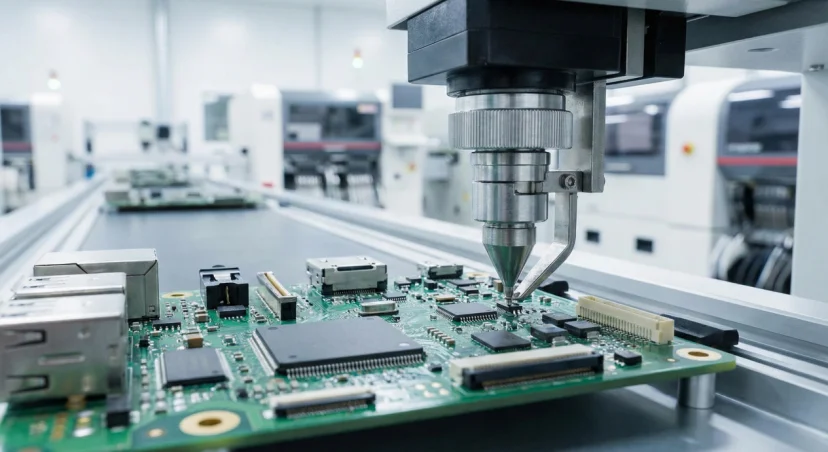
The best EMS companies in China for a hardware startup are the ones that can support its next build, engineering gaps, and production economics. EMS stands for electronics manufacturing services. A large factory network is useful only if the supplier will allocate the right people and processes to your product.
For a team planning roughly 1,000 to 100,000 units a year, the first decision is therefore about fit. Do you have a released design and need assembly capacity, a regulated product that needs specialist process controls, or an early prototype that still needs substantial development? Each situation produces a different shortlist.
At Minewing, we support electronics development and manufacturing. We have put together this guide to help you compare 15 manufacturers and development partners, understand their published order terms, and prepare a useful first inquiry.
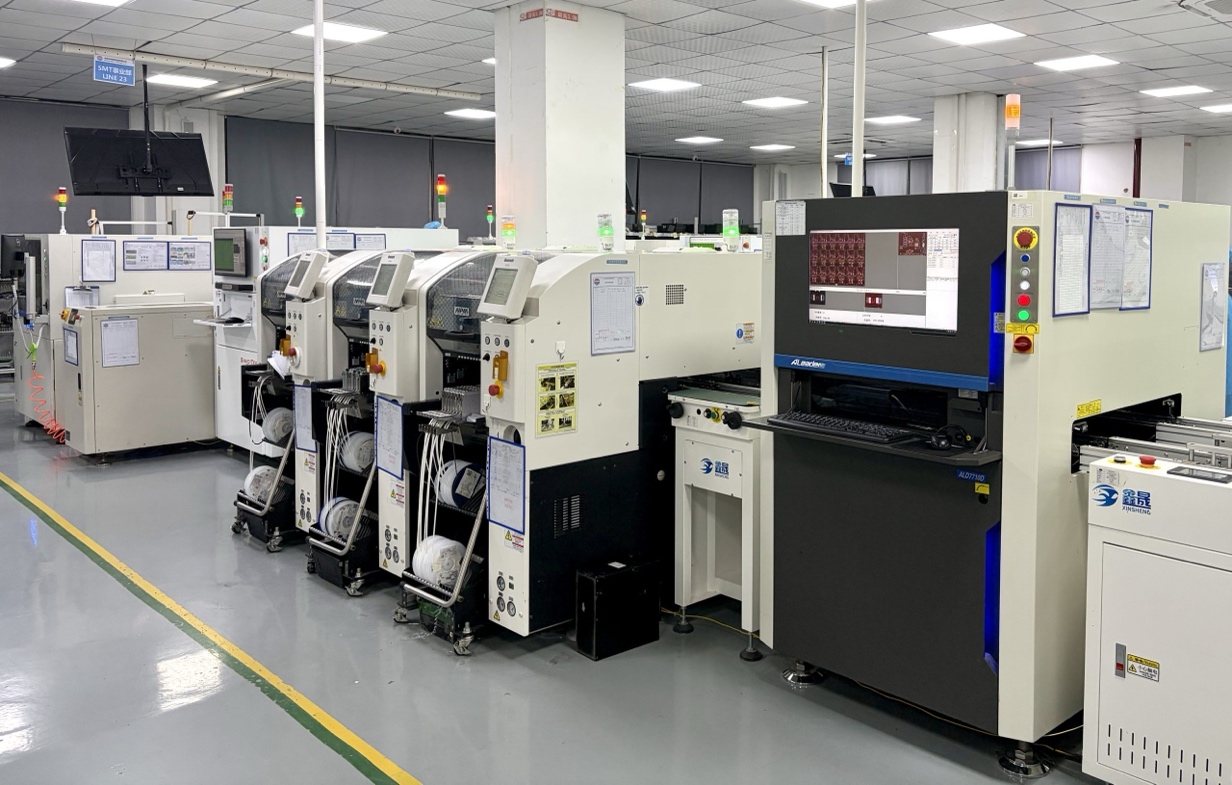
How this comparison was built
We reviewed supplier websites and service documentation available on 29 September 2026. Inclusion requires a documented electronics manufacturing or product development offering connected to production in mainland China. Headquarters may be elsewhere, and some companies use a manufacturing partner network.
We group companies by the work they offer, with “Best for” indicating our assessment of their published services. Use the comparison to build an initial shortlist, then confirm each supplier’s interest, relevant factory experience, and capacity for your project.
We include our own services in Group C. We encourage you to assess us against the same requirements you use for every other supplier, including engineering scope, order economics, and production readiness.
MOQ needs context. A one-board PCBA service does not establish finished-product order terms. Quantity minimums and development budgets are separate. “Ask” means the reviewed source did not publish a general minimum; we have not estimated one.
Group A Global scale manufacturers
These companies are worth approaching when your product fits an established business line and you can explain the engineering scope, launch forecast, and expected ramp. Their scale alone does not tell you whether a small first batch is commercially acceptable.
Foxconn
Core capabilities: Integrated design and manufacturing spanning consumer devices, computing, cloud and networking equipment, and components.
Volume: A general startup MOQ is not published on the reviewed service page.
Best for: Programs needing broad industrialization resources and a multinational footprint.
What to know: Identify the business unit and factory that would actually quote and build your product; a group-level introduction is only the beginning. [1]
Luxshare
Core capabilities: Design and manufacturing across components, modules, and complete systems, with consumer electronics, communications, data center, and automotive offerings.
Volume: Ask for program-specific entry requirements.
Best for: Products that match its component and system integration capabilities.
What to know: Confirm whether the proposal covers a complete device or a particular subsystem, and who owns the design work. [2]
BYD Electronic
Core capabilities: Integrated electronics solutions drawing on precision molds, materials, thermal management, and manufacturing technology.
Volume: No general startup MOQ is stated on the reviewed overview.
Best for: Products requiring close integration of electronic and mechanical manufacturing.
What to know: Approach BYD Electronic with a defined product brief and forecast; do not infer its commercial requirements from BYD’s vehicle business. [3]
Goertek
Core capabilities: Smart hardware combining acoustic, optical, electronic, and precision manufacturing capabilities, including wearables and VR/AR devices.
Volume: Project-specific inquiry.
Best for: Wearable, audio, or immersive hardware that benefits from these specialized technologies.
What to know: Establish how much of the proposal uses an existing platform and how much requires new development. [4]
USI
Core capabilities: Electronic device and module design, miniaturization, sourcing, manufacturing, and lifecycle services.
Volume: Ask the relevant business unit.
Best for: Programs where compact electronics and established manufacturing quality processes are central.
What to know: USI describes an international manufacturing network that includes Asteelflash. Confirm the proposed entity, site, and scope instead of treating the entire network as one interchangeable factory. [5]
This group becomes more relevant when your product requirements and forecast are credible enough to support a detailed capacity discussion. Ask directly about pilot builds; do not assume either that every global manufacturer rejects startups or that a promising forecast guarantees acceptance.
Group B Industry and application specialists
A specialist can be the right starting point when manufacturing requirements are driven by the application: medical electronics, automotive assemblies, industrial controls, or connected appliances. This group includes companies of very different sizes.
Start with the operating conditions your product has to withstand. For a connected device, our IoT terminal project collection offers examples to help frame that discussion. Use the relevant power, connectivity, and enclosure requirements when evaluating a supplier’s experience.
Kaifa
Core capabilities: EMS across medical, commercial and industrial, automotive, and communications products, with engineering and supply chain support.
Volume: Its EMS page explicitly describes both high-volume and low-volume, high-mix production.
Best for: Teams needing an application-specific manufacturing process.
What to know: Low-volume support is not a universal numerical MOQ. Discuss the relevant business unit, traceability requirements, and approval process. [6]
DBG
Core capabilities: EMS for smart terminals, automotive electronics, communications, digital energy, AI and computing, and medical electronics.
Volume: Ask for the relevant program threshold.
Best for: Programs that need established electronics production and potential geographic expansion.
What to know: DBG’s current history page records its 2025 acquisition of All Circuits and an expanding footprint. Confirm which capabilities belong to the quoting site. [7]
3CEMS
Core capabilities: PCB and PCBA through box build, system integration, and joint design services, with medical, automotive, industrial, communications, and maritime applications.
Volume: A general finished-product MOQ is not stated on the reviewed overview.
Best for: Products needing board-to-system integration.
What to know: Request current site-specific certificates and a proposed test strategy for your application. [8]
Viasion
Core capabilities: PCB fabrication, component sourcing, assembly, box build, and testing.
Volume: Its website states that PCB and PCBA orders can start at one piece.
Best for: Teams with a developed electronics design that need prototypes and small-to-medium production.
What to know: The one-piece claim concerns PCB/PCBA services; confirm enclosure, firmware, and complete-product development separately. [9]
Computime
Core capabilities: Engineering and manufacturing for intelligent controls, including hardware and firmware co-development, prototyping, DFM, and DFT.
Volume: Ask for project-specific terms.
Best for: Connected controls and appliance-related programs.
What to know: Clarify whether you are buying engineering services, a customized platform, or manufacturing of your own released design. [10]
Choose this group for relevant process experience, then verify it at the factory level. A medical or automotive customer reference does not, by itself, establish that a site can manufacture your particular regulated product.
Group C Product development and launch partners
These options make sense to investigate when the design is still evolving. They use different commercial models: low-volume builds, separately scoped ODM development, or substantial project budgets. Inclusion here does not mean every supplier offers no-MOQ finished products or performs every operation in one building.
Minewing
Core capabilities: We bring industrial, mechanical, hardware, and firmware development together with prototyping, manufacturing, assembly, and packaging. Our JDM, OEM, and ODM services support different levels of customer design input.
Volume: We support single-unit prototypes and low-volume trials without a strict general MOQ.
Best for: Startups seeking coordinated electronics and enclosure development.
What to know: Your quotation should define the development budget, material purchase minimums, build location, and prototype acceptance criteria.
Our services cover both electronics and enclosure production, with operations in China and Vietnam. The right arrangement depends on the product and the processes it needs. When discussing your project with us, establish which site will handle each build and how engineering changes will be transferred.
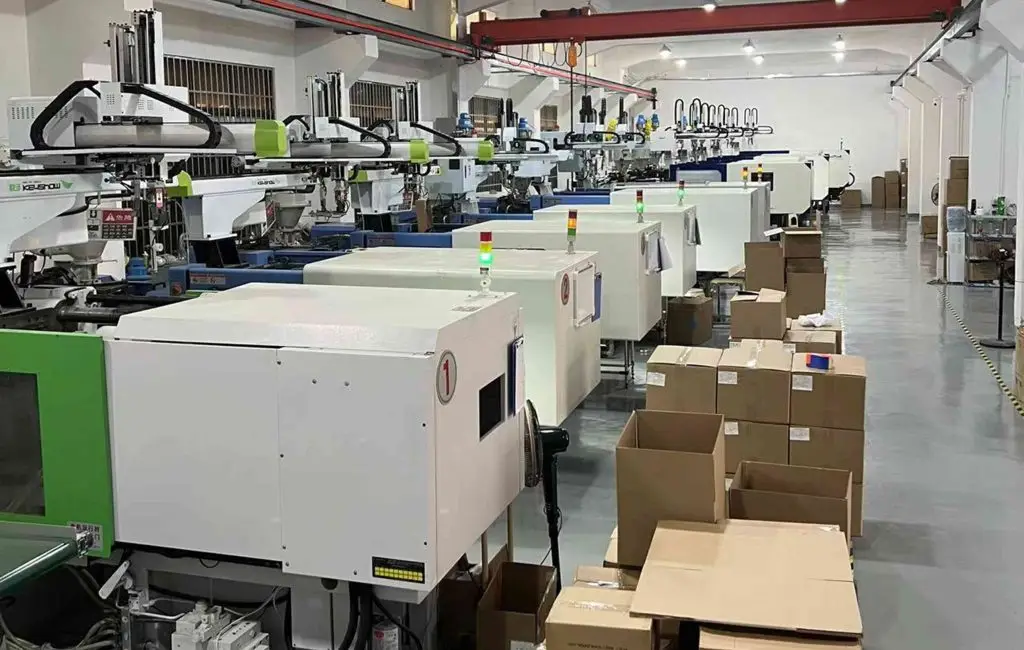
NexPCB
Core capabilities: IoT product realization covering engineering, mechanical development, prototyping, NPI, and production.
Volume: Its current FAQ describes prototype and NPI builds as small as 5–10 units, with production quantities dependent on product complexity.
Best for: Connected-device teams needing an organized path from validation to production.
What to know: Its capabilities page describes distributed manufacturing, including PCBs in China and plastic parts in Malaysia. Review how transfers, revisions, and quality records are controlled. [11, 12]
Seeed Studio
Core capabilities: Fusion PCB/PCBA services and separately scoped ODM customization covering electronics, mechanical parts, assembly, and testing.
Volume: The Fusion guide lists one-piece PCBA orders and five-piece bare-PCB orders.
Best for: Teams moving from a development platform or design package toward a manufactured device.
What to know: These order minimums do not establish the MOQ or price of a complete ODM project. [13, 14]
Agilian
Core capabilities: Product development, DFM, validation, and manufacturing support for products with electronic and mechanical content.
Volume: Agilian generally looks for a credible plan to purchase at least US$300,000 of products at factory prices in the first 12 months of mass production.
Best for: Funded teams approaching industrialization.
What to know: For projects requiring its design services, it also states a minimum total design budget of US$50,000, only part of which needs to be spent with Agilian. Confirm these separate expectations in the quotation. [15]
Titoma
Core capabilities: Electronics design, engineering, and prototyping, working with manufacturing partners in China.
Volume: Its FAQ states a minimum order value of US$150,000, rather than a fixed unit MOQ.
Best for: Funded programs seeking an external development team and a managed production route.
What to know: Titoma also states that full development NRE tends to start at US$150,000. Its design offices and manufacturing partners are separate; it is not a low-budget, single-factory option. [16, 17]
For this group, compare the complete path to a saleable product. A low first-build quantity is helpful, but design fees, tooling, testing, and component purchases still determine how much cash the project needs.
Comparison of published order terms
“Ask” means that the reviewed official source did not provide a general minimum for a custom finished product. It does not mean that the supplier refuses small orders. Design descriptions summarize public services, not a project quotation.
| Company and group | Published order information | Design support | Best fit |
|---|---|---|---|
| Foxconn (A) | Ask | Integrated design and manufacturing | Broad industrialization |
| Luxshare (A) | Ask | Components through systems | Component integration |
| BYD Electronic (A) | Ask | Integrated product solutions | Electronics and mechanics |
| Goertek (A) | Ask | Smart hardware development | Audio and wearable hardware |
| USI (A) | Ask | Device and module design | Miniaturization |
| Kaifa (B) | High-mix, low-volume supported; ask | Product development and DFx | Application-specific EMS |
| DBG (B) | Ask | Confirm engineering scope | Manufacturing footprint |
| 3CEMS (B) | Ask | Joint design and system build | Board-to-system integration |
| Viasion (B) | PCB/PCBA from 1 piece | PCB design and DFM support | Board-level small batches |
| Computime (B) | Ask | Hardware and firmware co-development | Intelligent controls |
| Minewing (C) | No strict general MOQ; project terms apply | ID, mechanical, hardware, firmware | Coordinated development |
| NexPCB (C) | Prototype/NPI from 5–10 units | Electronics and mechanical engineering | IoT development and NPI |
| Seeed Studio (C) | PCBA 1; bare PCB 5; ODM ask | Separate ODM service | Prototype-to-product route |
| Agilian (C) | US$300,000 first-year purchase plan; design budget applies | Development and DFM | Funded hardware launches |
| Titoma (C) | US$150,000 minimum order value | Design and manufacturing partners | Funded development programs |
Location and certification check: Obtain the name and address of the proposed manufacturing entity, then request certificates covering that site and activity. Viasion advertises ISO 9001 and ISO 13485; USI describes ISO 9001 and IATF 16949 within its manufacturing network. Check the certificate scope against the factory and work proposed for your product. [5, 18]
Apply the same check when working with us: include the relevant site, quality requirements, and supporting documentation in the supplier review.
SMETA should be evaluated separately as a social audit methodology. It is not a certification or a pass/fail award. [19]
Eight questions before sending your BOM
If your design still needs engineering, identify that work before requesting an assembly price. Our electronics development solutions outline areas such as embedded hardware, connectivity, and manufacturing engineering. Whichever supplier you approach, use the questions below to define what belongs in the proposal.
- What are the first-batch and reorder commitments? Ask about finished units, material purchase minimums, minimum order value, excess stock, and cancellation exposure.
- Who builds the prototype and the production units? A transfer can work, but it needs controlled files, fixtures, test limits, and a named engineer responsible for the handover.
- What is included in non-recurring engineering and tooling? Itemize non-recurring engineering (NRE), molds, stencils, fixtures, software, maintenance, and transfer charges. State who owns each asset and when ownership transfers.
- Who buys components and approves alternatives? Agree turnkey versus consigned material, approved sources, traceability, and written approval before substitutions.
- What does each validation build have to prove? Define quantities from the test plan, exit criteria, retest budgets, and responsibility for failed builds or design changes.
- How far does compliance support go? Distinguish laboratory coordination from technical documentation, declarations, applicant responsibilities, and ongoing product support.
- Who answers engineering questions? Name technical and commercial contacts, decision owners, response expectations, and an escalation route.
- What evidence supports production readiness? Request representative yield reports, defect definitions, corrective actions, and relevant references that the supplier is permitted to share.
Red flags that deserve a closer look
A very low quote is difficult to assess if it omits test fixtures, scrap assumptions, component alternatives, or tooling. Ask for a cost breakdown and an explanation of the assumptions behind the price.
Undisclosed subcontracting, unexplained factory changes, and refusal to provide reasonable production evidence are also warning signs. Legitimate customer confidentiality can limit factory access, so evaluate the explanation and available alternatives rather than treating one restriction as automatic proof of a problem.
The name of a confidentiality agreement is less useful than its coverage. Refusing your preferred “NNN” template is not conclusive; refusing to address unauthorized use, disclosure, subcontracting, asset ownership, or remedies leaves substantive issues unresolved. Have locally qualified counsel review the arrangement before releasing sensitive files.
Frequently asked questions
How are EMS ODM and JDM different
EMS describes manufacturing services, which may include engineering. ODM adds supplier-provided design, while JDM describes joint development. The labels overlap. Use a responsibility matrix and statement of work to define who supplies each design element and owns the resulting files.
Do Chinese EMS providers work with startups
Yes. The published offerings above include low-volume and development services. The useful question is whether a particular provider can support your design maturity, product category, budget, and next build.
What is a realistic MOQ for custom electronics
There is no universal finished-product MOQ. Single-board services demonstrate that very small electronic assemblies are possible, but custom tooling, bought-in parts, packaging, and project economics can create separate minimums.
How much money is needed before production
Request an itemized budget for engineering, tooling, prototypes, compliance work, and production materials. Published development thresholds at Agilian and Titoma illustrate how different commercial models can be; they are not industry-wide price benchmarks. For a project with us, the budget depends on the agreed engineering and manufacturing scope.
How should a startup protect design files
Control access by project stage, share only what is needed, keep revision and disclosure records, and agree rights to source files, firmware, test software, and tooling. Plan local IP protection early: trademark rights registered elsewhere do not automatically give protection in China. [20]
Should production be in China or Vietnam in 2026
Compare the actual sites, component supply routes, engineering support, qualification work, and total landed cost. Changing the assembly country alone does not establish a tariff saving. Have the importer or customs specialist confirm the classification, origin treatment, and duties for the proposed process and destination. For a project with us, discuss the proposed site and process allocation before comparing delivery options.
Build a shortlist around the next production decision
Start with global manufacturers when industrialization scale is central, application specialists when process expertise determines fit, and development partners when the design still needs engineering. Then send each candidate the same brief and compare the work, evidence, and commercial assumptions in their responses.
If you need support bringing electronics and an enclosure through development together, share your project with our team. Include the current design stage, target markets, first-batch quantity, annual forecast, and the technical questions you would like us to help resolve.
References
Sources accessed 29 September 2026.
[1] Foxconn services.
https://www.foxconn.com/en-us/products-and-services
[2] Luxshare capabilities.
https://www.luxshare-ict.com/en/
[3] BYD Electronic overview.
https://www.byd-electronics.com/en
[4] Goertek smart hardware.
https://www.goertek.com/en/product/index.html
[5] USI manufacturing quality.
https://www.usiglobal.com/en/Quality/Manufacturing-Quality
[6] Kaifa EMS.
https://en.kaifa.cn/EMS/
[7] DBG company history.
https://www.dbg.com.cn/about-us/our-history/
[8] 3CEMS overview.
https://www.3cems.com/index
[9] Viasion services and MOQ.
https://www.viasion.com/
[10] Computime manufacturing.
https://www.computime.com/manufacturing/
[11] NexPCB overview.
https://www.nexpcb.com/
[12] NexPCB manufacturing capabilities.
https://www.nexpcb.com/capabilities
[13] Seeed Studio Fusion PCB and PCBA service guide.
https://wiki.seeedstudio.com/Service_for_Fusion_PCB/
[14] Seeed Studio ODM process.
https://www.seeedstudio.com/blog/2025/07/18/understanding-seeed-studios-odm-process-from-concept-to-product/
[15] Agilian project fit.
https://www.agiliantech.com/about-us/who-we-work-with/
[16] Titoma operating model.
https://titoma.com/
[17] Titoma commercial FAQ.
https://titoma.com/faq/
[18] Viasion EMS.
https://www.viasion.com/electronic-manufacturing-services/
[19] Sedex explanation of SMETA.
https://www.sedex.com/solutions/smeta-audit/
[20] U.S. International Trade Administration guidance.
https://www.trade.gov/country-commercial-guides/china-protecting-intellectual-property