Holiday logistics places considerable pressure on manufacturers, distributors, retailers, and logistics providers. Rising order volumes, tight delivery schedules, temporary storage requirements, and cross-border transportation can make shipments harder to monitor. When products move through multiple facilities and transportation networks, limited visibility can lead to delays, misplaced inventory, and customer dissatisfaction. Choosing appropriate product tracking solutions helps businesses improve shipment visibility, coordinate logistics activities, and maintain better control during peak seasons.
GPS and Bluetooth Low Energy (BLE) technologies offer different approaches to tracking goods. Understanding their capabilities, limitations, and integration requirements helps businesses select suitable systems for their supply chains.

Why Holiday Logistics Requires Better Product Visibility
Seasonal demand introduces operational challenges that extend beyond transportation capacity. Warehouses may process more orders than usual, temporary workers may handle unfamiliar procedures, and shipments may pass through additional distribution points. Without reliable tracking information, businesses can struggle to identify bottlenecks or determine whether goods have reached the correct location.
Effective product tracking solutions provide information that supports inventory management, delivery planning, and exception handling. Depending on the system, businesses can monitor shipment locations, record movements between facilities, or identify when tagged items enter designated areas. These capabilities help logistics teams respond more quickly to disruptions and communicate more accurately with customers and business partners.
GPS Tracking for Long-Distance Shipments
Global Positioning System (GPS) technology determines location using satellite signals. Tracking devices can combine GPS receivers with cellular or other communication technologies to transmit location data to a monitoring platform. This makes GPS particularly useful for shipments traveling between cities, countries, ports, and distribution centers.
For holiday logistics, GPS tracking can help businesses monitor trucks, shipping containers, high-value cargo, and selected individual packages. Location updates allow logistics teams to compare actual progress with planned routes and investigate unexpected stops or delays. Depending on the device and service configuration, additional information, such as temperature or movement, may also be collected.
However, GPS devices require suitable power sources and communication coverage to provide useful updates. Satellite reception can also be limited inside buildings, underground facilities, or enclosed transportation environments. Battery life, connectivity costs, device placement, and reporting frequency should therefore be considered before implementation.
BLE Tracking for Warehouses and Distribution Centers
Bluetooth Low Energy is designed for short-range wireless communication with relatively low power consumption. BLE tags or beacons can transmit identifiers that compatible gateways, receivers, or mobile devices detect within their communication range. By placing receivers at warehouse entrances, storage zones, packing stations, or loading docks, businesses can record the movement of tagged assets through specific locations.
BLE is particularly valuable for monitoring inventory within facilities where satellite-based positioning may be unreliable. For example, a retailer preparing holiday orders could use BLE-enabled tags to identify whether selected cartons have reached a staging area before collection. Warehouse teams can also use location events to investigate misplaced equipment or improve the visibility of reusable containers.
Unlike GPS, BLE does not inherently provide precise global coordinates. Its effectiveness depends on receiver placement, radio conditions, tag configuration, and the tracking platform. Businesses should define whether they need room-level visibility, zone detection, or more precise positioning before choosing an implementation.
Choosing Between GPS and BLE Technologies
GPS and BLE serve different operational purposes, so the best choice depends on where goods move and what information a business needs.
GPS generally suits outdoor transportation and long-distance shipment monitoring. BLE is better suited to indoor environments, short-range identification, and tracking movement through predefined facility zones. A business handling both transportation and warehousing may benefit from combining the technologies rather than relying on either one exclusively.
When evaluating product tracking solutions, decision-makers should consider shipment value, tracking frequency, expected battery life, network availability, deployment costs, and integration with existing warehouse or transportation management systems. Data security and access permissions also matter when multiple suppliers, carriers, and customers share shipment information.
Integrating Tracking Hardware into Business Operations
A tracking device delivers value only when its hardware, software, and operational processes work together. Businesses must consider how tags are attached, how devices are powered, how data reaches the platform, and how tracking events trigger useful actions. For instance, a notification about a delayed shipment is more valuable when staff know who should investigate and how delivery plans can be adjusted.
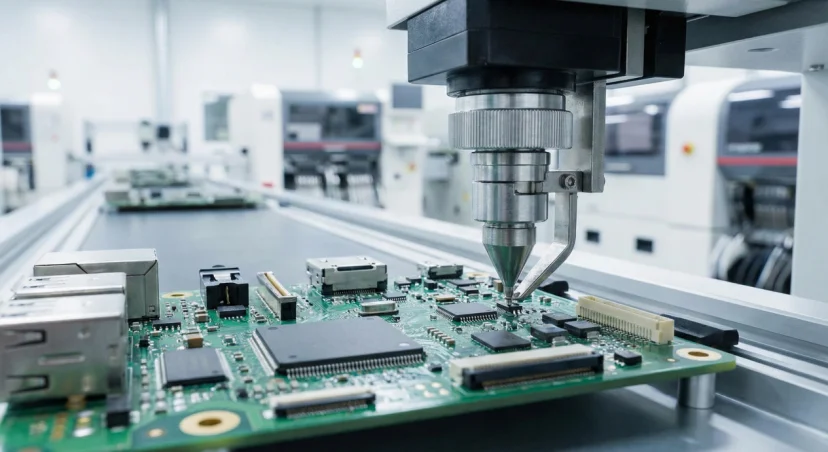
Hardware design is especially important when tracking devices must withstand repeated handling, temperature fluctuations, vibration, or extended operation. Antenna performance, enclosure design, power management, circuit integration, and manufacturing consistency can all influence product reliability.
At Minewing, we provide end-to-end electronic design, engineering, and manufacturing services, supporting projects from prototyping through mass production. Our turnkey manufacturing solutions can help businesses develop electronic products around defined functional, quality, and production requirements. Early engineering evaluation allows teams to assess component selection, device packaging, and manufacturing feasibility before committing to larger production volumes.
Preparing Tracking Systems for Seasonal Demand
Businesses should validate tracking systems before holiday order volumes peak. Pilot projects can reveal coverage gaps, installation difficulties, battery limitations, and inconsistencies in location reporting. Testing representative shipments and warehouse workflows also helps teams establish realistic expectations about tracking accuracy and update frequency.
Scalability deserves equal attention. A system that performs adequately with several hundred tagged items may require different gateway capacity, data processing, or device management procedures when expanded. Businesses should confirm that their chosen platform can accommodate expected shipment volumes and connect with relevant inventory, logistics, or customer service systems.
Reliable product tracking solutions also depend on clear operating procedures. Staff need instructions for registering devices, replacing batteries, responding to missing signals, and maintaining accurate shipment records. These preparations reduce avoidable problems during the busiest weeks of the year.
Building a More Resilient Holiday Supply Chain
GPS and BLE provide complementary ways to improve logistics visibility, from long-distance transportation to movement inside warehouses. By matching technology to operational needs, testing deployments before peak demand, and integrating tracking data into existing workflows, businesses can reduce uncertainty and improve coordination.
For companies developing connected tracking devices, engineering quality and manufacturing readiness are equally important. Minewing supports these requirements through electronic product development and turnkey manufacturing solutions, helping businesses move from product concepts toward scalable production. With suitable planning, product tracking solutions can strengthen shipment visibility, support better decisions, and create a more dependable holiday logistics operation.