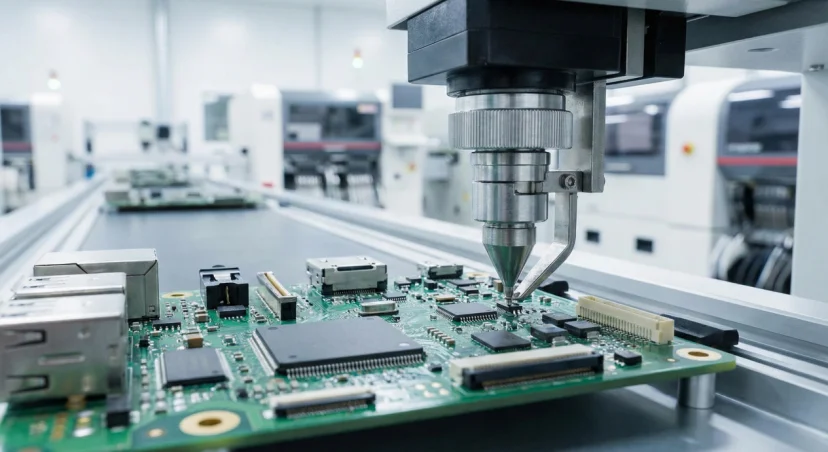
Choosing the right manufacturing model can directly affect a product’s development timeline, engineering workload, intellectual property strategy, and production efficiency. For businesses developing electronic products, understanding OEM and ODM is therefore more than learning two industry terms. It helps us determine who owns the design work, where engineering responsibility sits, and how much support we need from a manufacturing partner before entering production.
What Does OEM Mean for Electronics Businesses?
OEM, or Original Equipment Manufacturer, generally refers to a manufacturing model in which the customer owns or controls the product design while a manufacturing partner produces the product according to defined specifications. In an electronics project, this may include finalized Gerber files, a bill of materials (BOM), mechanical drawings, assembly requirements, testing standards, and other production documentation.
For businesses choosing an OEM service, the major engineering decisions have already been made. The manufacturing partner’s role is to execute those requirements accurately and consistently. This makes manufacturing capability, process control, component sourcing, quality management, and production scalability especially important.
Our OEM service at Minewing is designed for customers who already have a finalized product design and need a capable manufacturing partner. We can support electronics production, assembly, testing, and related manufacturing processes while working according to the customer’s established requirements. Our broader service system also covers prototyping, trial production, and mass production.
What Is ODM Electronics?
ODM, or Original Design Manufacturing, takes a different approach. Rather than receiving a fully completed design, the manufacturing partner contributes substantially to the product development process. The customer may begin with a product concept, functional requirements, target market, or business opportunity rather than complete engineering documentation.
This is where electronic ODM becomes particularly valuable. The ODM partner may participate in hardware development, component selection, engineering design, prototyping, testing, design optimization, and preparation for mass production. The exact division of responsibilities depends on the project agreement.
For companies without a large internal engineering team, our ODM services reduce the technical workload they need to manage independently. Instead of coordinating separate designers, engineers, prototype suppliers, and manufacturers, clients can work with us as a single partner across multiple development stages.
OEM and ODM: Where Is the Main Difference?
The simplest distinction between OEM and ODM is who takes primary responsibility for product design. Under an OEM model, the customer provides the established design and the manufacturer focuses mainly on production execution. Under an ODM model, the manufacturing partner participates in creating or developing the product itself.
This difference affects more than engineering responsibilities. It can influence development costs, project management, intellectual property arrangements, communication requirements, and time to market.
For example, a company with experienced hardware engineers and a validated product design may benefit from OEM manufacturing because it can retain greater control over the design process. A startup or established brand entering a new electronics category may instead prefer ODM support when it needs additional technical expertise.
How Should Businesses Choose Between OEM and ODM?
We recommend starting with the current stage of the product rather than choosing a manufacturing model based simply on cost. If the design has already been validated and the primary requirement is reliable, high-yield production, OEM may be the more appropriate route.
A typical OEM project may begin with complete design files, including Gerber files, BOMs, and mechanical 3D drawings. The manufacturing partner then focuses on translating those specifications into repeatable production while meeting agreed quality and testing requirements.
ODM is more suitable when the business has identified a market opportunity but still needs engineering support. The project may start with an idea or product requirement, after which the ODM partner helps develop the hardware and move the concept toward a production-ready solution.
At Minewing, we support this development path through engineering capabilities covering electronics hardware, software, structural processes, exterior design, and packaging. Our design team can also provide early-stage advice intended to improve product viability and help organize technical resources.
Why Engineering Capability Matters in Both Models
Although OEM and ODM place different responsibilities on the manufacturer, production capability remains important in both models. A design that looks workable on paper still needs to be translated into a stable manufacturing process. Component availability, assembly methods, testing procedures, production documentation, and process optimization can all affect the final result.
For ODM projects, this connection between engineering and manufacturing is even more important. Design decisions should consider manufacturability from an early stage instead of treating production as a separate step. Our integrated approach connects design, prototyping, trial production, and mass production, allowing engineering considerations to be addressed throughout the product lifecycle.
OEM and ODM Require Clear Project Responsibilities
Whichever model a business chooses, responsibilities should be clearly defined before development or production begins. Businesses should establish who controls the design files, who approves component substitutions, who owns newly developed intellectual property, who manages testing requirements, and who is responsible for production changes.
Quality systems and supply-chain management should also receive attention. At Minewing, our factories hold ISO 9001 and ISO 14001 certifications, while our quality processes include incoming material inspection, functional testing, and mass-production aging tests.
Choosing the Right Path from Concept to Production
OEM and ODM are not simply two different ways of purchasing electronics manufacturing. They represent different levels of responsibility and collaboration between a business and us as its manufacturing partner. OEM is generally appropriate when the customer already controls a finalized design and needs reliable production execution. We recommend ODM for businesses that need technical support to transform an idea into a manufacturable electronic product.
We provide both paths at Minewing because different customers enter the product lifecycle at different stages. With experience spanning electronics design, prototyping, trial production, and mass manufacturing, we can support customers from an established design or an early-stage concept.
Understanding these differences allows businesses to select a partnership model based on their actual engineering resources, intellectual property requirements, and product-development goals. For companies evaluating OEM and ODM, the right choice is ultimately the model that provides the appropriate balance of control, technical support, manufacturing capability, and responsibility.