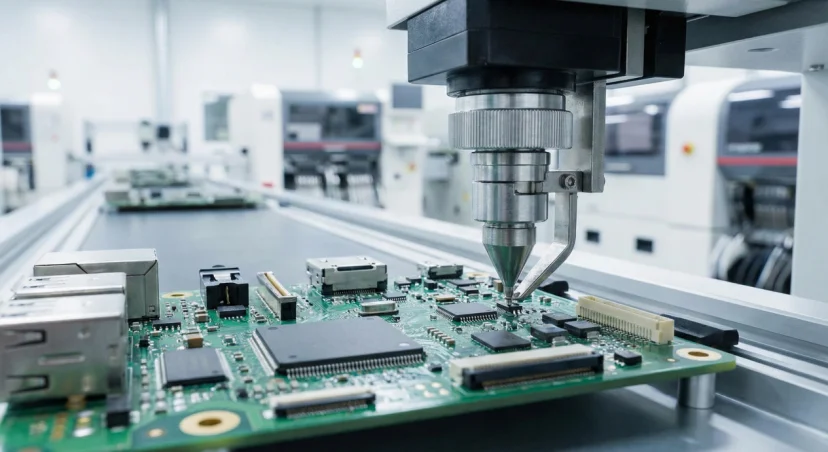
IoT products must connect hardware, software, users, and cloud services into one dependable experience. That makes development more complex than simply building an electronic device that works. For IoT brands, effective product design and prototyping should validate functionality, manufacturability, connectivity, security, and user experience before production investment increases. We use a structured development approach to help turn connected-product concepts into reliable, production-ready hardware.
Start With Clear IoT Product Requirements
A strong product begins with clearly defined requirements. Before designing a PCB or enclosure, we recommend documenting the product’s intended users, operating environment, core functions, connectivity requirements, power expectations, and performance targets.
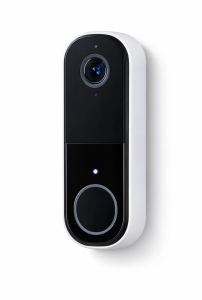
IoT brands should also consider how the device interacts with applications, cloud platforms, and other connected products. For a smart doorbell, for example, the requirements may include video monitoring, two-way communication, motion detection, night vision, mobile connectivity, and dependable operation at the entrance of a home.
Clear requirements provide our engineering and manufacturing teams with measurable targets. They also make prototype testing more effective, as we can evaluate the device against defined expectations instead of subjective impressions.
Design Hardware With Manufacturing in Mind
A prototype can prove that an electronic concept works without proving that it can be manufactured efficiently. We therefore recommend considering manufacturability from the beginning of product design and prototyping.
PCB layout, component selection, enclosure structure, connectors, fastening methods, thermal considerations, and assembly processes can all influence production cost and reliability. Design-for-manufacturing (DFM) reviews can identify unnecessary complexity before it becomes expensive to correct.
At Minewing, we integrate DFM optimization into our development approach. Our ODM services combine PCBA development with mechanical engineering, while our manufacturing process is designed to support products from concept through prototype and mass production.
Build Prototypes to Answer Specific Questions
Not every prototype needs to validate everything at once. We prefer using prototypes strategically to answer specific engineering questions.
An early prototype might validate the electronics architecture or connectivity. A later prototype can examine enclosure integration, thermal performance, user interaction, or assembly. This staged approach allows teams to identify problems before committing to larger production quantities.
For IoT brands, electronic prototype manufacturing should therefore be treated as an engineering validation activity rather than simply producing an attractive sample. Each prototype should have defined objectives, test criteria, and documented findings that guide the next development iteration.
Validate Connectivity and Real-World Performance
Connectivity is central to IoT products, but successful laboratory communication does not necessarily guarantee dependable field performance. Engineers should evaluate the device under realistic operating conditions and consider factors such as wireless range, interference, power consumption, environmental conditions, and network behavior.
A smart doorbell illustrates this requirement clearly. Its value depends not only on camera performance but also on dependable communication between the device, application, and user. Testing should therefore cover the complete product experience rather than evaluating individual hardware functions in isolation.
We use prototyping and testing to identify performance issues early, helping customers refine their designs before manufacturing scales.
Build Security Into the Design Process
Cybersecurity should not be added after the hardware has already been finalized. National Institute of Standards and Technology (NIST)’s 2026 revision of its foundational IoT guidance recommends that manufacturers consider cybersecurity activities across product development and support, including pre-market and post-market activities.
For IoT brands, this means considering secure authentication, software and firmware practices, update mechanisms, data protection, and vulnerability management during development. NIST also emphasizes that IoT security involves both technical capabilities and supporting processes throughout the product lifecycle.
We recommend incorporating these requirements into the product specification and prototype testing plan instead of treating security as a separate final-stage exercise.
Protect the User Experience Through Iteration
IoT hardware can contain sophisticated technology while still delivering a poor user experience. Buttons, indicators, mounting systems, mobile interactions, audio, camera positioning, and physical accessibility can all affect whether customers find a product intuitive.
Our smart doorbell development experience demonstrates why hardware and user experience should be considered together. The product combines HD video monitoring, two-way audio, motion detection, night vision, and app connectivity. During development, these functions need to work as one coherent experience rather than as unrelated features.
Iterative prototypes allow IoT brands to identify usability problems while design changes remain manageable.
Prepare the Prototype for Production
The final prototype should represent more than the intended appearance and basic functionality. Before production, we recommend reviewing the bill of materials, component availability, PCB assembly requirements, enclosure manufacturing, testing procedures, packaging, and quality criteria.
This stage connects electronic prototype manufacturing with scalable production. A manufacturing partner should be able to identify potential production issues and recommend practical changes before volume manufacturing begins.
At Minewing, we support this transition through DFM, prototyping, testing, manufacturing preparation, and mass-production services. We also provide end-to-end electronic design and manufacturing support, allowing development and production activities to remain connected.
Choose a Partner That Supports the Full Lifecycle
For an IoT brand, the right development partner should contribute more than prototype assembly. Engineering support, manufacturing knowledge, quality control, supply-chain coordination, and production scalability can all influence the commercial outcome.
We support OEM, ODM, and JDM projects, including electronic prototyping and manufacturing. Our approach is designed to help customers progress from concept and engineering through prototype validation and full production. We also use controlled processes for project data and quality management during manufacturing.
Turning IoT Concepts Into Production-Ready Products
Effective product design and prototyping requires IoT brands to think beyond whether a device simply functions. Requirements, manufacturability, connectivity, security, user experience, testing, and production readiness all need attention before commercial scaling.
We believe the strongest development process connects these considerations from the beginning. Through our smart doorbell project and broader IoT manufacturing services, we help customers move from product concepts to validated hardware and scalable production. Our role is to make electronic prototype manufacturing part of a structured path toward dependable, market-ready IoT products.