
A supplier can quote an attractive unit price and still create difficulties once engineering work begins. Quality in electronics manufacturing depends on far more than the finished appearance of a product; printed circuit board (PCB) assembly, process control, component sourcing, testing, communication, and production flexibility all influence the final result.
For teams evaluating one-stop custom fabrication services, the real task is to examine whether a manufacturing partner has the technical depth and operational discipline required at each stage. At Minewing, we believe capability should be judged through practical evidence, transparent communication, and the ability to turn engineering requirements into repeatable manufacturing processes.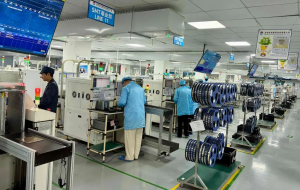
Examine Manufacturing Infrastructure
Physical manufacturing infrastructure provides an important starting point, but equipment alone does not tell the whole story. Surface mount technology (SMT) capability, PCB assembly resources, inspection equipment, tooling facilities, and production lines should be considered alongside the types of products a supplier regularly handles. High-density electronic assemblies, for example, demand tighter process control than relatively simple circuit boards.
The capabilities of electronics manufacturers in China can differ significantly even when several suppliers appear similar on paper. A useful assessment therefore looks at whether the factory has appropriate SMT equipment, experienced engineering personnel, production testing, and processes suited to the intended product category. Documentation about quality management and manufacturing procedures can also provide useful evidence during supplier evaluation.
Our own expansion into smart electronics followed this principle. At Minewing, we established SMT facilities to support high-density PCBA manufacturing as demand for connected devices increased. That investment expanded our ability to work with core electronic circuitry for applications such as communication and M2M equipment, while also strengthening the connection between electronic engineering and physical manufacturing.
Evaluate PCBA Quality And Process Control
Reliable PCBA manufacturing depends on consistent processes rather than visual inspection alone. Soldering quality, component placement, traceability, inspection procedures, and functional testing all deserve attention. Depending on product complexity, teams may also need to consider automated optical inspection, X-ray inspection, programming, and electrical testing.
Supplier discussions should move beyond asking whether one-stop custom fabrication services are available. Requesting information about inspection stages, test coverage, defect handling, and process documentation can reveal how quality is managed throughout production. A factory that can explain its testing logic clearly is easier to evaluate than one that relies mainly on broad quality claims.
For high-density assemblies, manufacturing precision becomes especially important because small process deviations can affect electrical performance or long-term reliability. Our SMT manufacturing work at Minewing is therefore considered alongside engineering requirements, component selection, PCB layout, and production testing. Such coordination helps teams assess not only whether a board can be assembled, but also whether the manufacturing process fits the product’s technical demands.
Assess Engineering And Technical Depth
Manufacturing capability becomes much more valuable when engineers can contribute before production begins. Design reviews may uncover problems involving component availability, PCB layout, assembly access, thermal conditions, enclosure integration, or testing. These observations can influence the product before tooling and volume manufacturing create higher costs for revisions.
A capable group of China electronics manufacturers should be able to discuss manufacturing constraints in specific technical terms rather than simply accepting production drawings. Questions about Design for Manufacturing, component substitutions, tolerance requirements, assembly sequence, and test points can reveal how deeply the supplier understands the product.
Technical collaboration also matters when a project changes after the first prototype. At Minewing, we work across design, engineering, prototyping, and manufacturing so that new requirements can be reviewed in relation to the existing product architecture. That approach gives development teams a practical way to evaluate whether proposed changes are feasible without treating every revision as an isolated manufacturing request.
Look Beyond The Factory Floor
Quality is influenced by the supply chain as much as by assembly equipment. Component shortages, inconsistent materials, unexpected substitutions, and fragmented supplier communication can all affect production schedules. A supplier assessment should therefore include procurement practices, component verification, inventory planning, and communication procedures.
The broader value of one-stop custom fabrication services comes from connecting multiple activities instead of treating each supplier as a separate island. PCB fabrication, component sourcing, SMT assembly, enclosure work, packaging, and logistics can interact closely, so coordination across these areas can reduce unnecessary communication gaps and make project status easier to track.
Long-term cooperation also requires straightforward communication when problems occur. At Minewing, we place emphasis on transparent discussions about technical changes, supply conditions, production progress, and potential issues. Rather than measuring a supplier solely by how smoothly routine orders proceed, teams should consider how openly the manufacturing partner communicates when circumstances become less predictable.
Making Supplier Evaluation More Practical
Selecting a fabrication partner is less about finding the factory with the longest equipment list and more about verifying whether its capabilities match the product’s actual requirements. PCBA quality, engineering support, sourcing discipline, testing methods, production flexibility, and communication should all form part of the assessment rather than being considered separately.
A thoughtful review of one-stop custom fabrication services can reveal how much of the development and manufacturing process a supplier can realistically coordinate. Site evidence, process documentation, engineering discussions, prototype results, and production references often provide more useful information than general promotional statements.
Hardware projects rarely follow a perfectly linear path, so the relationship behind the manufacturing process matters just as much as the machinery itself. At Minewing, we build our work around transparent communication, integrated engineering, and manufacturing capabilities that can develop alongside our partners’ requirements. That combination gives product teams a more grounded basis for judging quality today while considering whether a supplier can remain useful as the hardware moves into its next stage.



