
A compact electronic product rarely succeeds through printed circuit board (PCB) performance alone. The board, enclosure, connectors, thermal path, fasteners, and assembly method must work as a coordinated physical system, especially when space is limited and production volumes are expected to grow.
One-stop custom fabrication services make that coordination more practical by connecting electronic and mechanical development within the same manufacturing workflow. At Minewing, we use integrated engineering and manufacturing practices to help turn hardware concepts into reliable products without treating printed circuit board assembly (PCBA) and enclosure work as unrelated tasks.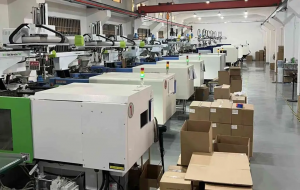
Why PCBA And Enclosure Must Be Developed Together
PCBA design determines much more than electrical functionality. Component height, connector positions, heat generation, mounting points, and access for testing can all affect the enclosure. If the housing is designed first and the board is adjusted later, mechanical conflicts may appear during prototyping, forcing revisions that consume both time and engineering resources.
The role of electronics manufacturers in China can extend into this design interaction when engineering and fabrication capabilities are closely connected. Manufacturing teams can review board dimensions alongside enclosure requirements, helping identify issues involving tolerances, assembly clearance, material selection, and production methods before they become difficult to modify.
Designing The Internal Structure Around Real Requirements
Space efficiency becomes particularly important in handheld devices, smart home equipment, and connected consumer hardware. The enclosure must provide enough room for the PCBA while accommodating batteries, antennas, buttons, sensors, speakers, and other components. Internal structure therefore deserves the same engineering attention as the visible exterior.
Working with China electronics manufacturers that understand both fabrication and assembly can help teams evaluate practical details such as wall thickness, fastening methods, connector access, and tolerance accumulation. These factors may appear minor in a digital model, yet they can affect whether a physical assembly fits smoothly and whether production operators can work efficiently.
Our Smart Doorbell project provides a useful example of this principle. At Minewing, we consider electronic architecture, enclosure constraints, connectivity, and manufacturing requirements as related engineering questions rather than isolated assignments. Such coordination is particularly valuable when a compact product must accommodate several functions inside a restricted physical footprint.
Using Prototypes To Validate The Physical Product
Digital drawings can reveal many design issues, but a physical prototype offers another level of evidence. Engineers can check whether boards fit correctly, buttons align with openings, connectors remain accessible, and enclosure surfaces behave as expected. These checks become more meaningful before expensive tooling or higher-volume fabrication begins.
A practical one-stop custom fabrication services workflow may combine 3D printing, CNC machining, silicone molding, PCB fabrication, and assembly according to the validation stage. Early prototypes can focus on dimensions and usability, while later samples can move closer to production-intent materials and processes. The objective is not simply to produce samples quickly, but to obtain useful information from each iteration.
Prototype feedback also creates a bridge between engineering assumptions and manufacturing reality. A housing that appears structurally sound may require additional support around a mounting point, while a PCB that meets electrical requirements may need repositioning to accommodate assembly access. At Minewing, we use these physical observations to guide subsequent engineering decisions instead of waiting until volume production to discover avoidable conflicts.
Preparing The Integrated Design For Production
A prototype and a production unit have different priorities. Prototype fabrication can tolerate more manual intervention, whereas volume production requires repeatable assembly methods, stable component sourcing, suitable tooling, and practical testing procedures. The transition should therefore begin before the design reaches its final manufacturing stage.
Experienced China electronics manufacturers can contribute through Design for Manufacturing reviews that examine component availability, PCB fabrication, enclosure materials, assembly access, and testing requirements together. Such reviews help teams identify processes that may work for a few samples but become inefficient or inconsistent at higher quantities.
Creating A Scalable Hardware Architecture
Scalability involves more than increasing the number of units produced. A well-prepared product should also have a manufacturing process that can accommodate demand changes without requiring unnecessary redesign. Component sourcing, assembly procedures, quality checks, packaging, and logistics all become relevant as the project moves beyond its initial production stage.
For hardware teams, one-stop custom fabrication services can provide continuity between early samples and larger production quantities. Rather than transferring the project between unrelated suppliers at every stage, developers can maintain greater consistency in technical documentation, manufacturing feedback, and process knowledge. That continuity can be especially useful for products with close relationships between electronic and mechanical components.
Our broader manufacturing approach at Minewing connects design, engineering, rapid prototyping, production preparation, assembly, and packaging. We also support projects ranging from individual prototypes to larger production requirements, allowing manufacturing plans to develop alongside the product itself. The result is a workflow in which physical design decisions remain connected to practical production considerations.
Making Integration Part Of The Development Strategy
PCBA and enclosure integration should not be treated as a late-stage manufacturing concern. Their relationship affects thermal management, structural integrity, accessibility, assembly efficiency, and even the user experience. Addressing those relationships early can make subsequent engineering decisions more predictable and reduce unnecessary redesign cycles.
The capabilities available through China electronics manufacturers vary considerably, so evaluation should focus on more than equipment or production capacity. Engineering communication, prototype capability, DFM experience, sourcing coordination, assembly resources, and quality processes all influence how effectively a supplier can support an integrated hardware project.
A product reaches maturity through hundreds of connected decisions rather than one final manufacturing step. By combining engineering coordination with practical fabrication experience, Minewing helps our partners move from concept to scalable hardware while keeping PCBA and enclosure development closely aligned. That integrated perspective gives teams a stronger foundation for building products that are not only functional in prototype form, but also practical to manufacture as demand grows.



