
Complex hardware rarely stays within a single engineering discipline. A product may combine dense circuitry, mechanical structures, wireless communication, embedded software, power management, testing, packaging, and production requirements, with a change in one area affecting several others. One-stop custom fabrication services offer a way to coordinate these dependencies through a more connected development process. In practice, they handle highly complex projects by aligning engineering, prototyping, and production under one coordinated workflow.
Rather than treating fabrication as the final stage, teams can use an integrated workflow to manage technical decisions from early design through production. At Minewing, we have built our manufacturing approach around this kind of cross-functional coordination, particularly for projects where engineering complexity makes fragmented supplier management difficult.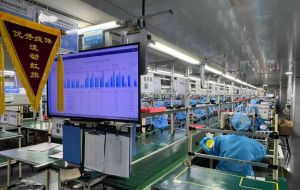
Breaking Down Complexity Before Production
Large hardware projects become easier to manage when their requirements are separated into clear technical areas. Electrical architecture, mechanical design, firmware, connectivity, power consumption, testing, and production engineering each have different concerns, yet none operates entirely independently. Establishing these relationships early gives project teams a clearer basis for setting priorities and identifying dependencies.
The capabilities of electronics manufacturers in China should therefore be assessed according to more than factory size or production volume. Complex projects require engineering resources that can discuss PCB layout, component selection, enclosure constraints, assembly processes, and manufacturing feasibility within the same development conversation. Clear responsibility across these areas can also reduce confusion when specifications change.
Our own transition into full-service EMS followed this need for integration. Since 2011, Minewing has combined mechanical and electronic expertise within an industrial project-management framework, allowing us to support work from circuit layout through retail-ready assembly. The objective is not simply to place more processes under one roof, but to create a development structure in which those processes can communicate effectively.
Coordinating Electronics And Mechanical Engineering
A sophisticated electronic product often depends on a surprisingly small physical space. Components need sufficient clearance, connectors must remain accessible, antennas require suitable positioning, and heat generated by the circuitry may influence enclosure materials or ventilation. Mechanical decisions can therefore affect electrical performance just as easily as the reverse.
Through one-stop custom fabrication services, teams can coordinate PCBA, enclosure development, tooling, assembly, and related manufacturing considerations without dividing every task among unrelated suppliers. A housing revision, for instance, may require a PCB adjustment, while a change in component placement could affect mounting points or internal supports. Reviewing those relationships together makes technical revisions easier to evaluate.
At Minewing, our mechanical and electronic capabilities developed alongside our EMS operations, giving us experience with projects where physical and electronic requirements overlap. That integrated perspective is useful when a product must move from circuit-level development toward a manufacturable physical assembly without losing sight of its original functional requirements.
Managing Prototyping And Engineering Changes
Complex products rarely reach production after a single prototype. Different iterations may focus on electrical behavior, mechanical fit, firmware interaction, thermal performance, user experience, or manufacturability. Each sample should answer specific engineering questions so that the next revision is based on evidence rather than assumption.
Experienced China electronics manufacturers can make these iterations more productive when prototype fabrication is connected to engineering review. Rapid samples may expose problems with connectors, component clearances, mounting structures, or assembly sequences that are difficult to identify from digital files alone. The important point is not merely how quickly a prototype is produced, but how effectively its results feed back into development.
A structured change process becomes equally important once testing begins. At Minewing, we consider engineering revisions in relation to production requirements, so changes can be reviewed for their potential impact on sourcing, assembly, tooling, and testing. Such coordination helps keep complex projects from accumulating disconnected modifications that later become difficult to reconcile.
Building A Controlled Production Workflow
Moving from engineering samples to volume manufacturing introduces another layer of complexity. Production requires stable component sourcing, repeatable assembly, inspection procedures, testing methods, documentation, packaging, and scheduling. A process that works well for a handful of prototypes may not be practical when hundreds or thousands of units must follow the same production route.
An integrated manufacturing model can simplify these transitions by keeping fabrication and manufacturing activities connected. Circuit assembly, mechanical fabrication, final assembly, and packaging can be considered as parts of one production sequence rather than independent operations. This structure becomes particularly useful when a product has tight dimensional tolerances or several assembly dependencies.
Industrial project management also plays an important role. Our EMS experience at Minewing involves coordinating engineering requirements with manufacturing execution, helping teams address issues through defined processes instead of relying on informal communication. As project complexity increases, disciplined documentation and clear decision paths become increasingly valuable.
Creating A More Connected Route To Production
Complexity itself is not necessarily the biggest obstacle to a hardware project. The greater difficulty often comes from disconnected processes, unclear responsibilities, delayed feedback, and engineering decisions made without visibility into manufacturing consequences. A coordinated workflow addresses these structural issues by allowing technical information to move more naturally between design and production.
For that reason, one-stop custom fabrication services should be evaluated as a project-management and engineering model as much as a fabrication option. A strong fit depends on whether the supplier can connect electronic development, mechanical work, prototyping, sourcing, assembly, testing, and production planning around the actual needs of the product.
Our experience at Minewing has reinforced a simple principle: complicated hardware becomes more manageable when its different requirements are treated as parts of the same system. By combining mechanical and electronic expertise with EMS capabilities and structured project coordination, we help our partners move through difficult development stages with greater clarity, while keeping the path from circuit design to finished hardware connected.



