Choosing the right manufacturing model can shape how quickly an electronics product reaches the market, how much engineering work your team must handle, and how much control you retain over the final design. We often see businesses compare OEM and ODM without fully understanding how the two models differ. For startups and established brands alike, knowing where responsibility sits can make supplier selection much more straightforward.

What Does OEM Mean in Electronics Manufacturing?
OEM stands for Original Equipment Manufacturer. In a typical OEM arrangement, the customer already owns or controls the product design and provides the technical information needed for manufacturing. This may include Gerber files, a bill of materials (BOM), mechanical 3D drawings, assembly requirements, and quality specifications.
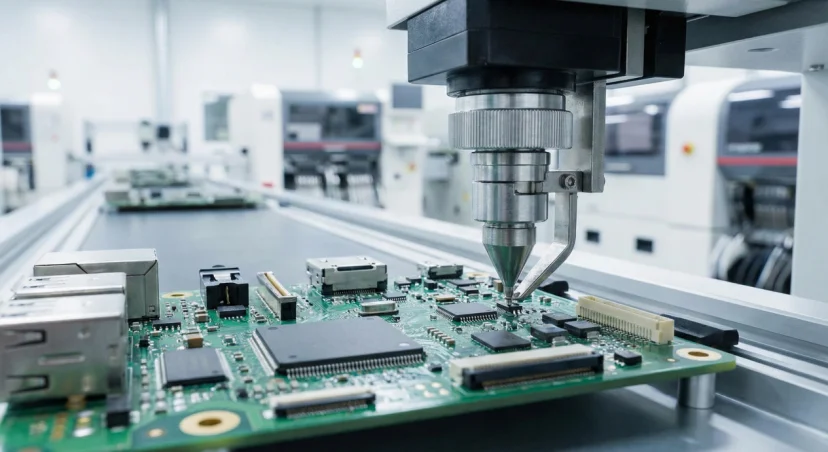
The manufacturing partner’s primary role is to turn that established design into a physical product. This can include PCB assembly, component sourcing, production assembly, testing, quality inspection, and packaging, depending on the agreed scope of work.
For companies with a finalized design, OEM manufacturing can provide an efficient route to volume production. The brand maintains control over product specifications and intellectual property while relying on the manufacturer for production capabilities, process control, and supply-chain execution.
When Should We Choose an OEM Service?
We generally see OEM as a strong option when a company has already completed most of its product development work. If your engineering team has finalized the circuit, PCB layout, enclosure, and manufacturing documentation, you may not need a partner to redesign the product.
Instead, you need a reliable manufacturing partner capable of following your specifications accurately and consistently. Production yield, component availability, quality control, assembly precision, and delivery performance then become important supplier-selection criteria.
Intellectual property protection is another consideration. When the customer provides proprietary designs, the manufacturing relationship should clearly define ownership, confidentiality, and permitted use of technical information. Strong communication and controlled access to product documentation can further support IP protection throughout production.
What Is ODM Electronics?
ODM stands for Original Design Manufacturer. Unlike an OEM arrangement, electronic ODM services can begin with an idea, product requirement, or market opportunity rather than a fully completed design.
The ODM partner contributes engineering expertise to develop the product. Depending on the project, this can involve hardware architecture, schematic design, PCB development, component selection, prototyping, design verification, and preparation for mass production.
This model can be especially useful for companies that understand their target market but do not have a complete in-house electronics engineering team. Instead of coordinating separate design and manufacturing suppliers, clients can work with us throughout most of the product-development process.
OEM and ODM: What Is the Difference?
The easiest way to understand OEM and ODM is to look at where the product design comes from and who carries the development responsibility.
With OEM manufacturing, the customer typically arrives with a finished or production-ready design. The manufacturer focuses primarily on executing that design at the required quality, volume, and cost. The customer therefore retains greater direct control over the technical definition of the product.
With ODM electronics, the customer may begin with a concept or functional requirement. The manufacturer contributes substantially to technical development before the product enters production. This can reduce the engineering burden on the customer while accelerating the transition from concept to manufacturable product.
Neither model is automatically better. The right choice depends on your team’s engineering capabilities, intellectual property strategy, development timeline, and desired level of control.
How Should Businesses Select the Right Manufacturing Model?
We recommend starting with the current stage of your product rather than simply choosing the model that appears more comprehensive.
If your team already has Gerber files, BOMs, mechanical 3D drawings, production specifications, and validated designs, OEM service may be the more appropriate route. The priority becomes finding a manufacturer that can execute the design accurately and achieve stable production yields.
If you have a clear product concept but still need technical development, ODM can provide more value. An experienced ODM partner can help translate functional requirements into a practical electronics design and progressively refine the product through prototyping and testing.
Cost should also be considered carefully. OEM may require greater upfront investment in internal engineering, while ODM transfers more development responsibility to the manufacturing partner. However, the total project cost depends on complexity, tooling, component requirements, testing, revisions, and production volume.
How Minewing Supports Both Paths
At Minewing, we support startups and global brands across different stages of electronics product development. Our approach allows customers to select a manufacturing path according to how much of the product design has already been completed.
For customers pursuing our OEM service, the process can focus on executing an established design. When you provide finalized Gerber files, BOMs, mechanical 3D drawings, and related specifications, we can concentrate on reliable production, assembly precision, quality management, and scalable volume manufacturing while respecting your intellectual property.
For customers requiring electronic ODM support, we can take greater responsibility for the hardware development process. Starting from your product idea and market requirements, our team can help develop the hardware and move the concept toward a production-ready product.
Why Long-Term Manufacturing Support Matters
The relationship should not necessarily end when the first production batch is completed. Electronics products often require component changes, design revisions, cost optimization, production scaling, and ongoing quality improvements.
We therefore view manufacturing as a long-term partnership rather than a single transaction. Transparent communication helps us understand changing requirements, while stable supply-chain management supports production continuity. A problem-solving mindset also allows us to address manufacturing challenges as products move from prototypes to larger production volumes.
Choosing the Right Route From Concept to Production
Understanding OEM and ODM gives businesses a clearer framework for deciding where manufacturing responsibility should sit. OEM is generally suited to companies with a completed design that need dependable production execution, while ODM is valuable when technical development remains part of the project.
At Minewing, we provide flexible support for both situations. Whether you need a manufacturer to execute your established design or an ODM partner to help develop your electronics concept, our goal is to provide a practical path from product requirements to reliable production.