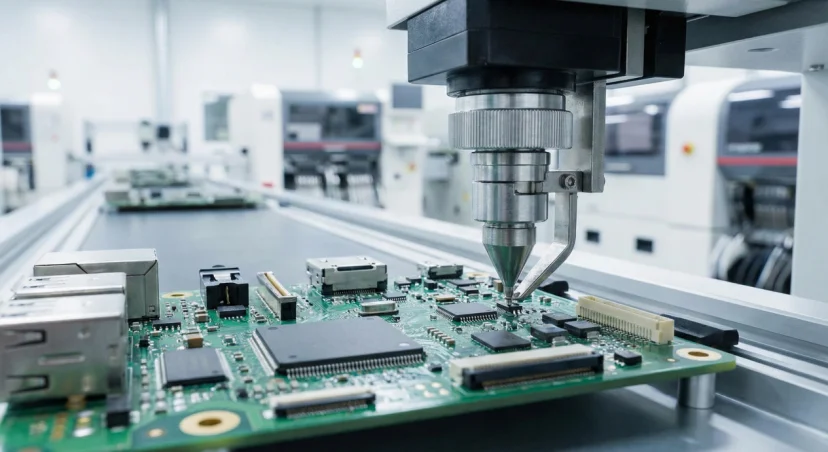
Choosing an electronics manufacturing partner involves more than evaluating production capacity, pricing, and delivery schedules. Businesses must also consider how consistently a supplier manages product quality, controls manufacturing processes, and addresses environmental responsibilities. These factors become particularly important when outsourcing electronic assemblies or developing products for international markets.
ISO 9001 and ISO 14001 provide internationally recognized frameworks for evaluating these management practices. The first focuses on quality management, while the second addresses environmental management. For businesses working with electronics manufacturing services providers, understanding these standards can help reduce supplier-related risks, improve production oversight, and support long-term cooperation.
Although certification alone cannot guarantee perfect products or sustainable operations, it offers useful evidence of an organization’s commitment to structured management and continuous improvement.
What ISO 9001 Means for Electronics Manufacturing
ISO 9001:2015 is an international standard for quality management systems (QMS). It establishes requirements that help organizations consistently provide products and services that meet customer expectations and applicable regulatory requirements.
For electronics manufacturing, quality management must cover multiple connected activities. These may include supplier evaluation, incoming material inspection, production planning, assembly procedures, process monitoring, testing, and corrective actions.
A manufacturer operating under an ISO 9001 quality management system should maintain documented procedures and clearly defined responsibilities. This helps ensure that production activities follow established requirements rather than depending entirely on individual operators.
For customers, these practices provide greater visibility into how quality is managed. When defects occur, structured investigation and corrective action processes can help identify underlying causes and prevent similar problems from recurring.
However, businesses should remember that ISO 9001 certification applies to an organization’s management system, not automatically to every product it manufactures. Product specifications and acceptance criteria still need to be established separately.
Understanding ISO 14001 and Environmental Responsibility
ISO 14001:2015 provides a framework for establishing an environmental management system (EMS). It helps organizations identify, manage, monitor, and improve the environmental aspects of their operations.
Electronic manufacturing can involve energy consumption, material waste, packaging, chemical handling, and emissions. Without appropriate management procedures, these activities may create environmental risks and increase operational costs.
An ISO 14001-based system encourages manufacturers to identify relevant environmental impacts and establish measurable management objectives. Depending on their operations, these objectives may involve improving energy efficiency, reducing waste, managing hazardous materials, and complying with applicable environmental regulations.
The standard also emphasizes monitoring and continuous improvement. Organizations are expected to review their environmental performance and evaluate whether established controls remain effective.
For international customers, environmental management is increasingly relevant to supplier selection. Businesses may need to demonstrate responsible sourcing and manufacturing practices as part of their own sustainability commitments. Working with a supplier that follows a structured environmental framework can support these efforts.
Why Both Standards Matter When Selecting an EMS Partner
ISO 9001 and ISO 14001 address different management priorities, but they complement each other in electronics manufacturing.
Quality management focuses on delivering consistent products and services, while environmental management addresses the impact of business operations. Together, they provide a broader perspective on how a manufacturer manages its responsibilities.
When evaluating electronics manufacturing services, buyers should consider how these systems influence everyday production activities. A documented quality process can support consistent assembly and inspection, while environmental procedures can improve the management of materials, energy, and manufacturing waste.
These standards are also relevant to supply chain management. Manufacturers need procedures for evaluating suppliers, monitoring external processes, and responding to operational issues. Such controls can help customers gain greater confidence in the way outsourced production is managed.
Nevertheless, certification should be one part of supplier evaluation. Buyers should also review production capabilities, engineering experience, testing resources, communication practices, and the manufacturer’s ability to support changing project requirements.
What to Check When Evaluating Electronic Manufacturing Services Companies
Not all suppliers offer the same technical capabilities or management practices. Before selecting a partner, businesses should examine several important areas.
Certification validity and scope: Request current ISO certificates and verify the issuing certification body’s credibility. Check whether the certified scope covers the relevant manufacturing facilities and activities.
Quality control procedures: Ask how the manufacturer manages incoming inspections, production monitoring, functional testing, and final product verification. These procedures should align with the product’s technical requirements.
Environmental management: Understand how the supplier handles production waste, energy consumption, restricted substances, and other relevant environmental responsibilities.
Traceability and documentation: Check whether materials, production batches, inspection results, and corrective actions can be documented and traced when necessary.
Continuous improvement: Ask how the manufacturer reviews performance, handles customer complaints, and implements corrective and preventive measures.
When comparing electronic manufacturing services companies, businesses should also consider whether the supplier can support the entire product lifecycle, from engineering and prototyping to volume production. A partner with coordinated technical and manufacturing capabilities may simplify project communication and reduce the complexity of managing multiple suppliers.
How Minewing Approaches Quality and Environmental Management
At Minewing, we understand that dependable manufacturing requires more than assembling electronic components according to customer specifications. We focus on structured project management, consistent production practices, and responsible manufacturing operations.
Our facilities adhere to ISO 9001:2015 quality management and ISO 14001:2015 environmental management standards. These frameworks support our approach to production oversight, process consistency, and environmental responsibility.
We provide end-to-end electronic product design, engineering, and manufacturing services, supporting customers from initial prototyping through mass production. By coordinating development and manufacturing activities, we help businesses address technical requirements while maintaining clearer project communication.
For customers seeking electronics manufacturing services, this combination of engineering support and structured management practices can be valuable when developing customized products or preparing for larger production volumes.
We at Minewing also recognize that every project has different requirements. Product complexity, component specifications, testing expectations, and production quantities all influence the appropriate manufacturing approach. Clear communication and defined quality expectations help us align our processes with customer objectives.
Building a More Reliable and Responsible Manufacturing Partnership
ISO 9001 and ISO 14001 provide important reference points when evaluating an electronics manufacturing partner. One establishes a framework for consistent quality management, while the other supports systematic environmental responsibility.
For businesses comparing suppliers, these certifications can help narrow the selection process, but they should always be considered alongside actual engineering capabilities, production controls, traceability, and communication standards.
Choosing among electronic manufacturing services companies requires a long-term perspective. By working with a partner that combines technical expertise, structured quality management, and environmental awareness, businesses can build a more dependable manufacturing relationship and prepare their electronic products for sustainable commercial growth.