
One-stop custom fabrication services can reduce time-to-market by coordinating engineering, prototyping, sourcing, testing, and production preparation within a more connected workflow. A product can lose valuable momentum long before it reaches a customer. Delays often emerge between design revisions, prototype fabrication, supplier coordination, testing, and production preparation rather than from a single technical problem.
One-stop custom fabrication services bring these activities into a more connected workflow, reducing unnecessary handoffs and giving development teams clearer control over project progress. At Minewing, we approach this process through practical engineering coordination, transparent communication, and manufacturing planning built around long-term collaboration.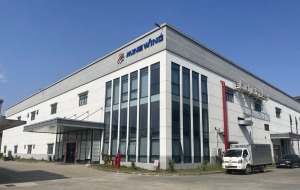
Connecting Design And Manufacturing Earlier
Product development becomes slower when engineering decisions are made without considering how those decisions will translate into physical production. A board layout may function correctly in a prototype yet require substantial modification because of assembly constraints, enclosure dimensions, component availability, or testing requirements. Bringing fabrication knowledge into earlier design discussions helps teams identify such issues before they become expensive schedule changes.
The value of electronics manufacturers in China extends beyond access to production capacity. Teams with engineering, sourcing, tooling, assembly, and quality resources within a connected manufacturing ecosystem can provide practical feedback while a product is still being refined. That interaction makes it easier to evaluate material choices, component placement, production methods, and assembly requirements before development reaches a later stage.
Reducing Delays Through Rapid Prototyping
Prototype cycles frequently determine whether a product moves forward smoothly or becomes trapped in repeated revisions. A functional sample gives engineers an opportunity to examine mechanical fit, electronic behavior, user interaction, power consumption, and other practical factors that drawings alone cannot reveal. Rapid fabrication therefore serves as a decision-making tool rather than simply producing an early physical sample.
With China electronics manufacturers, access to processes such as 3D printing, CNC machining, silicone molding, PCB fabrication, and assembly can shorten the distance between an engineering revision and its physical evaluation. The exact method depends on the component and testing objective. A temporary enclosure may require a different approach from a production-intent mechanical component, while a printed circuit board (PCB) revision may call for electrical validation before further mechanical work.
Our work at Minewing incorporates rapid prototyping into a broader development sequence, allowing functional concepts to move toward EVT, DVT, and PVT stages through progressive validation. This staged approach gives teams opportunities to identify technical concerns while changes remain manageable. Instead of waiting for a large production run to expose a problem, engineers can use smaller iterations to make informed adjustments.
Simplifying Supplier And Production Coordination
Every additional supplier relationship introduces another communication point. Different vendors may use different documentation formats, production schedules, quality procedures, or change-control practices. Even a modest project can become difficult to coordinate when PCB fabrication, enclosure production, component sourcing, assembly, and packaging are managed independently.
A key strength of one-stop custom fabrication services is the ability to coordinate several manufacturing activities through a more unified workflow. Design information can move between engineering and production teams with fewer administrative barriers, while sourcing decisions can be considered alongside manufacturing requirements. Such coordination becomes particularly useful when a product contains tightly integrated electronics and mechanical structures.
Scaling Without Rebuilding The Process
Moving from prototype quantities to commercial production introduces a different set of challenges. Components that were easy to obtain for a few samples may require broader sourcing plans at volume. Assembly processes may also need adjustment, while testing procedures, tooling, packaging, and production documentation become increasingly important.
Experienced China electronics manufacturers can support this transition by combining production engineering with supply-chain planning. Design for Manufacturing considerations may influence PCB fabrication, component selection, assembly access, testing points, and material choices. Addressing these factors before volume production reduces the likelihood of discovering that a prototype process is difficult or costly to reproduce at scale.
Building A Faster And More Predictable Development Cycle
Speed should not be measured simply by how quickly a factory produces units. A product that reaches fabrication quickly but requires several rounds of correction may still arrive late. A more useful measure considers the entire path from design decision to validated sample, then from validated sample to stable production.
By bringing engineering, fabrication, sourcing, assembly, and packaging into a connected workflow, one-stop custom fabrication services can reduce the number of transitions that commonly create schedule friction. The benefit becomes particularly visible in products with compact electronics, custom enclosures, wireless connectivity, or specialized manufacturing requirements, where a seemingly minor change can affect several parts of the design simultaneously.
Long-term manufacturing relationships also change how development teams approach uncertainty. At Minewing, we focus on transparent communication, stable supply-chain coordination, and practical problem solving rather than treating production as a one-time transaction. That perspective helps teams build a development process in which technical decisions, manufacturing realities, and commercial timing remain connected from the first prototype through later production stages.
Turning Development Speed Into Sustainable Progress
Shorter time-to-market does not come from rushing individual manufacturing steps. It comes from reducing avoidable waiting, limiting unnecessary handoffs, validating important decisions early, and maintaining clear communication as a project evolves. The right manufacturing structure therefore has an impact not only on delivery dates but also on how efficiently engineering resources are used.
For technology companies evaluating China electronics manufacturers, the more meaningful question is often how well a partner can connect development requirements with manufacturing execution. Engineering capability, prototype responsiveness, sourcing coordination, quality systems, and production scalability all influence the real development timeline. A capable partner should fit into the product’s workflow rather than simply receive finished files at the end.
That principle shapes how Minewing works with partners pursuing new hardware products. By combining engineering support, rapid fabrication, manufacturing coordination, and transparent collaboration, we help create a development pathway that can adapt as the product changes. When these elements operate together, faster market entry becomes less about cutting corners and more about building a smarter, more predictable route from concept to production.



