Turning a working prototype into a commercially viable product is one of the most important transitions in hardware development. A prototype proves that an idea can work, but production requires much more: repeatable quality, manufacturability, stable sourcing, controlled costs, and reliable processes. When we help businesses understand how to go from prototype to production, we focus on connecting engineering validation with manufacturing readiness rather than treating production as a separate final step.
Start With a Production-Ready Prototype
The first step is to determine whether the prototype is ready to move beyond functional testing. A working sample may still contain design choices that are difficult or expensive to manufacture repeatedly. Components, PCB layouts, mechanical structures, tolerances, and assembly methods should all be reviewed before volume production.
We use electronic prototyping to validate product functionality and identify problems early. At Minewing, we support rapid prototyping through methods including 3D printing, CNC machining, and silicone molding, allowing customers to evaluate physical and functional characteristics before committing to larger production investments.
This stage should answer practical questions: Does the product perform as intended? Can components be sourced consistently? Can the enclosure be assembled efficiently? Are there design features that could create quality or yield problems?
Apply Design for Manufacturing Before Scaling
Once the prototype works, the next priority is manufacturability. Design for Manufacturing, or DFM, means considering actual manufacturing capabilities when developing and reviewing a product so that production can be more efficient and economical. This is particularly important for electronic products involving PCBs and complex assemblies.
We therefore review both electronics and mechanical structures before production. Our engineering services include PCB layout, hardware development, and electronics and enclosure design optimization, with the goal of improving manufacturability, quality, and cost.
We use DFM to uncover issues that are hard to detect during prototype development. A component may be technically suitable yet difficult to source, and an enclosure may work properly but require redundant assembly steps. Resolving these problems at an early stage is usually simpler than fixing them once production starts.
Validate the Product Through Trial Production
A common mistake is to move directly from a successful prototype to full-scale manufacturing. Instead, we recommend using controlled trial production to validate whether the product can be manufactured consistently.
At Minewing, our New Product Introduction (NPI) process uses small production batches across Engineering Validation Testing (EVT), DVT, and PVT stages to identify and eliminate potential manufacturing risks. We combine these stages with DFM optimization and supply chain preparation before volume production.
The purpose is not simply to produce more samples. Trial production gives engineering and manufacturing teams an opportunity to examine assembly processes, component performance, production yields, testing procedures, and potential quality problems under increasingly realistic production conditions.
Establish a Reliable Supply Chai
We know that even a production-ready design relies entirely on the availability and consistency of its components. Before scaling up production, we help businesses fully understand their bill of materials, approved components, qualified suppliers, production lead times, and viable alternative components.
We integrate component sourcing into the manufacturing process rather than leaving procurement disconnected from engineering. At Minewing, we provide global component sourcing and supply chain support, helping customers prepare reliable production resources before moving into higher volumes.
This step becomes particularly important when a product contains specialized or long-lead-time components. Early sourcing validation can expose availability problems while there is still time to adjust the design or procurement strategy.
Move From Validated Processes to Mass Production
After engineering, sourcing, and trial production have been validated, the project can move toward mass production. At this point, the objective changes from proving the product to repeatedly producing it according to defined specifications.
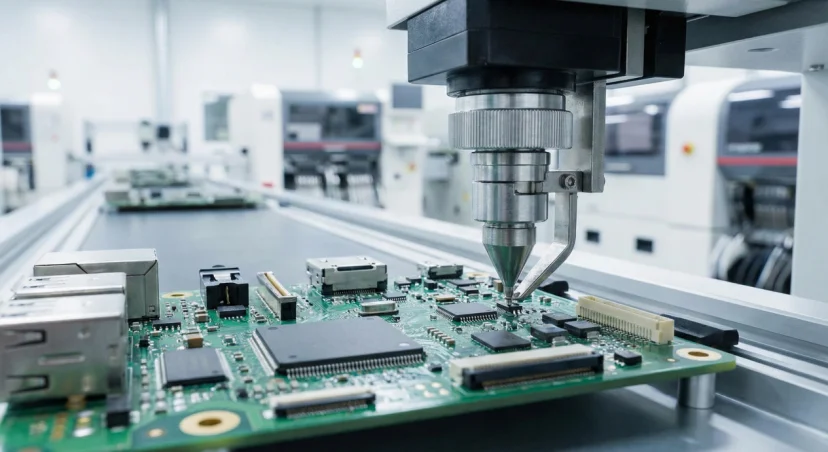
We support PCBA production, enclosure manufacturing, assembly, testing, packaging, and global delivery as part of our one-stop manufacturing approach. This integrated workflow reduces the number of separate production handoffs that customers need to coordinate.
For businesses learning how to go from prototype to production, this transition should be treated as a controlled scale-up. Production documentation, inspection procedures, testing requirements, approved components, and manufacturing processes should be sufficiently defined before increasing output.
Build Flexibility Into the Production Strategy
Production requirements can change quickly, especially for startups and emerging technology companies. Initial demand may be uncertain, and committing to a rigid high-volume model too early can create unnecessary financial and inventory pressure.
We take a flexible approach to production scale. At Minewing, we have no MOQ requirement and support projects from single-unit prototyping and low-volume trials through mass production. This allows customers to adjust manufacturing volume according to product maturity and market demand.
Turning a Proven Prototype Into a Scalable Product
Knowing how to go from prototype to production means understanding that successful manufacturing is a process, not a single handoff. Electronic prototyping validates the concept, DFM improves manufacturability, trial production exposes production risks, supply chain preparation supports continuity, and controlled scaling establishes repeatable output.
We bring these stages together through our end-to-end electronics manufacturing services. With more than 20 years of industry experience, at Minewing, we support startups and global brands from initial prototyping through mass production, providing flexible cooperation models without MOQ requirements.
Our objective is straightforward: help transform a promising prototype into a reliable, manufacturable, and scalable electronic product while giving each project the engineering and production support it needs at every stage.