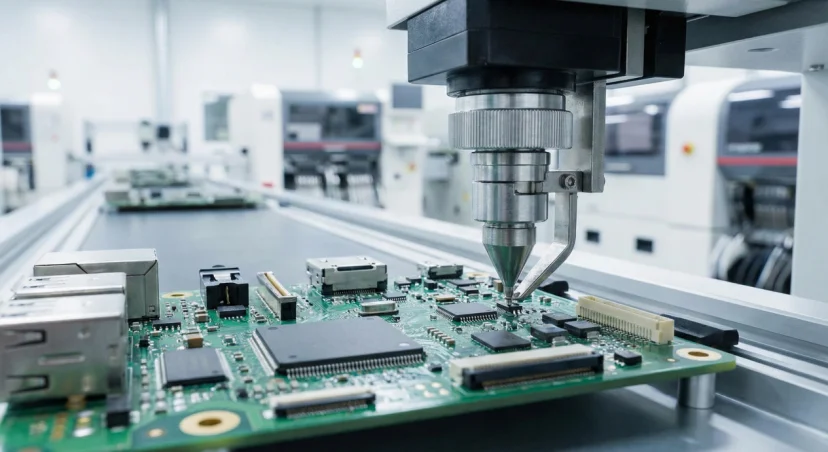
ODM pricing is rarely determined by the factory assembly cost alone. When we discuss OEM and ODM projects with business customers, we look at the full path from product definition and engineering through prototyping, validation, sourcing, tooling, and production. An electronic ODM partner may absorb more development responsibility than a conventional manufacturer, so the final cost reflects both technical complexity and the work required to make a design commercially manufacturable.
Why ODM Costs Differ From Standard Manufacturing
An ODM typically contributes to product design as well as manufacturing, whereas an OEM generally builds according to a customer’s established design. That difference matters for budgeting. An electronic ODM project can include engineering hours, component evaluation, PCB development, prototypes, testing, tooling, production preparation, and supply-chain work before regular production begins.
For B2B buyers, the lowest initial quotation is not always the lowest total project cost. A cheaper offer can become expensive through redesigns, unstable sourcing, poor yield, or tooling changes. We recommend evaluating cost as a complete development-to-production investment rather than focusing only on unit price.
Engineering Complexity Sets the Starting Point
The first cost driver is the product itself. A simple connected device with established components may require relatively limited engineering, while a compact wearable or IoT product can demand substantial hardware, mechanical, firmware, power, RF, and integration work. Requirements for miniaturization, battery life, connectivity, sensors, thermal performance, or specialized interfaces can all increase development effort.
At Minewing, our engineering team works on IoT and wearable hardware and PCB layouts, with attention to signal integrity and miniaturization. We balance functionality with manufacturability rather than separating design from production. This helps customers identify cost-driving decisions before they become expensive downstream changes.
Components, Materials, and Supply Chain
The bill of materials is another central part of ODM cost. Processor selection, memory, wireless modules, sensors, displays, batteries, connectors, enclosure materials, and other components can change both material cost and procurement complexity. Custom or low-volume components may also require additional supplier coordination, while volatile availability can affect purchasing decisions.
We therefore consider component selection alongside target cost and technology requirements. Our process includes feasibility assessment and supply-chain setup, including sourcing and validating key components and vendors. This matters because a technically attractive component may not be the best choice when availability, lifecycle, lead time, and volume are considered.
Prototyping and Validation Add Necessary Development Cost
Buyers should account for rapid prototyping within their ODM budget. Functional samples are not simply demonstration units. We help teams evaluate physical design, performance, usability, and manufacturing assumptions before clients commit to costly tooling or larger production runs. Iterations increase development expenditure, yet skipping validation may trigger far higher costs down the line.
Our rapid prototyping process uses 3D printing, CNC machining, and silicone molding for quick-turn samples. We also support proof-of-concept and functional testing against real-world scenarios. This stage gives customers an opportunity to correct design issues while changes are still manageable.
Tooling, NPI, and Trial Production
Once the design is sufficiently mature, tooling and new product introduction can become significant cost items. Enclosures, molds, fixtures, test equipment, and other production aids may require upfront investment. The amount depends on product geometry, materials, tolerances, tooling method, and expected production volume.
Trial production also carries engineering and operational costs. At Minewing, we use Engineering Validation Testing (EVT), DVT, and PVT stages during New Product Introduction (NPI) to identify and eliminate potential production risks. DFM optimization focuses on improving production yield and reducing assembly costs, while supply-chain preparation helps confirm that key components and vendors can support the intended production process.
Production Volume and Cost Allocation
Expected volume has a major influence on how development costs are distributed. A project with a large forecast can spread non-recurring engineering, tooling, and validation expenses across more units. A low-volume product has fewer units over which to distribute those costs, making its effective per-unit development burden higher.
Higher demand may justify dedicated tooling or more efficient processes, while early-stage programs may benefit from flexible low-volume production. We work with customers from prototypes and low-volume trials toward mass production, allowing the manufacturing strategy to evolve with commercial demand.
How We Help Control Electronic ODM Costs
Cost control works best when it begins before production. We integrate engineering, rapid prototyping, trial production, DFM, and supply-chain preparation so that decisions can be evaluated across the product lifecycle. Our objective is not simply to quote a low manufacturing price, but to help customers avoid redesigns, production bottlenecks, and inefficient assembly.
Our end-to-end model covers product development from concept through mass production. We provide hardware and enclosure design optimization, prototype development, PCBA and enclosure manufacturing, assembly, and packaging. By coordinating these stages, we can reduce communication gaps and give B2B customers a clearer path from technical concept to scalable production.
Making ODM Cost More Predictable
ODM costs are shaped by engineering complexity, component choices, prototyping, tooling, validation, production volume, and supply-chain requirements. Buyers who understand these drivers can compare suppliers more effectively and build realistic project budgets. For us, successful OEM original equipment manufacturer and ODM original design manufacturer cooperation means connecting design decisions with manufacturing realities from the beginning.
At Minewing, we combine engineering and design, rapid prototyping, and trial production to help businesses develop reliable electronic products with scalability in mind. By addressing manufacturability and cost drivers early, we help customers make better development decisions before they commit significant capital to production.