Recent developments across electronics manufacturing and logistics show that the industry is moving beyond simple cost-driven outsourcing. Semiconductor shortages, AI-driven production, regional manufacturing investment, and smarter logistics are changing how businesses evaluate contract manufacturing partners.
For us, these developments provide useful signals when assessing contract manufacturing electronics news. The key lesson is clear: manufacturers increasingly need integrated capabilities that connect engineering, sourcing, production, quality control, and delivery.
Electronics Manufacturing Faces New Supply Pressures
One of the most important developments in current electronics manufacturing is renewed pressure on memory supply. Recent reporting indicates that AI-related demand is drawing manufacturing capacity toward high-bandwidth memory and other advanced components, contributing to higher costs and tighter availability for conventional electronics.
This matters to businesses because component availability can affect product schedules long after a design has been finalized. A manufacturing partner therefore needs more than assembly capacity. We also need reliable procurement processes, supplier relationships, and the ability to identify potential component risks before they interrupt production.
AI Is Moving Deeper Into the Factory
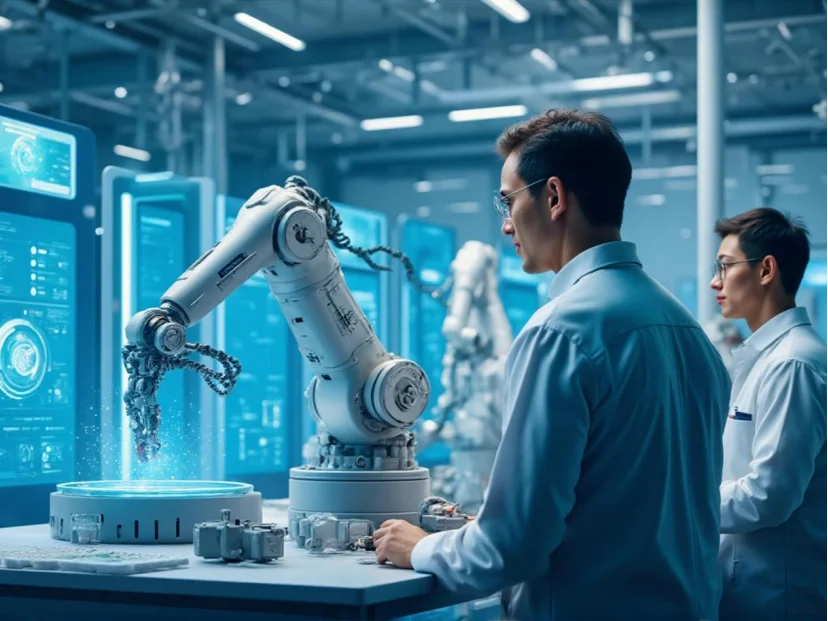
Another major development is the increasing use of artificial intelligence in manufacturing operations. Samsung Electronics announced a strategy to transition its global manufacturing sites toward AI-driven factories by 2030, including broader use of agentic AI across manufacturing processes.
For contract manufacturers, this trend suggests that automation and data-driven production will become increasingly important competitive factors. AI can support areas such as production monitoring, process optimization, predictive maintenance, and quality management. However, technology is most valuable when it is integrated into a broader manufacturing system rather than treated as a standalone feature.
Regional Manufacturing Networks Are Expanding
Recent manufacturing news also points toward greater diversification of production locations. Vietnam, for example, continues to attract investment and strengthen its position in global manufacturing networks, with growing attention to higher-value production and supply-chain integration.
For businesses developing electronic products, this creates both opportunities and challenges. Multiple manufacturing regions can provide additional sourcing options, but managing several suppliers can also increase communication, quality-control, logistics, and project-management complexity.
We believe this is one reason integrated manufacturing partnerships are becoming more valuable. Instead of coordinating every stage independently, businesses can work with a partner that understands product development, manufacturing, and supply-chain management as connected activities.
Logistics Is Becoming More Data-Driven
The logistics side of the industry is also changing rapidly. Recent work by Armada with Carnegie Mellon University used AI to improve shipment-related processes, including a reported 53% reduction in estimated-time-of-arrival errors across 1.76 million shipments.
Although logistics optimization is different from electronics manufacturing, the underlying principle is highly relevant. Better information can help companies identify delays earlier and make more informed operational decisions. For electronics businesses, production visibility and logistics visibility increasingly need to work together.
A finished product is not commercially useful until it has passed production, packaging, and shipment. Consequently, businesses should evaluate whether a manufacturing partner can coordinate these stages instead of viewing logistics as an unrelated final step.
What the Latest Contract Manufacturing Electronics News Means for Buyers
The latest contract manufacturing electronics news points toward a broader definition of manufacturing value. Production capacity remains essential, but buyers also need engineering support, component management, quality assurance, and flexible project execution.
At Minewing, we provide a one-stop manufacturing approach covering the product journey from idea and design through prototype, trial production, and mass production. Our capabilities span electronics and plastic manufacturing, with support for PCB production, mold manufacturing, assembly, testing, and related processes.
For us, this integrated structure is particularly useful when projects involve frequent technical adjustments. Keeping engineering and production activities connected can reduce unnecessary handoffs and help teams identify manufacturing issues earlier.
Electronic Manufacturing Services News Highlights Integration
The same trend appears across electronic manufacturing services news. EMS providers are increasingly expected to contribute beyond basic PCB assembly. Customers may need assistance with design optimization, prototyping, testing, component procurement, production verification, and final assembly.
At Minewing, our EMS capabilities support JDM, OEM, and ODM projects, including smart-home, industrial-control, wearable, beacon, and consumer-electronics applications. Our PCB service also delivers technical advice covering manufacturing processes, product optimization, rapid prototypes, testing improvement, and mass production.
This broader capability can be particularly valuable for businesses that need to move quickly from a validated concept toward scalable production without coordinating multiple specialized suppliers.
From Concept to Production: A More Connected Model
The phrase “From Concept to Production” increasingly reflects what buyers expect from contract manufacturing relationships. Product development, sourcing, manufacturing, testing, packaging, and shipment are no longer isolated activities when speed and consistency matter.
Our approach at Minewing follows this connected model. We support customers from early ideas through design and prototyping, followed by trial production and mass production. Our factory information also identifies SMT, DIP, assembly, functional testing, aging testing, mold, injection, post-processing, and packaging capabilities.
This allows us to approach manufacturing as a complete process rather than a single production stage.
Why One-Stop Manufacturing Is Gaining Importance
Current developments suggest that the strongest manufacturing partnerships will increasingly combine technical expertise with operational coordination. Businesses cannot completely eliminate semiconductor shortages, trade disruptions, transportation delays, or changing market demand. However, they can select partners like us that are prepared to respond to these conditions.
Our One-Stop Manufacturing, Assembly & Packaging approach is designed around that need. At Minewing, our mass-production service covers raw-material procurement, SMT, mold and shell production, assembly, testing, packaging, and shipment.
For businesses following contract manufacturing electronics news and electronic manufacturing services news, the broader direction is clear. Manufacturing is becoming more integrated, technology-driven, and supply-chain conscious. We see the greatest value in partnerships that connect concept development with reliable production, assembly, packaging, and delivery, giving businesses a more coordinated path from product idea to market.