
Turning a hardware concept into a sellable product rarely happens in one large production order. Early-stage teams often need samples, engineering revisions, pilot batches, and market feedback before they know which configuration deserves wider investment. China electronic manufacturing services can therefore become particularly valuable when a supplier can accommodate smaller production needs without forcing a startup to commit to excessive inventory. For a young company, flexibility at this stage is not simply a purchasing convenience; it can shape how efficiently technical decisions, financial resources, and market testing move together.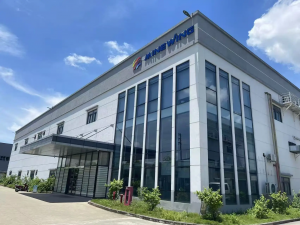
Smaller Batches, Smarter Product Decisions
Hardware development tends to involve uncertainty. A prototype may reveal that a component needs replacing, an enclosure may require another iteration, or customer testing may suggest changes to the original specification. Ordering a very large quantity before those questions are settled can tie up capital in hardware that may soon be revised.
Access to flexible electronics manufacturing services gives startups more room to adjust their plans around actual development progress. Instead of treating manufacturing as a single transaction, teams can view production as a sequence of increasingly mature stages. That approach makes it easier to connect engineering feedback with purchasing decisions and avoid unnecessary stock commitments.
How MOQ Affects Startup Cash Flow
Minimum order quantities have a direct relationship with inventory investment. Consider a startup developing a connected consumer device: even if each unit carries a reasonable manufacturing cost, a large minimum order multiplies spending on components, assembly, packaging, and storage before meaningful sales data exists. Cash that could support software development, certification, marketing, or another engineering revision may become locked into inventory.
Flexible electronic manufacturing services can provide a different path. Smaller runs allow businesses to allocate resources progressively, particularly during prototype validation and early commercialization. The benefit is not that every production run will automatically be cheaper; rather, the company gains greater control over how much capital is committed at each stage of product development.
A thoughtful approach to MOQ also considers the relationship between batch size and design iteration. Early production runs may reveal assembly challenges, component lead-time issues, or quality variations that require engineering adjustments. A smaller first batch allows the team to incorporate these lessons into the next revision without scrapping a large inventory of older units. Some manufacturers also offer staged delivery schedules, where a single order is split into multiple shipments, giving startups additional breathing room to validate market response before committing to the full quantity.
From Prototype Changes to Pilot Production
Manufacturing flexibility becomes even more useful when engineering work continues alongside commercial preparation. A startup may move from a proof-of-concept unit to an engineering prototype, then require a limited pilot batch before committing to larger volumes. Each stage can expose different concerns, including component availability, assembly procedures, enclosure tolerances, and production testing.
Our approach at Minewing connects product development with manufacturing activities, covering areas such as prototyping, trial production, mass production, assembly, packaging, and supply-chain support. We also provide services such as 3D printing, CNC machining, PCB development, and DFM optimization, which can help product teams assess manufacturability as their designs mature.
Why Flexible Manufacturing Supports Market Testing
A startup often learns more from real users than from an initial business plan. A limited batch can place a product into actual environments, producing feedback about usability, durability, installation, connectivity, or other practical characteristics. Those observations may justify a design adjustment before the product reaches a much broader customer base.
The same principle applies to electronics manufacturing services more broadly: production capacity should match the maturity of the product rather than dictate it. A flexible manufacturing partner can make pilot quantities more practical, allowing startups to test demand while keeping engineering and commercial decisions connected.
Scaling Without Changing the Entire Workflow
No MOQ does not mean that production planning becomes unnecessary. Once demand increases, the manufacturer still needs to evaluate component sourcing, production capacity, quality controls, testing procedures, packaging requirements, and logistics. The real value lies in having a manufacturing relationship capable of evolving as those requirements change.
For startups working with China electronic manufacturing services, continuity between early production and later scale can reduce the disruption associated with moving from one supplier to another. Familiarity with the product’s engineering history can also make discussions around revisions, sourcing, and DFM more efficient as volumes grow.
A More Practical Path to Commercialization
A hardware startup rarely has perfect information at the beginning. Product specifications change, customer expectations become clearer, and production assumptions are tested against real-world constraints. Flexible manufacturing gives teams space to respond to those discoveries instead of forcing every decision into an oversized first order.
At Minewing, we work with startups and growing brands through different stages of hardware development, from early prototypes to mass production. Our electronics manufacturing services are structured around flexible development and manufacturing support, giving product teams a practical way to scale their projects as requirements and demand develop. For an emerging hardware company, that flexibility can preserve both capital and room to make better decisions as the product finds its market.



