
EMS is crucial for hardware startups and tech brands because it connects engineering, sourcing, manufacturing, and production requirements throughout the product development process. Hardware ideas rarely fail because the concept itself is weak. More often, the difficult part appears later: radio performance, component availability, printed circuit board (PCB) constraints, production consistency, and the cost of moving from a working prototype to a manufacturable product.
For startups and growing technology brands, intelligent manufacturing solutions can connect engineering decisions with practical production needs, while giving teams a clearer path from development to scale. At Minewing, we approach this process as an integrated engineering challenge rather than treating manufacturing as a separate final step.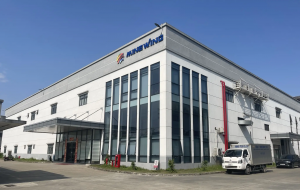
Wireless Design Starts Earlier Than Production
Wireless hardware has little room for isolated decisions. Cellular, Wi-Fi, and BT/BLE modules interact with antennas, power circuits, PCB materials, enclosures, and surrounding components, so a seemingly minor layout change can affect RF behavior. Teams therefore need to consider communication requirements while the hardware architecture is still taking shape, rather than discovering limitations after tooling or pilot production has begun.
The choice of wireless protocol should also reflect the product’s actual operating environment. A connected industrial device may require cellular communication for broad-area coverage, while a compact consumer accessory could rely on BLE for low-power communication with a nearby phone. Wi-Fi may suit products that regularly exchange larger amounts of information, yet its power demand and antenna placement deserve careful attention in battery-operated designs.
A useful EMS partner brings these considerations into the same engineering conversation. Turnkey manufacturing solutions can combine PCB development, component sourcing, assembly planning, and production engineering so that connectivity requirements remain aligned with manufacturability. Such coordination matters particularly for startups, where engineering resources are often limited and every prototype iteration carries a meaningful cost.
RF Performance Depends On Physical Details
Wireless reliability is not determined by the communication chip alone. Antenna positioning, grounding, signal paths, shielding, enclosure materials, and PCB stack-up can all influence RF behavior. Mechanical design can become equally important when metal parts, batteries, or compact internal structures sit close to the antenna area.
Manufacturing engineering adds another layer to the equation. A PCB layout that works in a laboratory prototype may require adjustment before volume assembly because component spacing, soldering access, inspection requirements, and mechanical tolerances affect production stability. Design for manufacturing (DFM) analysis helps identify these issues while design changes are still relatively inexpensive.
Our work at Minewing places these elements within a shared development process. Instead of evaluating RF design and factory requirements as unrelated subjects, we consider how the electronic architecture, enclosure, and assembly method interact. That approach can reduce unnecessary redesigns and give engineering teams more useful information before they commit to larger production quantities.
DFM Turns A Working Design Into A Manufacturable Product
Prototype success provides valuable evidence, but it does not automatically mean that a product is ready for repeatable manufacturing. A design may contain components that are difficult to source, PCB features that complicate assembly, or mechanical tolerances that create unnecessary production variation. These details become increasingly significant as order quantities rise.
DFM optimization focuses on practical questions: Can components be placed efficiently? Is the PCB layout compatible with the intended assembly process? Can inspection and functional testing be performed without excessive manual intervention? Are mechanical structures unnecessarily complicated? Addressing these questions early can improve production yield while reducing assembly time and avoidable manufacturing expense.
For a young company, this discipline has commercial value as well as engineering value. Intelligent manufacturing solutions help connect product decisions with measurable production considerations, allowing teams to compare alternatives before large quantities are built. The result is not simply a factory-ready drawing package; it is a more realistic understanding of how the product will behave inside an actual manufacturing workflow.
Scaling Requires More Than Increasing Order Quantity
The transition from dozens of units to thousands changes the nature of manufacturing. Supply planning becomes more important, production fixtures may need refinement, and even a small assembly inefficiency can become costly when repeated across a large batch. A startup that plans for scale early can avoid treating every new production stage as a separate engineering project.
One example from our project experience is the Smart Doorbell, where connected hardware needs to balance wireless communication, compact electronics, mechanical constraints, and repeatable assembly. The broader lesson is that connected products benefit from considering the complete hardware path rather than optimizing a single subsystem in isolation.
As production expands, turnkey manufacturing solutions can provide a coordinated framework covering engineering, sourcing, assembly, and manufacturing optimization. This does not mean every project needs the same process. Instead, the manufacturing route should evolve according to product complexity, forecast volume, certification requirements, and the level of engineering support available internally.
A Strong EMS Process Protects Product Decisions
Technology brands often focus heavily on feature development because that is where differentiation begins. Yet manufacturing decisions can quietly influence the final product just as much. Component substitutions, PCB revisions, enclosure changes, and assembly constraints may affect cost, reliability, development schedules, and even the user experience.
That is why collaboration between engineering and manufacturing should happen before the design becomes difficult to change. Intelligent manufacturing solutions provide a framework for connecting technical requirements with production realities, while structured DFM reviews can reveal potential bottlenecks before they become expensive corrections. The goal is not to make every product identical; it is to create a production method suited to its specific architecture.
We see the value of this approach in the way hardware projects move through development: concept, prototype, validation, trial production, and volume manufacturing each introduce different questions. At Minewing, we work across those stages so that decisions about connectivity, PCB design, mechanical structures, and manufacturing can inform one another.



