
A hardware project may look straightforward on paper but becomes complex once cost, testing, sourcing, production, and schedule are involved. Every engineering decision affects another: a component choice may alter the Bill of Materials (BOM), and a printed circuit board (PCB) revision can change assembly requirements.
A prototype that works technically may still be expensive to manufacture. Electronics solutions projects can be managed more effectively by defining requirements early, building a validation-based development roadmap, and coordinating engineering with sourcing and production.
Managing electronics solutions therefore requires more than coordinating engineers; it calls for a development process that keeps technical performance, commercial objectives, and production realities connected from the beginning. At Minewing, we treat that connection as an important part of building a practical product roadmap.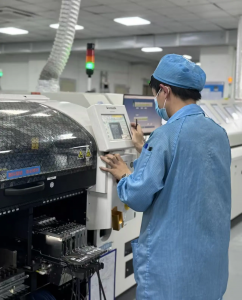
Define Requirements Before Engineering Begins
Clear requirements provide the foundation for sensible project decisions. Teams should first identify essential functions, expected operating conditions, connectivity needs, power limitations, target production volume, certification requirements, and approximate cost boundaries. Without those parameters, engineering work can easily move toward technically attractive options that later conflict with commercial or manufacturing expectations.
Project managers also need to distinguish between essential functions and desirable additions. A startup may initially need only a stable wireless connection and basic control interface, while advanced sensing or additional communication protocols can be considered during later revisions. Such prioritization gives engineers a defined scope and makes changes easier to evaluate.
At Minewing, we use requirement discussions to connect product objectives with engineering possibilities. Electronics solutions become easier to manage when teams understand which specifications are fixed and which can change. That distinction is particularly useful during early design reviews, where a small adjustment can have a much smaller financial impact than a revision made after tooling or pilot production.
Build A Development Roadmap Around Validation
A realistic roadmap should contain more than a final production date. Hardware teams need identifiable checkpoints for schematic review, PCB development, prototype evaluation, firmware integration, functional testing, and manufacturing preparation. Each milestone should answer a specific question rather than simply represent another date on a project calendar.
Validation stages are especially valuable because hardware problems often appear through interaction between subsystems. A wireless module might perform differently after enclosure integration, while a power circuit that behaves well on a bench may require additional attention once the full device operates under load. EVT, DVT, and PVT provide structured opportunities to examine these differences before larger quantities are produced.
Our approach to turnkey manufacturing solutions incorporates these validation stages into the broader manufacturing workflow. Instead of viewing prototype development and production as disconnected activities, we use each stage to collect information that can influence the next one. That creates a clearer decision trail and reduces the temptation to rush an unresolved issue into the next phase.
Control Cost Through Engineering Decisions
Manufacturing cost rarely comes from one component alone. The BOM, PCB dimensions, component availability, assembly method, mechanical structure, testing requirements, packaging, and expected volume can all contribute to the final figure. A useful cost review therefore examines the entire product rather than searching for the cheapest individual part.
BOM optimization can involve comparing alternative components with similar electrical characteristics, reviewing unnecessary specifications, or reconsidering a design choice that adds assembly complexity. Value engineering works well when performance requirements remain visible throughout the discussion; cutting cost without understanding the function of each component can create new problems elsewhere.
Connect DFM With Prototype Feedback
Design for Manufacturing should not be treated as a final inspection of an already finished design. PCB layout, component placement, mechanical tolerances, assembly access, inspection points, and testing methods can all influence how smoothly a product moves through manufacturing. Reviewing these factors during development gives engineers opportunities to adjust the design while changes remain manageable.
Prototype feedback provides another source of useful information. A trial build may reveal that a connector is difficult to assemble, a component sits too close to a mechanical feature, or a testing procedure requires excessive manual work. These observations are valuable because they reflect actual production conditions rather than assumptions made solely from design files.
One project example from our work is the Smart Doorbell, where compact electronics, connectivity, mechanical integration, and production considerations have to coexist within a consumer device. We use such project experience to examine how design decisions behave beyond the schematic stage. Turnkey manufacturing solutions become more practical when DFM findings from prototype builds can flow directly into subsequent engineering revisions.
Turning Engineering Work Into A Production Path
Successful hardware management depends on timing as much as technical knowledge. Requirements must shape engineering, validation must influence revisions, cost analysis must inform design choices, and manufacturing feedback needs to arrive before changes become expensive. A disciplined workflow gives each stage a clear purpose while leaving enough flexibility to respond to what the prototypes reveal.
That philosophy also explains why turnkey manufacturing solutions can be useful beyond factory assembly. A connected process can bring PCBA development, EVT/DVT/PVT validation, DFM optimization, BOM analysis, and production planning into one coordinated path. The objective is not simply to move a design through predefined stages, but to make each stage contribute useful evidence to the next decision.
Hardware development will always involve uncertainty, particularly for startups and technology brands working with new concepts. What matters is how effectively that uncertainty is managed. At Minewing, we use structured engineering and manufacturing collaboration to help teams turn changing requirements into actionable decisions, while keeping cost, quality, scalability, and product intent in view. With that foundation, turnkey manufacturing solutions become part of a broader development strategy rather than merely a production service.



