
Hardware brands rarely succeed on product ideas alone; the route from an engineering concept to a dependable commercial device can determine how efficiently that idea creates value. Access to capable manufacturing resources affects prototyping, sourcing, assembly, quality control, scalability, and even design decisions made months before launch.
For companies evaluating a China electronic manufacturers supplier, the attraction is therefore not simply production capacity but the broader manufacturing ecosystem behind it. At Minewing, we work with startups and global companies by connecting engineering requirements with practical manufacturing resources across the product lifecycle. In short, China electronic manufacturers and suppliers matter because they give hardware brands access to a mature ecosystem that supports every stage from prototype to volume production.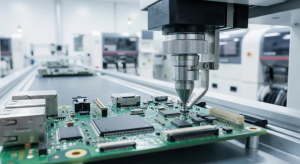
More Than Production Capacity
Manufacturing capability begins with the ability to translate technical files into consistent physical products. PCB assembly, component procurement, testing, mechanical fabrication, and final assembly each require different processes, equipment, and expertise. A supplier with experience across several areas can help hardware teams address production considerations before they become late-stage obstacles.
The phrase China electronics manufacturers covers a wide range of businesses, from specialized assembly factories to integrated hardware development and manufacturing organizations. This distinction matters because a consumer IoT device may require very different support from a straightforward circuit-board order. Buyers should therefore evaluate capabilities against their product architecture rather than relying on general factory descriptions.
Our own manufacturing scope at Minewing has developed around this broader requirement. With more than 20 years of experience, we support projects from initial concepts through volume production, combining electronic manufacturing knowledge with engineering and supply-chain coordination. Such a model gives hardware teams more opportunities to discuss manufacturability while the product is still evolving.
Supporting Faster Product Development
Time-to-market depends heavily on how quickly engineering teams can obtain useful feedback. A prototype is valuable because it turns assumptions into something that can be measured, tested, and revised. Delays arise if every development stage requires a new supplier, a separate quotation, or another round of technical communication.
For China electronic manufacturers, responsiveness during prototype development can be just as significant as production volume. Rapid fabrication, PCB assembly, component sourcing, and engineering review allow teams to investigate design questions before expensive tooling or larger production runs. The goal is not to rush every decision, but to shorten the distance between a question and reliable technical evidence.
At Minewing, we support a development pathway that can move from concept and engineering through prototyping, trial production, and later manufacturing stages. This structure is particularly useful when revisions involve several disciplines at once. Instead of viewing each change as a separate manufacturing request, teams can consider its implications for electronics, mechanics, sourcing, and assembly together.
Building A More Resilient Supply Chain
Component availability has become an important consideration for hardware brands. A design may depend on specific semiconductors, connectors, sensors, batteries, or passive components, and an unexpected supply issue can affect both cost and schedule. Manufacturing partners with broader sourcing experience can contribute practical alternatives when the original supply plan changes.
The industrial network surrounding China electronics manufacturers includes component suppliers, PCB producers, tooling specialists, assembly facilities, and logistics resources. This ecosystem can provide useful flexibility, although the actual value still depends on how effectively an individual manufacturing partner coordinates these resources. Supply-chain depth should therefore be assessed alongside communication and engineering capability.
We approach sourcing as part of the wider manufacturing process at Minewing, rather than treating procurement as an isolated purchasing activity. Component decisions can influence PCB design, assembly methods, product cost, and production continuity. Keeping those relationships visible gives development teams a stronger basis for evaluating alternatives when market conditions change.
Helping Products Scale Beyond Prototypes
A successful prototype does not automatically translate into efficient volume production. Production quantities introduce new considerations such as assembly takt time, tooling, material consistency, testing procedures, production documentation, and inventory planning. Hardware brands need to consider these factors before commercial demand arrives.
Working with a capable China electronic manufacturers supplier can provide continuity as quantities increase. Engineering teams can refine manufacturing processes while production teams prepare for higher volumes, reducing the need to transfer technical knowledge between unrelated vendors. This continuity becomes particularly useful for products with customized electronics or tightly integrated mechanical structures.
One example from our work is the Smart Automatic Pet Feeder, which combines intelligent sensors, wireless connectivity, programmable controls, compact motors, and precise feeding mechanisms. At Minewing, projects with this type of integration require attention to both electronic functionality and physical assembly. The product itself demonstrates why scaling hardware involves more than simply increasing the order quantity.
Turning Manufacturing Capability Into Business Value
For hardware brands, the significance of overseas manufacturing is ultimately tied to how effectively technical resources support business objectives. Better coordination can shorten development cycles, improve production planning, and give engineering teams greater visibility into manufacturing constraints. Those benefits matter whether a company is validating its first device or preparing an established product for higher demand.
A thoughtful assessment of a China electronic manufacturers supplier should cover engineering depth, prototype responsiveness, component sourcing, production systems, testing, communication, and scalability. No single metric can describe manufacturing quality adequately. The stronger evaluation method is to examine how these capabilities interact throughout the product lifecycle.
Our role at Minewing reflects that broader view: we connect hardware development with manufacturing execution so our partners can move from an initial concept toward a scalable physical product with fewer disconnected steps. For brands seeking a manufacturing partner in China, the most meaningful advantage may ultimately be the ability to build a working relationship in which engineering knowledge, supply-chain resources, and production experience continue to support the product as it grows.



