
Moving from a working prototype to thousands of finished units changes almost every aspect of hardware development. Design decisions must now account for repeatable assembly, material availability, testing, production capacity, packaging, and quality control rather than focusing only on whether the first sample works.
Anyone researching how to mass produce a product needs to look beyond factory output and consider the systems that make repeated production practical. At Minewing, we view mass production as a structured progression in which engineering, fabrication, supply-chain planning, and manufacturing processes gradually come together.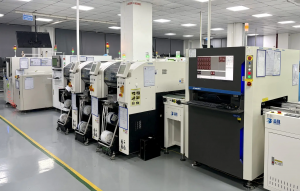
From Prototype To Production
A prototype answers technical questions, while mass production answers a different one: can the same product be manufactured repeatedly at the required quantity and quality? This distinction affects tooling, component sourcing, assembly procedures, inspection methods, and production documentation. A design that performs well in a small batch may still require modification before larger quantities become practical.
The purpose of electronic prototyping is therefore broader than creating an early sample. Engineers can use prototypes to evaluate circuitry, mechanical fit, power consumption, connectivity, firmware behavior, and user interaction. Each iteration provides evidence that can influence later manufacturing decisions.
For teams asking how to mass produce a product, the transition usually involves several validation stages rather than one sudden move into factory production. Engineering validation, design validation, and production validation each address different risks, helping teams progressively refine both the product and the manufacturing process.
Key Terms Behind Mass Manufacturing
EVT, DVT, and PVT are commonly used terms in hardware development. Engineering Validation Testing focuses on whether the engineering design performs as intended. Design Validation Testing examines the product against broader functional and user requirements, while Production Validation Testing evaluates whether the intended production process can consistently produce acceptable units.
An effective electronic prototyping process should support these stages with increasingly representative samples. Early builds may prioritize speed and design exploration, whereas later units should reflect production-intent components, assembly methods, and testing procedures. The closer a sample gets to actual production conditions, the more useful its results become for manufacturing planning.
Another important concept is DFM, or Design for Manufacturing. DFM reviews whether component choices, PCB layouts, enclosure structures, tolerances, and assembly methods are suitable for repeatable production. At Minewing, we use this type of engineering review to connect product design decisions with practical manufacturing requirements.
Standards And Quality Control
Industry standards give mass production a common framework for quality, safety, and consistency, but the standards that apply depend on the product category and destination market. For electronics, common reference points may include IPC guidelines for PCB assembly and soldering, ISO 9001 for quality management systems, IEC or EN standards for electrical safety, and electromagnetic compatibility (EMC) requirements.
Products with wireless functions may also need to satisfy regional radio regulations, while environmental directives such as RoHS and REACH can influence material selection. At Minewing, we review these standard-related requirements alongside the manufacturing process, because compliance is not a final inspection step—it affects component choices, assembly methods, documentation, and traceability from the beginning of production planning.
Quality control also occurs at several points rather than only during final inspection. Incoming components can be checked before assembly, production processes can be monitored during manufacturing, and finished units can undergo functional or electrical testing. This layered approach provides more information about where defects or process variations may originate.
A company researching how to mass produce a product should also consider traceability. Production records can connect materials, batches, testing results, and manufacturing dates, making it easier to investigate unexpected issues. Clear documentation becomes increasingly valuable as production volumes and supply-chain complexity increase.
Scaling Components And Assembly
Component sourcing becomes more demanding as production quantities rise. A part that is readily available for several prototypes may require long-term supply planning once commercial volumes are involved. Substitution policies, approved component lists, purchasing schedules, and inventory planning can all influence production continuity.
Manufacturing capacity matters just as much. SMT equipment, PCB assembly resources, tooling, mechanical fabrication, testing stations, and final assembly areas must match the expected production requirements. A supplier’s ability to coordinate these resources can affect both scheduling and manufacturing consistency.
Our Smart Automatic Pet Feeder offers an example of why integrated planning matters. The product combines intelligent sensors, wireless connectivity, programmable controls, compact motors, precise feeding mechanisms, and power management. At Minewing, projects with several interconnected functions require manufacturing considerations to be reviewed alongside the underlying electronic and mechanical architecture.
Turning Production Knowledge Into A Repeatable System
Mass production works smoothly when product design and manufacturing preparation develop together. Prototype results inform engineering changes; engineering changes influence DFM decisions; DFM affects assembly; and assembly requirements shape testing. Treating these activities as separate tasks can create gaps that become harder to address at higher volumes.
At Minewing, we support hardware projects through connected design, engineering, prototyping, and manufacturing activities. Our approach allows teams to move from early concepts toward trial production and volume manufacturing while keeping technical requirements visible throughout the process.
The real meaning of how to mass produce a product is therefore not simply increasing output. It is the disciplined conversion of a validated design into a repeatable manufacturing system, supported by suitable standards, documented processes, reliable sourcing, and practical quality controls. Once those elements are aligned, scaling becomes a structured engineering exercise rather than a leap from prototype to factory floor.



