Small-batch hardware production presents a unique challenge for manufacturers. Businesses must maintain consistent product quality, control operating costs, and respond to changing customer requirements without the economies of scale available in mass production. For companies developing electronic devices, industrial equipment, and connected hardware, intelligent automation offers practical ways to improve production efficiency while preserving flexibility.
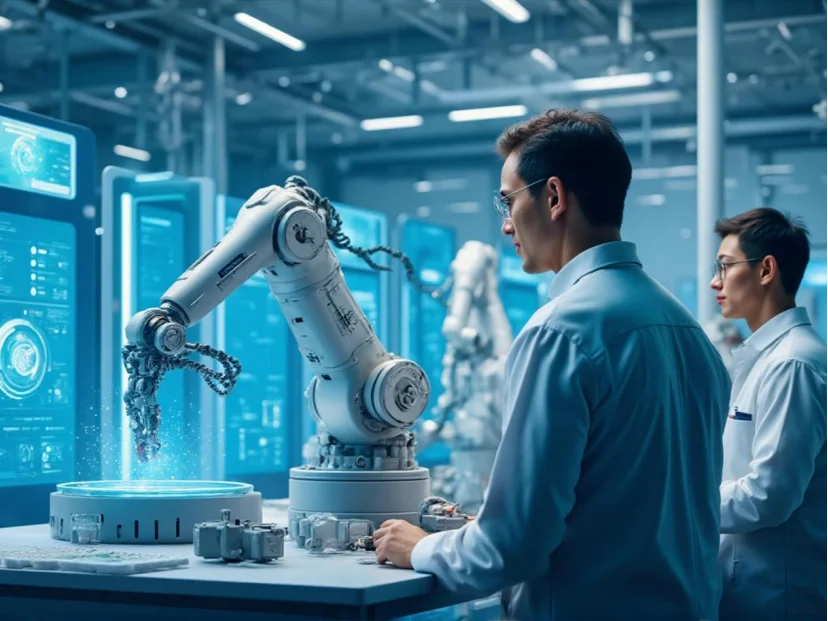
The value of intelligent automation in manufacturing extends beyond replacing manual tasks with machines. It involves using connected equipment, process monitoring, digital data, and automated inspection to make production more predictable. When combined with turnkey manufacturing solutions, these capabilities can help hardware businesses move from prototype development to repeatable production without investing prematurely in extensive manufacturing infrastructure.
Why Small-Batch Hardware Needs a Different Automation Strategy
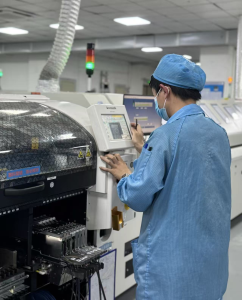
Large-scale factories often rely on dedicated production lines optimized for high volumes of standardized products. Small-batch manufacturing operates under different conditions, including frequent product changes, shorter production runs, and variable demand. An automation system designed exclusively for one product may become inefficient when configurations change regularly.
For small-batch manufacturers, flexibility is therefore as important as speed. Equipment should support repeatable operations while allowing reasonable adjustments to product specifications, assembly sequences, and testing requirements. Modular workstations, programmable equipment, and reusable production fixtures can help achieve this balance.
Automation investments should also reflect actual production needs. Not every operation requires a sophisticated robotic system. Manufacturers may achieve meaningful improvements by automating repetitive, error-prone tasks while retaining human oversight for complex assembly, engineering decisions, and exception handling.
Where Intelligent Automation in Manufacturing Delivers the Most Value
The strongest opportunities often appear in processes where consistency, traceability, and repetitive execution directly influence product quality or operating costs.
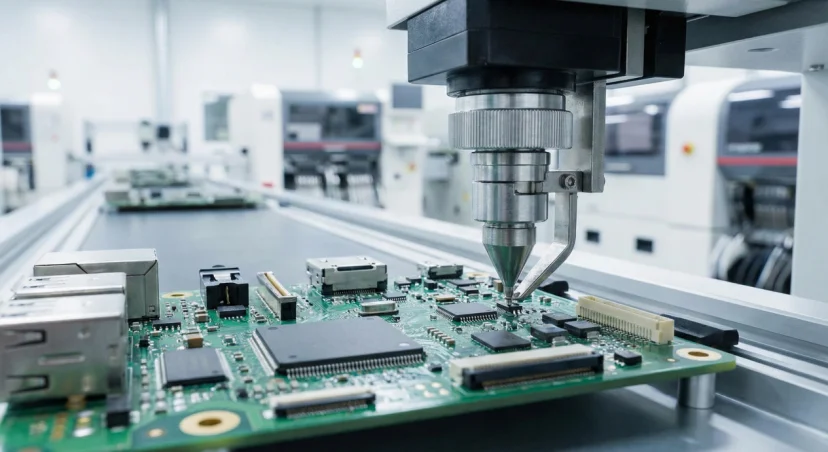
PCB assembly and component placement: Automated pick-and-place equipment supports accurate component positioning and repeatable assembly. For electronic hardware, this can reduce manual handling and help maintain consistency across small production batches. Automated optical inspection can identify certain placement errors, soldering defects, and other visible issues before products proceed to later manufacturing stages.
Functional testing and verification: Hardware products frequently require electrical checks, firmware verification, or functional testing. Automated test procedures can standardize these steps, reduce dependence on manual inspection, and record results for each unit. This is particularly useful when manufacturers must demonstrate consistent performance across multiple production runs.
Material handling and inventory tracking: Barcode scanning, digital work orders, and connected inventory systems help track components as they move through production. Better visibility can reduce picking mistakes, improve material planning, and make it easier to investigate shortages or discrepancies.
Together, these applications show how intelligent automation in manufacturing can improve reliability without requiring every production activity to become fully autonomous.
Improving Production Flexibility Through Digital Workflows
Small-batch manufacturing frequently involves engineering revisions, customized configurations, and changing order priorities. Paper-based instructions and disconnected production systems can make these changes difficult to coordinate. Digital workflows provide a more structured way to manage product information and manufacturing instructions.
For example, digital work instructions can guide operators through assembly sequences, identify the correct component variants, and communicate approved revisions. Manufacturing execution systems, where appropriate, can connect production orders with equipment status, inspection results, and work-in-progress information.
These capabilities help manufacturers identify bottlenecks and understand where delays occur. They also support more consistent execution when teams switch between product models.
However, digitalization should begin with clearly defined processes. Automating an inconsistent workflow may simply reproduce existing problems more quickly. Manufacturers should first establish reliable procedures, identify measurable performance goals, and introduce technology where it addresses a demonstrated operational need.
Integrating Automation With Turnkey Manufacturing Solutions
For hardware companies without their own factories, coordinating engineering, component sourcing, assembly, testing, and packaging can consume considerable time. Working with an integrated manufacturing partner can simplify these responsibilities and improve communication between product development and production teams.
Effective turnkey manufacturing solutions connect design decisions with manufacturing requirements from the beginning. PCB layout, component selection, assembly methods, and testing procedures can be evaluated together rather than handled as isolated activities. This coordination helps identify potential production issues earlier and reduces the risk of costly changes after manufacturing begins.
At Minewing, we provide end-to-end design, engineering, and manufacturing services for electronic products, covering PCB design, prototyping, production, and final packaging. By connecting engineering activities with manufacturing execution, we help businesses establish a practical foundation for scalable electronics production.
For small-batch projects, this integrated approach can be particularly useful when companies need production flexibility but lack the resources to develop and maintain every manufacturing capability internally.
Calculating the Business Case for Automation
Automation decisions should be based on total operating value rather than equipment purchase price alone. Relevant costs include installation, programming, maintenance, training, integration, and potential downtime. Manufacturers should compare these expenses against expected improvements in labor efficiency, defect rates, throughput, and delivery reliability.
Production volume is an important consideration. A highly specialized automated line may be difficult to justify for a product manufactured only occasionally. In contrast, programmable inspection equipment or reusable testing fixtures may provide value across several product families.
A phased implementation can reduce financial risk. Manufacturers might begin with automated testing or inspection, measure the results, and expand into additional processes when the benefits become clear. Useful indicators include first-pass yield, cycle time, rework costs, and schedule adherence.
When combined with turnkey manufacturing solutions, this measured approach allows businesses to evaluate automation within the broader production process instead of treating each technology investment as an isolated decision.
Preparing Small-Batch Production for Future Growth
Intelligent automation is most effective when it addresses specific manufacturing challenges and supports a realistic growth strategy. For small-batch hardware, the greatest benefits often come from repeatable assembly, standardized testing, improved traceability, and better coordination between engineering and production.
At Minewing, we help businesses connect product design and manufacturing requirements while preparing electronic products for changing production needs. By selecting appropriate automation technologies, establishing dependable workflows, and measuring results, hardware companies can improve operational consistency without sacrificing flexibility. The goal is not maximum automation, but a production system that supports reliable quality, controlled costs, and sustainable growth.