
Industrial IoT projects rarely fail because a single device cannot connect to a network. More often, difficulties appear between hardware, wireless communication, software, power management, and the physical environment, where a small mismatch can affect the entire system.
Effective industrial IoT solutions therefore require a method for diagnosing problems by layer rather than treating every failure as a connectivity issue. At Minewing, we approach connected hardware from both engineering and manufacturing perspectives, which helps us consider technical problems within the wider product lifecycle.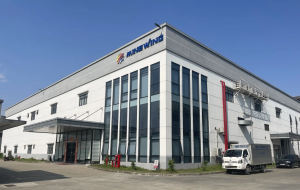
Identify the Real Source of the Problem
A useful troubleshooting process starts with the symptoms rather than the assumed cause. Intermittent data loss, delayed responses, inaccurate sensor readings, or unexpected device resets may originate from very different parts of the architecture. Collecting logs, operating conditions, error patterns, and affected device information provides a stronger starting point than immediately changing components.
Network problems deserve particular attention because industrial environments can contain electrical interference, physical obstructions, crowded wireless channels, or inconsistent signal conditions. Wired and wireless links should be examined separately, while communication protocols need to be checked for compatibility and appropriate configuration.
Projects involving turnkey manufacturing solutions can benefit from early coordination between hardware and production teams. A communication problem may involve antenna placement, PCB layout, enclosure materials, firmware configuration, or component selection, meaning the eventual fix may require changes beyond the network itself.
Strengthen Wireless and Data Communication
Reliable data transmission depends on more than selecting a wireless standard. Engineers need to consider range, bandwidth, latency, power consumption, environmental conditions, and the number of connected devices. A protocol that performs well in a small test environment may behave differently once many devices operate simultaneously.
Multi-protocol environments add another layer of complexity. Industrial equipment may communicate through different interfaces or standards, while cloud services and edge devices may use their own data formats. Clear interface definitions and consistent data structures can reduce translation errors as information moves through the system.
Our IoT architecture work at Minewing focuses on connecting physical devices with cloud platforms through secure, multi-protocol communication. That approach is particularly relevant when industrial IoT solutions need to exchange information continuously while maintaining practical control over bandwidth and device resources.
Diagnose Hardware and Power Constraints
A device that repeatedly disconnects may have a network problem, but unstable power can create almost identical symptoms. Voltage fluctuations, insufficient battery capacity, poor power regulation, or unexpected current peaks can cause processors and communication modules to behave unpredictably.
PCB design should therefore be examined alongside power architecture. Component placement, signal integrity, grounding, antenna positioning, and thermal conditions can all influence system stability. Testing individual elements separately may not reveal an interaction that only appears once the entire device operates together.
A practical example is the Smart Doorbell, where wireless communication, compact electronics, audio, sensing, and continuous power requirements need to coexist within a relatively small enclosure. Testing the integrated hardware helps reveal issues that isolated component checks might overlook.
Improve System Testing and Validation
Testing should mirror the environment in which the product will actually operate. A connected device intended for industrial use may face temperature variation, electromagnetic interference, long operating cycles, mechanical vibration, or fluctuating network conditions. Laboratory testing that ignores these factors can produce results that are difficult to apply in the field.
Functional prototypes provide an opportunity to investigate such conditions before larger production commitments are made. Engineers can examine communication stability, processing behavior, power consumption, mechanical integration, and software interaction while design changes are still manageable.
The transition from prototype to production also deserves attention. Turnkey manufacturing solutions can connect design review, prototype validation, assembly, testing, and production preparation, reducing the risk that an engineering fix works in a prototype but creates manufacturing complications later.
Manage Data, Software, and Scalability
An IoT system can remain technically functional while still becoming difficult to manage as the device count increases. Data volume, update frequency, device authentication, storage requirements, and cloud processing can all change substantially once deployment expands.
Edge processing can help by allowing selected information to be analyzed closer to the device instead of sending every raw data point to a remote platform. The appropriate balance depends on latency requirements, available processing power, connectivity, and the importance of centralized analytics.
Scalability should be considered during architecture design rather than added after deployment. A system built around rigid interfaces or poorly documented device states may require extensive redevelopment as new devices and functions are introduced. A modular architecture gives engineering teams more room to adapt without restructuring the entire platform.
Create a Repeatable Problem-Solving Process
Solving industrial IoT solutions issues effectively requires more than fixing the immediate symptom. Teams need to identify root causes, document test results, verify corrective actions, and track whether the same issue appears under different operating conditions. This creates a technical history that becomes increasingly valuable as the product matures.
Communication between engineering, software, manufacturing, and quality teams matters just as much. A hardware revision can affect firmware, while a software update may change power consumption or network behavior. Shared documentation keeps these dependencies visible instead of allowing each team to solve its own portion in isolation.
At Minewing, we connect IoT development with hardware engineering and manufacturing preparation so that technical decisions can be evaluated beyond the prototype stage. Our experience with turnkey manufacturing solutions allows us to consider design, production, testing, and scaling as related parts of one project. Once troubleshooting becomes a structured engineering process rather than a sequence of isolated fixes, complex connected systems can follow a consistent and repeatable workflow.



