
Industrial connectivity can look impressive in a product presentation yet prove difficult to maintain once sensors, controllers, software, and production equipment operate together. The right partner must therefore offer more than technical terminology or a broad service list.
Evaluating industrial IoT solutions requires attention to engineering capability, system integration, testing methods, production readiness, and long-term scalability. At Minewing, we approach these projects by connecting product development with manufacturing realities rather than treating the two as unrelated stages.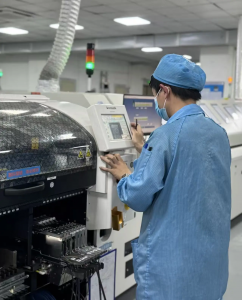
Start With the Technical Scope
A reliable provider should first be able to translate an industrial requirement into a workable technical architecture. That means examining sensors, processors, communication interfaces, power requirements, data handling, enclosure constraints, and the environment in which the device will operate. A vague promise of connectivity says little if the underlying hardware cannot support the intended application.
System compatibility deserves equal consideration. Industrial equipment may use different interfaces, protocols, and generations of control technology, so the provider needs a practical method for handling those variations. Ask how hardware, firmware, communication modules, and cloud or local systems will exchange information before discussing production volume.
The provider’s engineering workflow can reveal even more than a sales presentation. An integrated electronics development and manufacturing workflow can coordinate design, prototyping, testing, and production preparation as one development path. That structure is useful when a project requires adjustments across several technical disciplines.
Examine Prototyping and Validation
A prototype should answer specific engineering questions rather than simply demonstrate that a circuit can power on. Functional samples can be used to assess communication stability, sensor accuracy, thermal behavior, mechanical fit, power consumption, and interaction between hardware and software.
Rapid prototyping also makes design decisions easier to evaluate before expensive tooling or larger production commitments. Depending on the product, 3D printing, CNC machining, and silicone molding can provide useful physical samples, while functional testing reveals how the design performs under realistic conditions.
Minewing uses a DFM-led development approach to connect prototype refinement with production requirements. A consumer device may eventually become part of a larger connected environment, while an industrial controller may need greater attention to durability and integration. The same development principle applies: validate the important assumptions before scaling.
Assess Manufacturing Depth
Technical development alone does not tell you whether a provider can support commercial production. Review its capabilities in printed circuit board (PCB) assembly, enclosure manufacturing, testing, packaging, sourcing, and quality control. These functions become particularly important once an IoT device moves beyond small pilot quantities.
Production consistency should also be considered alongside capacity. A supplier may have sufficient equipment yet lack a practical system for managing engineering revisions, inspection criteria, component changes, and production data. Reliable manufacturing depends on how these details are controlled throughout the project.
For companies seeking industrial IoT solutions, scalability should be discussed early rather than after the prototype has been approved. A provider that understands both engineering and manufacturing can identify production constraints while the design remains flexible enough to change.
Look Beyond the Initial Prototype
Industrial projects rarely remain identical to their first specification. Customer requirements may shift, components can become unavailable, and field testing may reveal opportunities for modification. A suitable partner should have a clear process for reviewing changes without losing track of previous versions.
Communication between engineering and production is especially valuable during this stage. If a PCB revision affects assembly, enclosure dimensions, firmware, or testing procedures, the relevant teams need to see the same updated information. Fragmented communication can create inconsistencies that are difficult to discover later.
The broader value of turnkey manufacturing solutions lies in this connection between development and execution. Rather than passing a prototype from one organization to another and rebuilding the production process, teams can maintain greater continuity from design optimization through manufacturing preparation.
Evaluate Scalability and Industry Fit
Not every provider with IoT experience will be suitable for every industrial application. A company developing connected consumer hardware may prioritize compact design and rapid iteration, whereas an industrial application could place greater weight on environmental conditions, system durability, communication reliability, or integration with existing equipment.
Past project experience can provide useful evidence, but the focus should remain on technical relevance rather than the number of projects listed on a website. Ask how similar engineering problems were approached, which testing methods were used, and how the product moved from an early sample toward production.
Our work at Minewing spans consumer technology and connected hardware applications, giving us experience with the different constraints that appear across development stages. We apply manufacturing optimization alongside engineering decisions so that production considerations are addressed before volume scaling begins.
Build a Practical Provider Evaluation
Finding a dependable partner requires more than comparing quotations. Technical architecture, prototype validation, manufacturing depth, communication practices, quality processes, and scaling capability all deserve attention before a long-term relationship is established. A provider should be able to explain how these pieces fit together in the context of the actual product.
The strongest evaluation questions are often practical: Who owns the design files? How are engineering changes approved? What happens if a component becomes unavailable? Which tests are performed before production? How is manufacturability reviewed? Clear answers reveal far more about working capability than generic claims.
At Minewing, we treat industrial IoT solutions as hardware projects that must eventually function within real operating environments, not merely as connectivity concepts. Our integrated design, engineering, and manufacturing approach allows us to consider DFM, prototyping, production, and scaling within the same development process. That perspective helps customers assess whether a potential partner can support not only the first working sample, but the product journey that follows.



