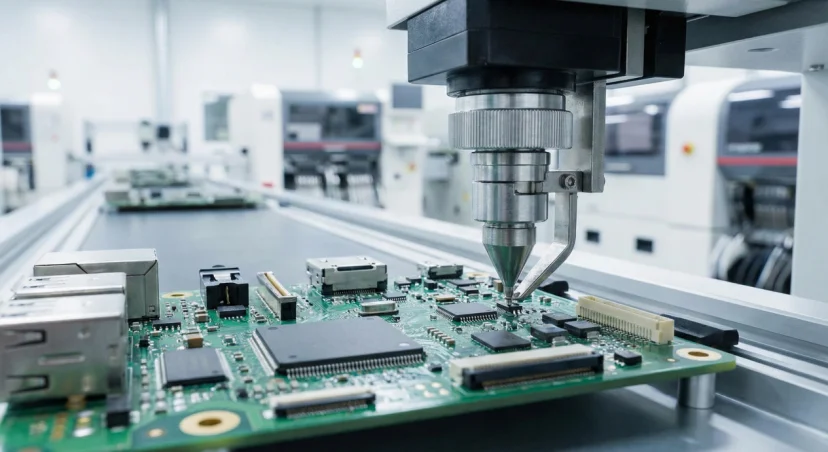
A product that looks correct on paper can still fail when converted into a physical device. Electrical performance, mechanical integration, connectivity, battery behavior, and user interaction often reveal issues that simulations or design files cannot fully expose. For businesses developing connected electronics, functional prototyping provides an important checkpoint before manufacturing investment increases. Through structured product design and prototyping, we can validate critical functions, uncover design risks, and create a stronger foundation for production.
Why Functional Prototyping Matters
Our functional prototypes do more than show what a product may eventually look like. They allow engineering teams to interact with a working version and evaluate whether the underlying systems perform as intended.
For electronic products, this can include checking PCB functionality, wireless communication, power consumption, sensor behavior, mechanical fit, and user interaction. Discovering an issue at this stage is generally preferable to discovering it after tooling or volume production has started.
We treat prototyping as a decision-making stage rather than simply a sample-making exercise. At Minewing, our development workflow includes rapid prototyping and Proof of Concept (POC) testing to validate performance in practical scenarios before customers commit to expensive tooling.
Connect Product Design With Real-World Testing
Effective product design and prototyping should connect engineering decisions with actual product requirements. A prototype needs to reflect the intended operating environment closely enough to reveal meaningful problems.
For a connected device, engineers may need to examine enclosure dimensions, antenna positioning, battery placement, charging access, button locations, and PCB integration together. Changing one element can affect another, making cross-disciplinary testing particularly important.
We therefore combine mechanical and electronic development rather than treating them as isolated activities. At Minewing, we provide hardware design, PCB layout, mechanical development, and prototype validation as connected parts of our development process.
A GPS Tracking Device as a Practical Example
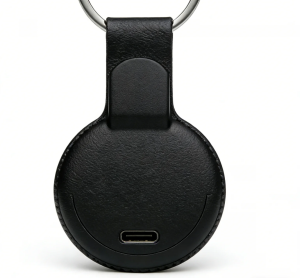
Consider a GPS tracking device designed for assets, vehicles, or personal items. Its commercial value depends on more than simply integrating a GPS module. The finished device needs to provide dependable location monitoring while remaining compact, practical, and easy to use.
For this project, we supported the product from concept definition through production readiness. Our engineering team transformed the initial tracking concept into mechanical and electronic designs, considering manufacturing feasibility alongside the desired functions.
We then created multiple prototypes so the development team could evaluate GPS accuracy, wireless connectivity, battery performance, and overall ergonomics. This iterative approach made it possible to identify weaknesses and refine the design before moving toward manufacturing.
Test Each Critical Function Systematically
Functional testing becomes more valuable when the test objectives are defined before prototypes are built. Instead of simply asking whether the device works, engineering teams should identify measurable functions and operating conditions that matter to the final application.
For the GPS tracking device, this means evaluating location performance, wireless communication, battery behavior, physical usability, and interactions between these systems. For other products, the test plan may focus on audio quality, sensor accuracy, thermal performance, connectivity, or power management.
Our approach is to use prototypes to answer specific engineering questions. At Minewing, our prototyping workflow is designed to validate functionality and real-world performance before products move toward production.
Use Prototype Iterations to Reduce Manufacturing Risk
The first functional prototype rarely needs to be the final version. Its value often comes from revealing what should change.
Once testing identifies an issue, engineers can modify components, PCB layouts, mechanical structures, or software and then evaluate the revised prototype. Several controlled iterations can produce a much stronger design before manufacturing resources are committed at scale.
We also consider manufacturability during these iterations. At Minewing, we integrate DFM evaluation into our development process to identify component, assembly, and structural concerns early. This helps connect functional validation with the requirements of eventual production.
Move From Functional Prototype to Production Readiness
Successful functional testing does not automatically mean a product is ready for mass production. The design must also be manufacturable, components must be available, and production processes must be repeatable.
This is why the transition from prototyping to New Product Introduction (NPI) should be structured. At Minewing, we use small testing batches through Engineering Validation Testing (EVT), DVT, and PVT to identify and eliminate potential production risks. We also incorporate DFM optimization and supply-chain preparation before volume manufacturing.
This progression allows engineering teams to move from individual functional validation toward production validation without treating the first large manufacturing order as a test run.
Build Confidence Before Scaling
For B2B product developers, functional prototyping is ultimately about reducing uncertainty. A physical prototype provides evidence about whether a design can perform its intended functions, fit its intended use case, and provide a suitable foundation for manufacturing.
Our GPS tracking device project illustrates this approach. By combining concept development, mechanical and electronic engineering, prototype iteration, and functional testing, we could address key performance and usability considerations before production.
At Minewing, we support customers from concept and electronic prototype manufacturing through NPI and mass production. Our goal is to help transform promising concepts into reliable, manufacturable products through transparent communication, engineering support, and practical testing.
Turning Tested Designs Into Production-Ready Products
Functional prototyping gives businesses an opportunity to test assumptions before committing to manufacturing at scale. It helps expose technical problems, improve usability, coordinate mechanical and electronic systems, and establish clearer production requirements.
We believe the strongest development process connects product design and prototyping with manufacturing preparation from the beginning. Through electronic prototype manufacturing, functional validation, DFM optimization, and structured NPI, we help our partners create a more predictable path from concept to production. The result is not simply a working prototype, but a design that is better prepared for reliable commercial manufacturing.