Developing an electronic product involves more than turning an idea into a working prototype. Businesses must coordinate industrial design, electrical engineering, mechanical structures, component selection, testing, and manufacturing preparation. When these activities are handled separately, communication gaps and repeated design changes can extend development schedules and increase costs. Working with a joint development manufacturing (JDM) partner offers a more integrated approach, connecting engineering decisions with production requirements from the beginning.
For companies pursuing concept to production product design, this collaboration can reduce unnecessary development cycles and make technical decisions more practical. Rather than treating design and manufacturing as separate stages, a JDM model encourages teams to consider product performance, manufacturability, and commercial objectives together. We support this process through flexible product development and electronic manufacturing services tailored to different project requirements.
Understanding the JDM Model in Product Development
JDM refers to a cooperative development model in which a manufacturer and a client share responsibility for bringing a product from concept toward production. Unlike traditional OEM arrangements, where clients generally provide established product specifications and designs, JDM partners contribute engineering knowledge during development.
The level of collaboration varies according to the project. A client may provide an initial product concept, functional requirements, or an existing prototype, while the manufacturing partner contributes expertise in electronic architecture, PCB design, mechanical integration, and production planning.
This arrangement is particularly useful for businesses that have strong market knowledge but limited internal engineering resources. It allows product teams to access additional technical capabilities without independently establishing every development and manufacturing function.
How a JDM Partner Accelerates Development
Connecting Product Requirements with Engineering Decisions
Early product planning establishes the foundation for the entire development process. Businesses need to define what a device should do, who will use it, and what operating conditions it must withstand. These requirements influence component selection, enclosure dimensions, power architecture, interfaces, and expected production costs.
A JDM partner can help translate business objectives into engineering specifications. For example, a connected industrial device may require wireless communication, multiple sensor interfaces, and protection against environmental exposure. Addressing these requirements together helps avoid design decisions that create problems later.
This early coordination makes concept to production product design more structured because technical feasibility and manufacturing considerations are evaluated before extensive resources are committed.
Integrating Industrial, Mechanical, and Electrical Design
Electronic products rarely succeed through circuit development alone. Their physical appearance, internal layout, thermal performance, and assembly structure also influence usability and reliability.
An integrated development team can coordinate industrial design (ID), mechanical design (MD), and electrical engineering (EE). Industrial design establishes the product’s appearance and user interaction. Mechanical engineering addresses structural integrity, dimensions, materials, and component positioning. Electrical engineering develops the circuitry, PCB architecture, and electronic interfaces.
When these disciplines collaborate, potential conflicts can be identified earlier. For instance, an enclosure may need modification to accommodate connectors, antennas, or heat-generating components. Resolving such issues during development is generally more efficient than correcting them after tooling or production preparation has started.
Improving Prototype Validation and Design Iteration
Prototypes allow businesses to evaluate whether a product meets its intended requirements. However, a prototype should do more than demonstrate basic functionality. It should also provide information about usability, component compatibility, electrical performance, and mechanical integration.
A JDM partner can help establish prototype evaluation procedures and organize feedback into actionable engineering changes. PCB revisions, enclosure adjustments, firmware coordination, and component substitutions can then be managed within a more consistent development process.
For businesses investing in electronic ODM, this collaboration is valuable because product customization must remain compatible with technical feasibility and eventual production requirements. Early validation helps reduce the risk of discovering major design limitations during manufacturing preparation.
From Design Validation to Manufacturing Readiness
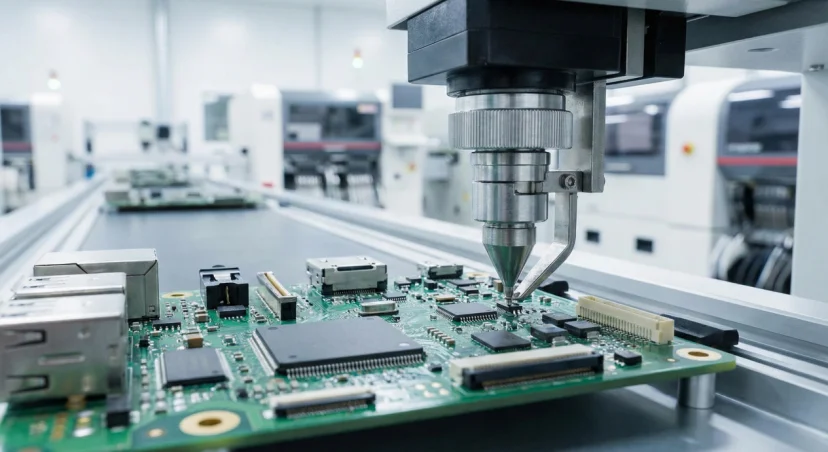
A successful prototype does not automatically translate into a production-ready product. Commercial manufacturing introduces additional considerations, including component sourcing, assembly processes, production tolerances, inspection standards, and supply chain stability.
Design for manufacturability (DFM) helps address these challenges. Engineers review PCB layouts, component placement, assembly accessibility, fastening methods, and material choices to identify opportunities for improvement. Design for assembly (DFA) can further simplify production by reducing unnecessary parts or complicated assembly operations.
Testing requirements should also be established before mass production. Depending on the product, these may include functional testing, electrical safety checks, environmental evaluation, and communication performance verification. Clear acceptance criteria help manufacturers maintain consistent output across production batches.
A structured concept to production product design workflow therefore connects prototype validation with manufacturing preparation rather than treating them as unrelated activities.
Choosing a Flexible Manufacturing Cooperation Model
Not every business needs the same level of development support. Some companies already have complete engineering documentation and primarily require manufacturing capacity. Others need assistance with product architecture, design refinement, component selection, and prototype development.
We provide flexible cooperation models to accommodate these different requirements. JDM co-development is suitable for clients seeking engineering collaboration throughout product development. OEM arrangements can support businesses that already possess established designs and need a manufacturing partner to produce them. Custom manufacturing services can also be structured around specific technical and production requirements.
For companies evaluating electronic ODM, the important consideration is whether the partner can provide the engineering involvement, manufacturing capabilities, and communication structure required by the project. Defining responsibilities early helps establish realistic schedules and avoid misunderstandings during development.
At Minewing, we combine product engineering capabilities with electronic manufacturing support, helping clients coordinate development activities from initial requirements to production preparation. Our approach emphasizes scalable collaboration, allowing businesses to select services according to their existing resources and project objectives.
Building a More Efficient Path to Commercial Production
Selecting a JDM partner should involve more than comparing manufacturing quotations. Businesses should examine engineering experience, communication efficiency, design capabilities, component sourcing practices, testing procedures, and the ability to support future production volumes.
It is also important to clarify intellectual property ownership, engineering change procedures, documentation requirements, and quality responsibilities before development begins. These agreements provide a clearer framework for collaboration and help protect both parties as the project progresses.
A capable partner should be willing to discuss technical limitations and suggest practical alternatives rather than simply accepting every initial specification. This engineering-oriented relationship supports better decisions throughout the development lifecycle.
Turning Product Concepts into Manufacturable Solutions
Shortening the journey from an initial idea to commercial production requires coordination across multiple disciplines. A JDM partnership brings product engineering and manufacturing considerations closer together, helping businesses identify technical challenges earlier, validate designs more effectively, and prepare products for repeatable production.
With the right collaboration model, concept to production product design becomes a more organized process rather than a sequence of disconnected activities. By combining flexible JDM, OEM, and electronic ODM capabilities, we help businesses develop practical electronic products while building a foundation for scalable manufacturing.