
A small production run can be managed with a relatively simple supplier arrangement, but rising order volumes introduce another set of pressures. Engineering changes, component sourcing, quality controls, tooling, logistics, and production scheduling gradually become too interconnected for informal coordination. A manufacturing agent ODM China can initially help bridge communication between a buyer and factory, while a more integrated model may become practical as the product matures. At Minewing, we see this transition as a business decision shaped by product complexity, production volume, technical requirements, and long-term supply planning.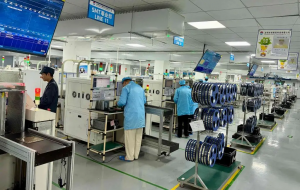
Recognizing the Limits of an Agent Model
An agent can be useful during the early stages of a hardware project, particularly when a company needs access to established factories without building its own supplier network. The arrangement may simplify quotations, factory communication, and order coordination while the product is still being validated.
The situation changes as production becomes more demanding. More purchase orders mean more opportunities for component substitutions, quality discrepancies, delivery coordination, and engineering questions. A B2B manufacturing partnerships model can provide a stronger framework once several departments need to exchange information regularly.
Product complexity provides another useful signal. A simple electronic assembly may require relatively little technical coordination, whereas an IoT device with custom circuitry, wireless connectivity, firmware, and a molded enclosure involves decisions across multiple disciplines. At that point, relying only on transactional communication can make development less efficient.
Assessing Whether Production Has Reached the Next Stage
Volume alone should not determine the move toward ODM. A product with moderate demand but frequent hardware revisions may require more engineering involvement than a high-volume product with an established design. The right question is whether manufacturing decisions have become important enough to affect product performance, cost, or scalability.
Supply chain exposure is another consideration. As order quantities increase, component availability and purchasing terms become more consequential. Global sourcing can provide alternatives, yet each substitution may require electrical validation, firmware adjustments, certification review, or new testing. An ODM manufacturing partnership becomes more valuable when the partner can contribute technical and procurement coordination rather than simply relay supplier information.
Quality requirements often develop alongside volume. Higher output requires repeatable assembly processes, inspection criteria, test procedures, and documentation. Precision SMT and DIP, custom tooling and molding, and a stated 99.5% quality assurance target can become increasingly relevant as production moves from experimental batches toward sustained manufacturing.
What Full ODM Integration Adds
Full ODM involvement generally means that engineering and manufacturing responsibilities become more closely connected. Instead of handing a finished design to a factory, the development partner may participate in PCB optimization, component selection, enclosure considerations, prototyping, testing, and production preparation.
The difference can be particularly noticeable during design revisions. A component change that appears minor from a purchasing perspective might alter board layout, thermal behavior, firmware, or certification requirements. Through B2B manufacturing partnerships, those consequences can be discussed across technical and commercial teams before a decision is implemented.
Our Berry AI Wearable project offers a useful example of this integrated development process. At Minewing, our work has covered PCB design, electrical engineering, internal structure, component selection, firmware debugging, and hardware-software integration. The example demonstrates why scaling hardware often calls for closer cooperation between development and manufacturing rather than simply larger factory capacity.
Preparing the Organization for Higher Production
Moving toward ODM does not remove the buyer’s responsibilities. Product teams still need clear specifications, approval procedures, quality expectations, demand forecasts, and decision-making authority. A well-defined division of responsibilities prevents the supplier relationship from becoming unclear as more functions are added.
Internal processes should evolve as well. Engineering change notices, approved component lists, inspection criteria, packaging requirements, and production forecasts become increasingly useful once a product enters sustained manufacturing. These records create a common technical reference for both sides.
Cost analysis should include more than factory pricing. Tooling, testing, engineering support, inventory exposure, certification, packaging, and international logistics can all influence the economics of scale. A manufacturing agent ODM China may help identify these factors, but the buyer should compare the value of broader technical involvement against the actual needs of the product.
Finding the Right Point to Scale
The shift from agent support to full ODM should happen when coordination itself becomes a significant part of the product’s risk and cost structure. Frequent revisions, complex electronics, growing order volumes, sourcing exposure, and tighter quality requirements are stronger indicators than volume alone.
A mature B2B manufacturing partnerships arrangement can give product teams access to broader technical knowledge while keeping manufacturing decisions connected to commercial priorities. For companies evaluating the next stage of production, the better question is not simply whether an ODM partner can handle more units, but whether its engineering, sourcing, quality, and production capabilities match the product’s future demands.
That distinction guides our approach at Minewing. We use the manufacturing model that fits the project’s actual stage, adding deeper technical and production coordination where it provides measurable value. Once the product, supply chain, and manufacturing process need to operate as a unified system, the move toward full ODM becomes less a change of supplier and more a logical evolution of the product strategy.



