
A successful electronic product involves far more than a functioning circuit board. Hardware teams must coordinate component selection, PCB development, mechanical construction, tooling, assembly, testing, and production planning while keeping commercial objectives in view. An electronic manufacturing service provider can bring several of these activities into a connected development process, which can be particularly useful when a product moves from engineering samples toward repeatable production. At Minewing, we see this connection as an important part of turning technical concepts into products that can be manufactured at the required scale.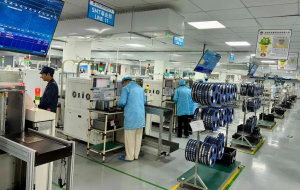
Integrated Engineering From PCB to Production
PCB design establishes the electrical foundation of a device, but its performance cannot be considered independently from the mechanical structure or manufacturing process. Component placement affects enclosure dimensions, connectors influence assembly access, and thermal considerations may change the arrangement of both the board and housing. Looking at these relationships together can help teams make better decisions before production resources are committed.
An electronics manufacturing services partner can contribute beyond board assembly by supporting areas such as hardware development, PCB layout, mechanical design, prototyping, and manufacturing preparation. This integrated approach gives product teams a single technical context in which engineering requirements and production constraints can be discussed together.
For startups and growing brands, that coordination can also reduce the burden of managing multiple specialist suppliers. Instead of passing design information between unrelated organizations, teams can establish a clearer workflow from initial specifications through physical prototypes and production preparation.
Prototyping and Design Validation
A prototype provides an opportunity to test assumptions that are difficult to verify through drawings or simulations alone. Physical dimensions, connector positions, button placement, enclosure fit, and component accessibility can all be assessed before the design reaches a larger production stage. The feedback gathered during this period can influence both technical performance and user experience.
Our development capabilities at Minewing include rapid prototyping through 3D printing and CNC machining, together with PCB development and mechanical engineering. These methods allow us to create physical representations of a design and examine important details before production volumes increase.
Validation is especially useful for products that combine electronics with custom housings. A board may function correctly on a workbench but encounter unexpected issues after being installed inside a compact enclosure. Prototype iterations provide engineers with a practical way to identify those interactions and adjust the design accordingly.
Scaling Through Manufacturing Expertise
The transition from prototype to production introduces considerations that are not always visible during early engineering. Component sourcing, assembly methods, tooling, testing procedures, production yield, packaging, and supply-chain planning can all affect the final product. A manufacturing strategy therefore needs to evolve alongside the hardware itself.
An electronic manufacturing service can support this transition by bringing manufacturing knowledge into the later stages of product development. Design for manufacturing, component sourcing, and production engineering can help teams assess whether a design is suitable for the intended manufacturing volume.
Our published process at Minewing covers engineering design, rapid prototyping, trial production, and mass production, with EVT, DVT, and PVT stages used during new product introduction. We also support precision plastic tooling and final assembly as part of the broader production process.
Supply Chain and Production Coordination
Component availability can have a substantial effect on hardware schedules. A theoretically suitable component may become difficult to source, experience a long procurement cycle, or create cost pressure at higher quantities. Considering supply-chain conditions during development gives engineers more room to evaluate alternatives before the design becomes dependent on a single option.
The broader value of electronics manufacturing services comes from connecting sourcing with engineering and production planning. A coordinated process can consider the bill of materials, supplier availability, assembly requirements, and expected production volume together rather than addressing each issue after the design has already been finalized.
This perspective also matters when a product requires changes after pilot production. A manufacturing partner familiar with the project’s technical background can discuss component substitutions, PCB revisions, tooling adjustments, or assembly changes with greater context, helping the development team understand the practical consequences of each decision.
Turning Engineering Into a Repeatable Product
Manufacturing quality depends on repeatable processes as much as individual component performance. Production testing, assembly instructions, inspection procedures, tooling accuracy, and process controls all contribute to consistency across batches. These elements should be considered as part of product development rather than added only after engineering work is finished.
At Minewing, we provide support across hardware development, prototyping, tooling, assembly, manufacturing, and supply-chain coordination. Our approach allows us to work with startups and growing brands that need to move from an initial product definition toward larger-scale manufacturing without treating each stage as an isolated activity.
The resulting benefit is a more connected development path. Engineering decisions can be evaluated against production realities, while manufacturing feedback can inform subsequent design work. Such interaction becomes increasingly valuable as products grow more sophisticated and production requirements become less forgiving.
A Practical Foundation for Product Development
The strongest manufacturing strategy is rarely defined by one capability alone. PCB expertise, mechanical engineering, prototyping, sourcing, tooling, assembly, and testing become more useful when they operate within a coherent process. An electronics manufacturing service can provide that structure while allowing product teams to concentrate on the requirements that distinguish their own hardware.
We built Minewing around end-to-end custom electronics development, extending from PCB design and engineering through precision tooling, assembly, and mass production. Our role is not limited to producing a finished unit; we work with partners to connect technical development with manufacturing execution, giving each project a practical path from an early concept to a market-ready product.



