
Industrial environments rarely have the luxury of replacing an entire operational technology (OT) system simply because newer devices have arrived. Older controllers, sensors, communication interfaces, and monitoring equipment may still perform essential functions, yet modern applications increasingly demand richer data, wireless connectivity, smarter analytics, and more responsive human-machine interaction.
The challenge is therefore less about replacing what already works and more about creating a practical bridge between established infrastructure and emerging capabilities. At Minewing, we see intelligent manufacturing solutions as an engineering approach that allows new hardware to coexist with existing OT assets while preserving useful legacy investments.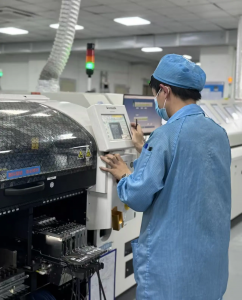
Why Legacy OT Requires A Layered Integration Strategy
Legacy OT infrastructure often contains equipment designed around specific protocols, interfaces, and operating assumptions. A controller may communicate through an established industrial bus, while a newly introduced device relies on Ethernet, Wi-Fi, Bluetooth, or another wireless connection. Connecting these systems directly can create compatibility problems, particularly if the original equipment was never designed to exchange data with modern platforms.
A layered architecture offers a more practical route. Rather than modifying every existing machine, engineers can introduce gateways, embedded controllers, interface boards, or edge devices that translate information between different environments. Such an arrangement keeps established control logic in place while giving newer applications access to selected operational data.
Data ownership and communication boundaries matter just as much as physical connectivity. Engineers need to determine which information should move between systems, how frequently it should be exchanged, and which device should perform local processing. With turnkey manufacturing solutions, these questions can be considered alongside hardware design, firmware development, prototyping, and production rather than being postponed until deployment.
Designing New Hardware Around Existing Constraints
Physical integration can be surprisingly difficult in mature industrial environments. Available installation space may be limited, existing connectors may follow older standards, and power supplies may not match the requirements of newer electronics. Mechanical dimensions, mounting positions, heat dissipation, and cable routing consequently become part of the integration problem.
Electrical characteristics deserve equal attention. A new sensing or communication module must operate within the available voltage range and coexist with surrounding equipment without introducing unwanted interference. Compact PCB design can help reduce installation requirements, but miniaturization should not compromise thermal management, service access, or component reliability.
Our work with wearable technology demonstrates a related engineering principle: new functionality often has to fit within strict physical and power constraints. The Smart Ring project, for example, reflects our focus on compact connected hardware, ergonomic considerations, and precise tracking capabilities. Although a wearable differs from industrial OT equipment, the underlying lesson is similar—electronics, mechanical structure, power management, and user interaction need to be considered as one system.
Making Modern Connectivity Useful To OT Systems
Connectivity alone does not make an upgraded infrastructure smarter. The useful question is what additional information becomes available once new devices can communicate with existing equipment. Edge processing can be valuable here because selected data can be interpreted close to its source instead of constantly sending raw information to a remote platform.
AI-enabled hardware adds another possibility. Sensors can collect environmental or operational signals, while local processors evaluate those inputs and generate responses with less dependence on centralized computing. Such an architecture can support applications that require timely feedback, particularly in environments where network conditions or response latency matter.
Intelligent manufacturing solutions can provide the technical framework for combining these capabilities with established equipment. The emphasis should remain on meaningful data exchange rather than adding connectivity for its own sake. A carefully selected interface, processing method, and communication protocol may deliver more practical value than a larger collection of disconnected technologies.
Managing Migration Without Disrupting Operations
Integration projects benefit from incremental validation. Instead of introducing an entire technology stack at once, engineering teams can first test one interface, device, or data pathway under controlled conditions. Results from that stage can then inform the next expansion, reducing the uncertainty associated with large-scale deployment.
Testing should cover more than basic communication. Response time, power behavior, electromagnetic compatibility, firmware stability, data accuracy, and recovery after communication interruptions may all influence how a new device behaves alongside established OT equipment. Documentation is equally important because future maintenance teams need to understand both the original system and the newly introduced components.
A staged manufacturing process can support this approach. Prototype samples allow mechanical and electronic assumptions to be checked, while EVT, DVT, and PVT stages provide opportunities to examine design behavior and production readiness at progressively broader levels. Turnkey manufacturing solutions are particularly relevant when the same engineering workflow needs to extend from initial samples into small-batch and volume production.
Creating A Sustainable Path From Old To New
Legacy infrastructure should not automatically be treated as an obstacle. In many factories and industrial facilities, existing machines contain valuable control logic, proven mechanical systems, and years of operational knowledge. Preserving those assets while adding carefully selected digital capabilities can make modernization more practical than starting again from zero.
The most effective migration strategy also leaves room for future development. Hardware interfaces should accommodate foreseeable upgrades where practical, firmware should be structured so that functions can evolve, and communication architecture should avoid unnecessary dependence on a single technology. Such flexibility gives businesses more options as sensors, processors, connectivity standards, and AI capabilities continue to change.
Our role at Minewing is to connect these engineering considerations across hardware development, embedded systems, PCB design, prototyping, manufacturing, and product integration. We approach intelligent manufacturing solutions as an evolving technical framework rather than a single piece of equipment, while turnkey manufacturing solutions can provide continuity between engineering work and physical production. By respecting the strengths of existing OT infrastructure and introducing new capabilities with deliberate engineering, modernization becomes a controlled progression instead of an abrupt replacement project.



