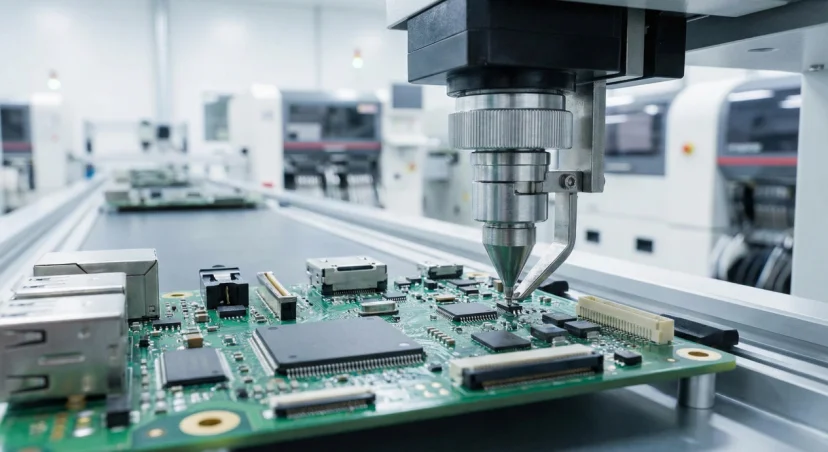
For companies developing electronic products, low-volume PCB production is often an important step between prototype validation and full-scale manufacturing. However, many businesses underestimate how testing requirements influence the final quotation. Testing affects not only product reliability but also engineering resources, production processes, and overall manufacturing costs.
At Minewing, we help startups and growing brands develop and manufacture electronic products through integrated engineering and production solutions. From the first schematic design to high-precision mass production, we provide a seamless platform to bring complex electronic concepts to life. Understanding the relationship between testing and a low volume PCB orders quote helps businesses make better manufacturing decisions and create more reliable products.

Why Testing Matters in Low-Volume PCB Manufacturing
Testing is a critical part of PCB production because electronic products must perform consistently before reaching customers. Even small production quantities require careful validation to ensure the design, components, and assembly processes meet quality expectations.
For low-volume PCB orders, testing can have a noticeable impact on quotations because production quantities are limited. Unlike large-scale manufacturing, where testing costs can be distributed across thousands of units, low-volume production often requires more consideration of setup, engineering time, and testing procedures.
At Minewing, we work with customers to evaluate testing requirements during the early development stage. By understanding product goals and performance expectations, we help create efficient testing strategies that support quality while managing costs.
How Testing Requirements Influence PCB Manufacturing Costs
When companies request a low volume PCB orders quote, manufacturers consider multiple factors beyond the number of boards required. Testing complexity is one of the important elements that affects the final cost.
Basic functional testing may involve checking whether the PCB operates according to design specifications. However, more advanced testing can include electrical performance analysis, firmware verification, signal testing, environmental testing, and reliability evaluation.
Each additional testing requirement may require specialized equipment, engineering time, or customized test fixtures. Therefore, companies should clearly define testing expectations when requesting quotations to ensure accurate cost estimation.
The Role of Engineering Review in Accurate Quotes
A successful PCB project starts with a detailed engineering review. Before production begins, manufacturers need to understand the design structure, component selection, and potential manufacturing challenges.
At Minewing, our Engineering & R&D team supports customers through PCBA layout, firmware development, DFM cost optimization, and rapid prototyping. These services help identify possible issues before manufacturing and improve production efficiency.
Through engineering analysis, we can evaluate how testing requirements affect production preparation. This allows businesses to receive more accurate quotations and avoid unexpected costs during later manufacturing stages.
Prototype Testing Helps Reduce Future Production Risks
Prototype testing is an essential step for companies preparing low-volume PCB orders. It allows engineers to verify product functions, identify design problems, and optimize performance before moving forward.
Rapid prototyping gives businesses an opportunity to evaluate real product behavior instead of relying only on simulations or design documents. Testing results can reveal issues related to power management, component compatibility, firmware performance, or PCB layout.
Minewing supports rapid prototyping with a 48-hour development capability for suitable projects. By validating designs earlier, customers can make improvements before production, reducing risks and improving the reliability of future manufacturing.
Testing Builds Stronger B2B Manufacturing Partnerships
Successful electronics production depends on cooperation between brands and manufacturers. Clear communication about testing requirements creates stronger B2B manufacturing partnerships because both sides understand project expectations from the beginning.
A reliable manufacturing partner does not only provide a production price. Instead, the partner should help customers determine suitable testing methods, identify potential risks, and develop practical solutions.
At Minewing, we believe manufacturing relationships should be based on collaboration and transparency. Our engineering teams work closely with customers to balance product requirements, production efficiency, and quality objectives.
Balancing Testing Requirements and Cost Efficiency
Although testing increases manufacturing investment, it also provides long-term value by improving product reliability and reducing failure risks. For electronic products, preventing quality problems before market launch is usually more cost-effective than handling customer returns or redesigns later.
Businesses should avoid selecting manufacturing solutions based only on the lowest initial quotation. A lower price without sufficient testing support may create additional costs during production or after product release.
Through DFM optimization and engineering support, Minewing helps customers identify efficient testing approaches. Our goal is to create manufacturing solutions that deliver reliable performance while maintaining cost control.
Prepare for Scalable Production with the Right Testing Strategy
Low-volume PCB orders are often the foundation for future product growth. A successful small-batch production process can provide valuable data for improving designs and preparing for larger manufacturing volumes.
Companies should consider whether their testing strategy can support future expansion. Testing methods developed during early production can often become part of a more advanced quality control system as production increases.
At Minewing, we support customers throughout the product lifecycle, from initial design and prototype testing to high-precision mass production. Our integrated approach helps businesses scale confidently while maintaining consistent quality.
Building Reliable Electronics Through Smarter Testing Decisions
Testing plays a major role in determining the cost, quality, and success of low-volume PCB production. When businesses understand how testing affects a low volume PCB orders quote, they can make better decisions about design preparation, manufacturing requirements, and long-term product planning.
At Minewing, we combine engineering expertise, manufacturing experience, and supply chain support to help customers develop reliable electronic products. Through effective collaboration and strong B2B manufacturing partnerships, we deliver “rock-solid dependability” from prototype development to scalable production.