
A promising hardware concept can change considerably between the first schematic and the first production unit. Electrical performance, mechanical constraints, component availability, testing requirements, and manufacturing methods all have to converge before a design becomes a dependable product. A manufacturing agent ODM China can help connect these stages, while the right technical relationship keeps commercial decisions aligned with engineering realities. At Minewing, we work with global innovators to develop resilient hardware foundations that support demanding industrial applications.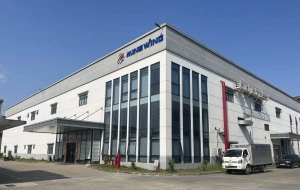
Turning Design Intent Into Manufacturable Specifications
A blueprint describes what a product should do, but manufacturing requires considerably more detail. Printed circuit board (PCB) dimensions, component footprints, enclosure interfaces, assembly tolerances, thermal considerations, and test points can all affect whether the original concept translates smoothly into production. Reviewing these elements early gives engineering teams an opportunity to resolve practical constraints before they become expensive revisions.
The transition also depends on communication between different technical disciplines. Electrical engineers may prioritize circuit performance, while mechanical teams focus on structural integrity and assembly space. A B2B manufacturing partnerships approach creates a shared framework in which these requirements can be evaluated together rather than handled as disconnected tasks.
Manufacturing feedback can reveal design alternatives that are difficult to identify from a schematic alone. SMT and DIP processes, for example, impose specific considerations around component placement and board assembly. A capable manufacturing agent ODM China can bring production knowledge into the development conversation without changing the product’s fundamental purpose.
Building Reliability Into the Hardware
Reliability is rarely the result of a single component or test. It develops through decisions made across PCB design, material selection, assembly methods, power management, enclosure construction, and validation. Products intended for industrial environments face even greater demands because vibration, temperature variation, continuous operation, and electrical stress may all affect performance.
Quality systems provide another layer of control. High-precision SMT and DIP, custom tooling and molding, and a stated 99.5% quality assurance target can support consistent production when paired with suitable inspection and testing procedures. The important point is not simply having these capabilities, but applying them according to the product’s actual risk profile.
At Minewing, we view reliability as something that needs to be considered throughout development rather than added shortly before shipment. Our work with industrial hardware emphasizes dependable circuitry, disciplined manufacturing processes, and practical validation so that performance expectations remain connected to physical production conditions.
Managing Components, Compliance, and Supply Risk
A technically sound design can still encounter difficulties if its components become difficult to source. Semiconductor availability, alternate part qualifications, minimum order requirements, and supplier consistency can affect both production continuity and product economics. Global sourcing gives development teams more options, but those alternatives need technical evaluation before they enter the bill of materials.
Compliance should also be considered before the hardware architecture becomes difficult to change. Depending on the target market and product category, CE or FCC requirements may influence wireless components, power systems, enclosure materials, and testing procedures. Integrating those considerations early can reduce unnecessary redesign work later in the development cycle.
A B2B manufacturing partnerships model becomes valuable when sourcing, engineering, quality, and certification teams need to exchange information continuously. Rather than treating procurement as a separate activity, the relationship can connect component decisions with manufacturability and regulatory requirements.
Moving From Prototype to Repeatable Production
Prototypes answer questions that drawings cannot. A functional sample can reveal thermal behavior, assembly difficulties, mechanical interference, signal problems, or usability concerns that remain invisible during theoretical design reviews. Multiple prototype iterations are often worthwhile because each round provides evidence for the next engineering decision.
Production preparation changes the nature of the work once the design becomes stable. Tooling, process documentation, inspection procedures, assembly instructions, and supply planning must be considered together. A manufacturing agent ODM China can coordinate these activities while keeping the development team informed about practical factory constraints.
A useful example is the Berry AI Wearable, where our team has worked across PCB design, electrical engineering, internal structure, component selection, firmware, and hardware-software integration. Its development illustrates why sophisticated hardware cannot be separated neatly into individual disciplines: each technical decision influences how the final device performs and how efficiently it can be manufactured.
Creating Value Through Long-Term Coordination
The role of an ODM partner extends beyond getting the first production order out of the factory. Products often evolve through new functions, regional certification requirements, component substitutions, or revised mechanical designs. A supplier that understands the original architecture can respond to these changes with greater context and fewer disconnected handoffs.
Cost should be assessed in the same long-term manner. A low initial quotation may lose its advantage if repeated engineering changes, poor yield, unstable sourcing, or additional testing generate unexpected expenses. Strong B2B manufacturing partnerships allow teams to examine those factors together and make decisions based on the broader lifecycle of the product.
From Engineering Concept to Industrial Hardware
A successful transition from blueprint to product depends on more than manufacturing capacity. It requires technical interpretation, disciplined validation, supply chain awareness, quality controls, and communication that remains clear as the project develops. The manufacturing agent’s value lies in connecting these pieces without losing sight of the original product requirements.
That connection becomes particularly important for industrial hardware, where resilience and dependable performance can matter as much as initial development speed. At Minewing, we combine engineering experience with precision manufacturing, global sourcing, certification support, and production coordination to help transform complex concepts into durable hardware. The strongest B2B manufacturing partnerships are built around that shared technical understanding, giving product teams a practical path from an early blueprint to hardware ready for demanding environments.



