
Modern electronic products are no longer judged by circuit performance alone. Connectivity, compact structures, power consumption, manufacturability, and long-term stability all have to work together before a device can move beyond the prototype stage.
At Minewing, we approach this challenge from the engineering side, combining embedded architecture, PCB development, manufacturing knowledge, and practical validation. In our view, intelligent manufacturing solutions are most valuable when they connect design decisions with the realities of production rather than treating engineering and manufacturing as separate tasks.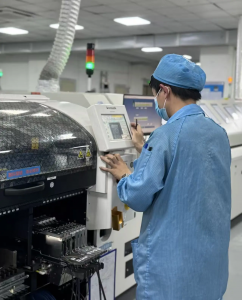
Embedded Architecture Creates The Hardware Foundation
An embedded system begins with more than selecting a capable processor. Engineers need to define how the chipset communicates with sensors, memory, power circuits, wireless modules, and peripheral components. The architecture also has to reflect the intended operating environment, because a wearable, industrial controller, and connected home device may face very different limitations. A well-planned architecture establishes clear relationships between functional blocks and gives later PCB development a more stable technical foundation.
PCB layout then turns that architecture into a physical system. Signal paths, component placement, power distribution, thermal behavior, and board dimensions can all influence how an embedded device performs. High-speed interfaces may require careful routing, while compact products demand thoughtful placement to prevent interference and simplify assembly. Rather than treating the circuit board as an isolated component, engineers should consider its relationship with the enclosure, battery, antenna, connectors, and mechanical structure from the beginning.
PCB Design Connects Performance With Manufacturability
A technically functional schematic does not automatically translate into an efficient production design. Component availability, package selection, assembly tolerances, board thickness, test access, and soldering requirements can all affect the practical outcome. Turnkey manufacturing solutions typically embed DFM analysis as a core part of their service, providing a useful bridge between engineering intent and factory execution by examining whether the proposed design fits the selected manufacturing process—while also addressing procurement, assembly, and test coverage under one coordinated plan.
Signal integrity deserves particular attention as device functionality becomes more sophisticated. Wireless modules, high-speed interfaces, sensitive analog circuits, and dense digital components can create interference or timing challenges if their relationships are poorly planned. Power integrity matters as well, especially in battery-powered products where unstable voltage behavior can affect processors, sensors, communication modules, or audio functions. These details may appear small on a schematic, yet they can have a significant impact during functional testing.
Manufacturing Intelligence Extends Beyond The Factory Floor
Automation is only one part of intelligent manufacturing. A broader system connects material planning, engineering changes, production scheduling, inspection, traceability, and quality data so that decisions can be made with better visibility. For electronics projects, this connection is particularly useful because a single component substitution may affect firmware, PCB layout, certification, assembly processes, or product performance.
Supply-chain coordination also has a technical dimension. Semiconductor availability, passive-component specifications, connector compatibility, and mechanical material choices can influence whether a product remains stable throughout its production life. Engineers therefore need to understand not only whether a component works, but also whether it can be sourced consistently and whether alternative parts would require redesign. This perspective becomes especially important during periods of component volatility.
At Minewing, we connect engineering development with manufacturing considerations through our broader electronics workflow. Our capabilities cover PCBA development, firmware, DFM cost analysis, rapid prototyping, SMT and DIP assembly, custom tooling, component sourcing, certification support, and global logistics. Rather than separating these activities into unrelated stages, we use their connections to identify practical issues earlier and keep technical decisions aligned with production realities.
From Prototype Validation To Scalable Production
Prototype testing provides information that simulation alone cannot reveal. A physical sample can expose unexpected heat buildup, uncomfortable dimensions, weak connectors, wireless interference, assembly difficulties, or power-management problems. Functional testing should therefore examine not only whether a feature works, but also how the hardware behaves under realistic operating conditions.
A useful example from our project experience is the Smart Doorbell, a compact IoT home-security device combining HD video monitoring, two-way audio, and real-time communication. Its development illustrates why several engineering disciplines must interact: the electronics need to support imaging and communication functions, while the enclosure and internal arrangement have to accommodate those components within a practical form factor. The project appears in our portfolio alongside other IoT, smart-home, wearable, AI hardware, and industrial-control applications.
Building A Manufacturing System That Can Adapt
Technology changes faster than many production cycles. A product that begins with one wireless module or processor may later require a different component because of availability, cost, certification, or performance considerations. Manufacturing systems therefore need enough engineering flexibility to accommodate controlled changes without disrupting every surrounding process.
The same principle applies to product scale. A startup may begin with functional prototypes and a small trial run, while an established brand may need higher-volume assembly and international logistics. The underlying manufacturing framework should accommodate these different stages without forcing the project into an unnecessarily rigid model. Flexible cooperation is particularly valuable when demand remains uncertain during market validation.
For us, the practical meaning of intelligent manufacturing solutions lies in this ability to connect information across the product lifecycle. Engineering, sourcing, prototyping, production, testing, and logistics each provide different kinds of data; their value increases when those signals can influence one another. Our experience at Minewing has shown that strong hardware development is not simply about producing a functioning circuit—it is about creating a system that can be tested, refined, manufactured, and adapted as the product moves forward.



