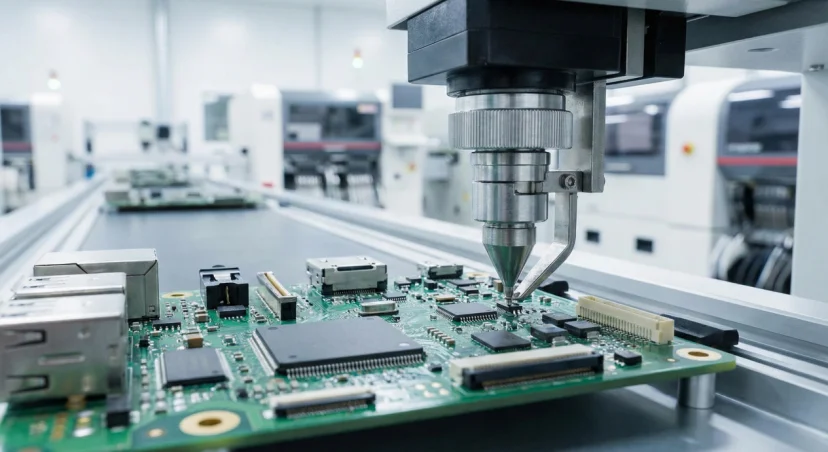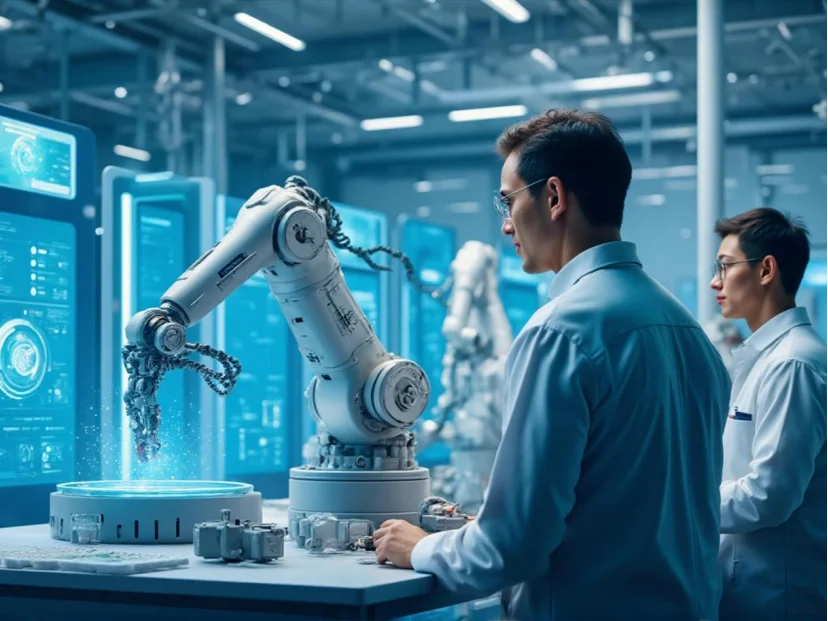
AI is no longer only a software story. The rapid expansion of generative AI is reshaping the physical electronics industry, from semiconductors and memory to servers, networking equipment, power systems, and manufacturing capacity. Recent electronic manufacturing services news shows that AI hardware demand is putting pressure on component supply chains while creating new opportunities for manufacturers. For businesses developing electronic products, these changes have important implications for sourcing, production planning, and supplier selection.
AI Hardware Is Reshaping Electronics Manufacturing
Recent contract manufacturing electronics news highlights how strongly AI demand is influencing manufacturing activity. Reuters reported that global factory activity expanded in August 2026, with Asian manufacturing hubs benefiting from demand for semiconductors and AI-related products. China, Japan, and South Korea all recorded manufacturing expansion during the period.
The impact extends beyond advanced processors. AI systems require substantial supporting hardware, including memory, power components, networking equipment, storage, cooling systems, and server infrastructure. As AI data centers expand, manufacturers throughout the electronics value chain are increasingly affected by this demand.
For B2B buyers, this means AI affects component availability and cost even when their own products are not AI-enabled devices. Our manufacturing strategies therefore need to account for broader market demand instead of focusing solely on a single product.
Component Supply Is Becoming a Strategic Concern
One of the clearest messages from recent electronics manufacturing services news is that component availability deserves more attention. S&P Global reported that electronics supply chains are struggling to meet elevated demand for data-center equipment, while memory-chip production is lagging demand. Additional capacity is being developed, but meaningful increases are expected to take time.
TrendForce has similarly reported that demand for AI servers and edge AI devices is causing foundries to allocate more capacity to AI-related products. This shift is tightening capacity for some mature-node applications, including power-related integrated circuits.
We see this as an important lesson for product companies: supply-chain planning cannot begin after the design is finished. Critical components should be identified early, alternative parts should be evaluated where practical, and procurement decisions should be connected closely with engineering.
Manufacturing Capacity Must Become More Flexible
AI hardware also demonstrates why manufacturing capacity needs to scale quickly. Major electronics manufacturers are expanding production footprints to respond to demand while reducing exposure to geographic and geopolitical risks.
For example, recent reporting shows that Wistron is expanding AI-related production capacity, including a new manufacturing facility in Texas, while raising capital partly to support raw-material purchases. Foxconn has also been expanding AI server production across multiple regions as cloud infrastructure investment accelerates.
For product companies, the lesson is broader than AI servers. A manufacturing partner should be able to adapt when demand changes, components become constrained, or production volumes increase. Flexibility can become just as important as nominal factory capacity.
AI Hardware Raises the Importance of Engineering Collaboration
AI-related products are also becoming increasingly complex. High-performance computing systems require careful coordination between processors, memory, power delivery, thermal management, networking, and mechanical structures.
Even companies outside the data-center market face similar challenges as products become more connected and intelligent. Compact IoT devices, industrial controllers, edge-computing equipment, and smart products may require sophisticated PCB designs and close coordination between hardware, firmware, and manufacturing engineering.
This makes the relationship between product development and manufacturing increasingly important. A manufacturer that can identify manufacturability problems early can help reduce costly redesigns before products enter volume production.
What This Means for Contract Manufacturing Electronics News
The contract manufacturing electronics news points toward a broader transformation in the role of manufacturing partners. Traditional assembly remains important, but customers increasingly need suppliers that can support engineering, sourcing, prototyping, production scaling, and supply-chain problem solving.
AI hardware is accelerating this shift because its demand is exposing weaknesses in conventional supply models. Higher component demand, capacity constraints, and rapid technology cycles require manufacturers to communicate more closely with customers.
We believe this approach is particularly important for startups and global brands. A manufacturing partner should not simply wait for a purchase order. It should understand the product, anticipate production risks, communicate changes, and help customers make practical decisions.
How We Support Changing Electronics Demand
At Minewing, we understand that manufacturing requirements can change significantly as products move from concept to mass production. As a Chinese electronics manufacturer, we support startups and global brands throughout product development and manufacturing.
Our role can extend from prototyping to mass production, giving customers a flexible path as their requirements develop. We focus on transparent communication, stable supply chains, and a problem-solving mindset because these factors directly affect a customer’s ability to maintain production continuity.
We also recognize that every project has different priorities. Some customers need support with an established design and volume manufacturing, while others require greater involvement during product development. Our one-stop-shop approach allows us to tailor manufacturing support to the project’s specific demands.
Preparing for the Next AI-Driven Manufacturing Cycle
The current AI hardware boom offers a useful preview of where electronics manufacturing is heading. Component demand is increasing, production capacity is being expanded, and manufacturers are investing in more geographically diverse supply chains. At the same time, businesses are placing greater value on reliability and manufacturing flexibility.
For companies evaluating an electronics manufacturing partner, these trends provide a practical checklist. Look beyond quoted production capacity and consider supply-chain resilience, engineering communication, production scalability, component management, and the ability to respond when market conditions change.
Building a Manufacturing Partnership for the AI Era
The most important message from recent electronic manufacturing services news is that AI is changing the entire electronics ecosystem, not simply the market for GPUs and servers. Its influence reaches components, factories, procurement strategies, logistics, and product development.
At Minewing, we aim to respond to this changing environment by building long-term partnerships rather than simply completing individual production orders. Through transparent communication, stable supply-chain support, and a problem-solving mindset, we work to help our partners develop, manufacture, and scale electronic products with greater confidence.