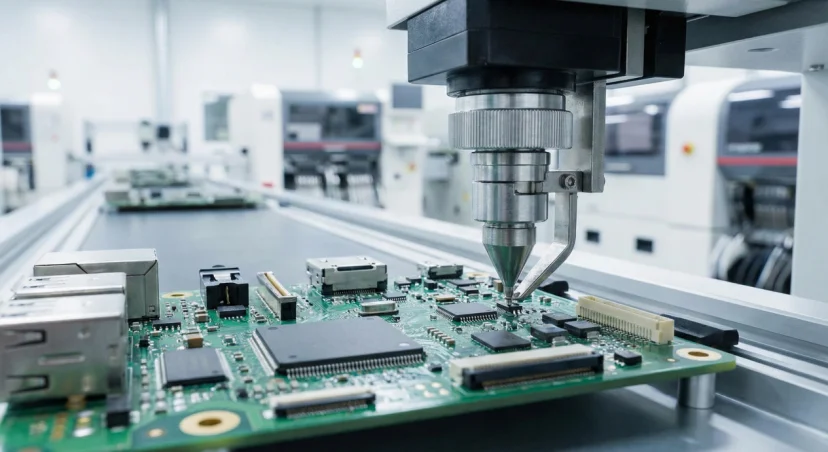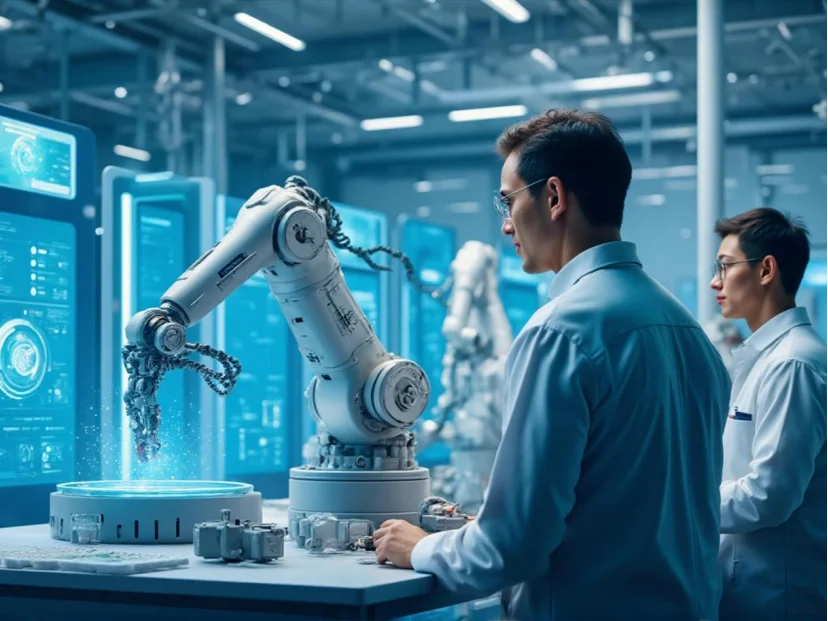
Buying electronics solutions is rarely as simple as selecting a manufacturer and requesting a quotation. For B2B buyers, the real challenge is finding a partner that can connect product requirements, engineering, manufacturing, quality, and scalability. Yet several misconceptions can complicate supplier selection. We believe understanding what turnkey manufacturing solutions actually involve can help buyers evaluate partners more effectively and make better long-term decisions.
Misunderstanding 1: Electronics Solutions Mean Assembly Only
One common misconception is that an electronics provider mainly assembles PCBs after the customer has completed every engineering task. While assembly remains important, modern electronics development can involve much more.
We provide end-to-end support covering concept development, hardware design, PCB layout, prototyping, trial production, assembly, testing, packaging, and mass production. This integrated model allows engineering and manufacturing considerations to be addressed together rather than handled as disconnected activities.
For buyers, this distinction matters because manufacturing problems can originate much earlier than the production line. A component choice, PCB layout, mechanical structure, or enclosure design can influence production yield and final cost.
Misunderstanding 2: Turnkey Means Giving Up Engineering Control
Some buyers assume that choosing turnkey manufacturing solutions means handing the entire project to a supplier and losing control over technical decisions. A well-structured turnkey relationship should work differently.
We collaborate with customers throughout development while maintaining clear project requirements and technical objectives. Our engineering capabilities cover integrated industrial design, mechanical development, and electrical engineering, allowing us to bridge product appearance with practical hardware architecture.
This collaborative model is particularly useful when product teams need manufacturing feedback during development. Instead of waiting until production to discover that a design is difficult or expensive to manufacture, teams can address those issues earlier.
Misunderstanding 3: More Features Always Mean a Better Product
Another misconception is that adding more functions automatically creates a more competitive electronic product. In reality, additional features can increase hardware complexity, power consumption, component count, development requirements, and manufacturing costs.
We therefore consider the relationship between functionality and engineering feasibility. For connected products, for example, wireless integration may involve cellular, Wi-Fi, Bluetooth, or BLE requirements, each of which can affect PCB design and RF performance.
Our goal is not simply to add technology. We help customers build practical products in which hardware architecture, connectivity, mechanical design, and manufacturing requirements support the intended user experience and commercial objectives.
Misunderstanding 4: Audio Quality Is Only About the Microphone
Products involving voice communication create another common misconception: that audio quality depends primarily on microphone hardware. Hardware is certainly important, but effective audio performance can also require careful acoustic engineering and signal processing.
Our capabilities include advanced acoustics and audio engineering, with high-fidelity voice capture and noise-canceling algorithms designed for clearer communication. This is relevant to products such as smart devices, communication equipment, and connected consumer electronics where users expect reliable voice interaction.
For B2B buyers, the important question is therefore not simply which microphone a supplier can install. It is whether the engineering team can integrate the complete audio system around the product’s intended environment and functionality.
Misunderstanding 5: Battery Life Can Be Fixed at the End
Power consumption is sometimes treated as an optimization task that can be solved shortly before production. We consider this approach risky because power efficiency is closely connected to architecture and component selection.
Our engineering capabilities include ultra-low-power and battery-management solutions. We work with intelligent power sequencing and high-efficiency energy-harvesting technologies to support longer device operating times.
Considering power requirements early gives product teams more opportunities to optimize the complete system. For battery-powered IoT, wearable, and smart hardware products, decisions made during hardware development can have a meaningful effect on operating life and overall product usability.
Misunderstanding 6: The Lowest Unit Price Is the Lowest Cost
A low quoted unit price can appear attractive, but it does not necessarily represent the lowest total manufacturing cost. Buyers also need to consider engineering changes, production yield, sourcing stability, tooling, testing, packaging, logistics, and the cost of managing multiple suppliers.
Our turnkey manufacturing solutions integrate design optimization with production capabilities. We use DFM principles to improve production yields, reduce assembly time, and lower overall manufacturing costs. We also support component sourcing and supply-chain management as part of the broader manufacturing process.
This approach helps buyers evaluate cost from a total-product perspective rather than focusing exclusively on the initial quotation.
What Buyers Should Really Look for in Electronics Solutions
A capable electronics partner should be evaluated according to more than production capacity. We recommend looking at engineering depth, prototyping capabilities, DFM expertise, supply-chain support, quality systems, production flexibility, and the ability to support a product throughout its lifecycle.
We support startups and growing brands from prototyping to mass production, providing flexible, reliable, and cost-effective integrated solutions. Our process can cover everything from PCB design and functional prototypes to PCBA, enclosure manufacturing, testing, packaging, and global delivery.
This is particularly valuable for companies whose requirements change as their products mature. A partner like us that can support both early prototypes and large-scale production programs delivers consistent continuity, instead of forcing buyers to repeatedly transfer engineering knowledge across different suppliers.
Making Better Decisions About Electronics Manufacturing
The biggest misunderstanding about electronics solutions is perhaps expecting a manufacturer to solve only the manufacturing part of the problem. Successful hardware requires a connected approach in which design, engineering, manufacturability, quality, sourcing, and production work toward the same objective.
At Minewing, we provide integrated turnkey manufacturing solutions designed to connect these stages. From integrated hardware development and advanced acoustics to ultra-low-power engineering, DFM optimization, prototyping, and scalable production, we help customers transform product requirements into manufacturable hardware. By looking beyond unit price and assembly capacity, buyers can choose a manufacturing partnership that supports not only the first production run but also the product’s long-term growth.